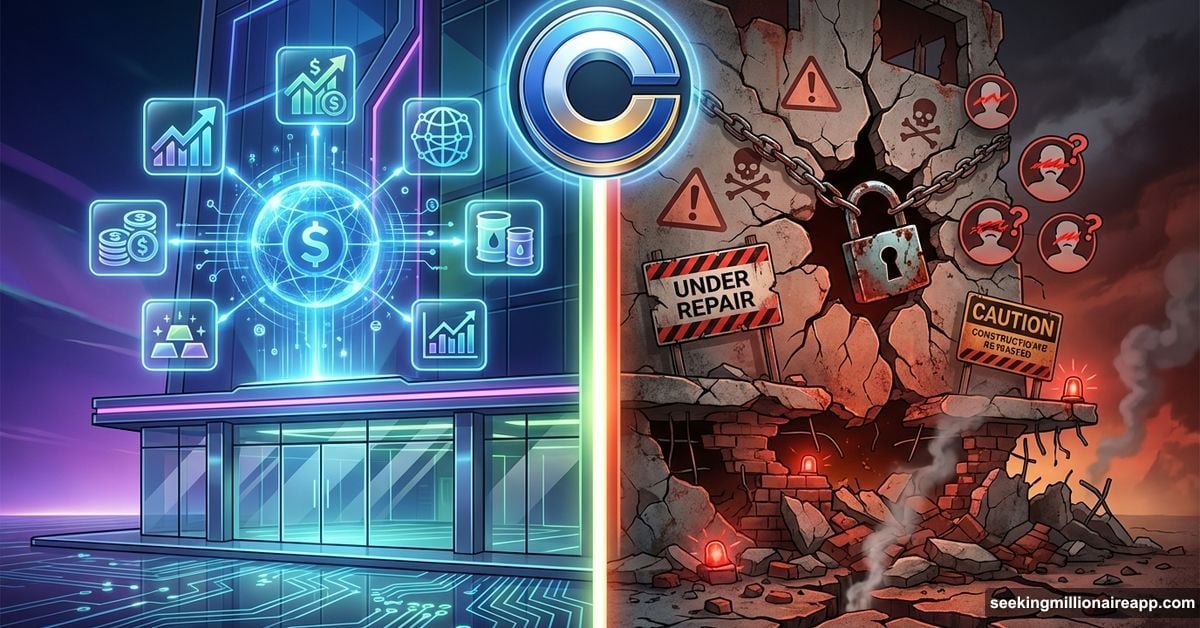
Coinbase CEO Brian Armstrong just dropped his 2026 vision. He’s promising a “global everything exchange” that handles crypto, stocks, commodities, and prediction markets all in one place.
Sounds ambitious. But the community’s response? Lukewarm at best, hostile at worst. Users and developers are calling out a familiar pattern: big promises while fundamental problems go unfixed.
Security Still Takes a Backseat
Armstrong’s roadmap emphasizes global expansion and automation. Yet many users point to ongoing security failures that suggest those priorities are backwards.
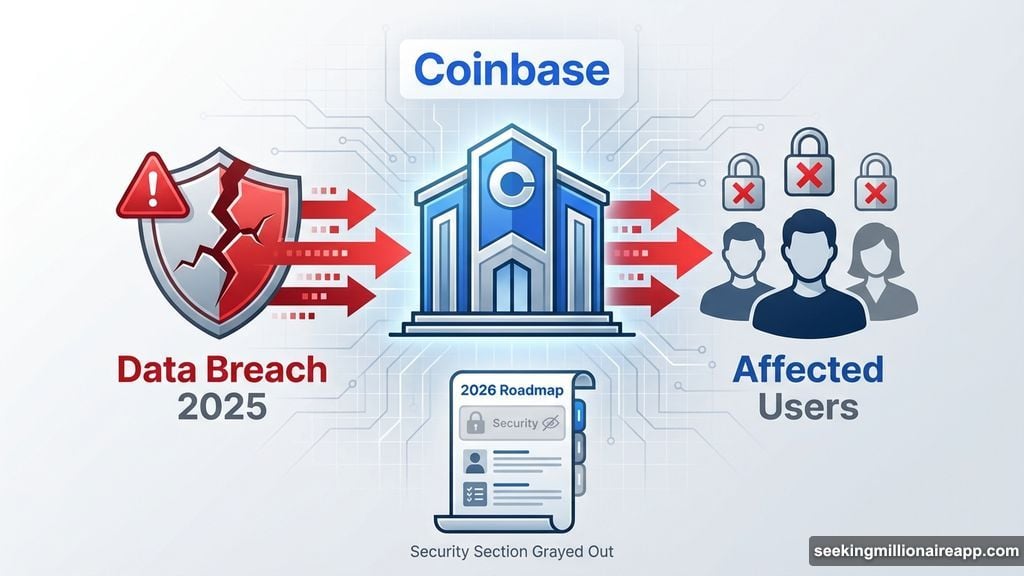
In 2025, Coinbase suffered a data breach that allegedly involved insider participation. That’s not just a technical failure. It’s a trust violation that affects real people’s money and personal information.
One prominent X user put it bluntly: “Brian still doesn’t see user safety to be a priority for Coinbase. A year later, instead of fixing that, leadership says ‘bring more lambs to my slaughterhouse.'”
The criticism stings because it’s specific. Users aren’t complaining about abstract concepts. They’re pointing to concrete incidents where Coinbase’s infrastructure failed them. Meanwhile, the 2026 roadmap barely mentions security improvements.
Base Chain Favors Insiders Over Builders
The backlash extends beyond the main platform. Base, Coinbase’s Layer-2 blockchain, faces mounting criticism from its own developer community.
The rebranded Base App was supposed to be a self-custody wallet combining trading, social feeds, and messaging. Instead, developers say it prioritizes creator coins and meme tokens over legitimate DeFi or gaming projects.
“Everything on Base is trash,” wrote one frustrated developer. “Your flagship is a scam token generator.”
That sentiment reflects a deeper issue. Long-time Base builders report feeling systematically overlooked unless they’re ex-Coinbase employees or personally connected to Base leadership. Developer Coco described the environment as an “uneven, unfair playground” where internal politics matter more than technical merit.
The recent controversy around Jesse Pollak endorsing a Soulja Boy meme coin crystallized these concerns. Why is Base leadership promoting celebrity tokens while serious builders struggle for recognition?
The “Everything App” Misses What Users Actually Want
Armstrong envisions Coinbase as the “#1 financial app in the world.” But critics argue he’s building the wrong thing.
Retail users don’t need another fragmented social experiment. They want integrated financial tools that let them bet, bank, save, earn, trade, and pay bills from one interface.
“Retail wants to bet, bank, save, earn, trade, withdraw cash, pay rent, and everything else at the same time,” explained one user. “Coinbase does not understand this.”
That’s a telling observation. Competitors like Robinhood already offer this kind of seamless financial integration. Coinbase, despite its crypto expertise, keeps pushing users toward separate apps and features that don’t connect cleanly.
The Base App exemplifies this disconnect. Instead of building powerful financial infrastructure, it emphasizes on-chain social features and content coins. That’s fine for experiments. But it’s not what serious traders need from their primary platform.
Confusing Decisions Raise More Questions
Some of Coinbase’s 2026 moves seem to contradict its stated goals. Take Argentina.
Coinbase plans to shut down on/off ramps in Argentina, a country with high stablecoin adoption. Why abandon a market that perfectly aligns with your stablecoin expansion plans?
Users are asking whether this reflects regulatory pressure, political constraints, or internal strategy. The lack of clear explanation fuels speculation and erodes trust.
These kinds of opaque decisions compound the credibility problem. When your roadmap promises global expansion but you’re pulling out of adoption-heavy markets, people notice the contradiction.
The Execution Gap Keeps Growing
Many critics acknowledge that Coinbase’s vision sounds good on paper. The problem is execution.
“They’ve run this same playbook for a long time now,” wrote one user. “The shit they say does not match up with the shit they do.”
That execution gap shows up everywhere. Token listings seem arbitrary. Developer support on Base feels uneven. Security improvements lag behind expansion plans. Customer support remains a persistent complaint.
For Coinbase to become the “everything exchange,” it needs to nail the basics first. Secure user funds. Support legitimate builders. Create clear, fair processes for token listings and developer access.
Without those fundamentals, adding more features just creates more surface area for problems.
What Coinbase Could Do Differently
The 2026 roadmap isn’t inherently wrong. Global expansion makes sense. Integrated financial services have real value. Stablecoin adoption is growing.
But the community’s frustration highlights clear priorities that Armstrong’s plan overlooks.
Fix security first. Before onboarding millions of new users, prove you can protect the ones you have. Address the data breach. Improve internal controls. Make security a visible, measurable priority.
Support actual builders. Base needs to become a platform where the best projects win, not just the ones with connections. Create transparent criteria for listings and promotions. Give serious developers the same attention you give meme coins.
Build the tools users need. Focus on integrated financial services that compete with Robinhood and modern fintech apps. Make Coinbase the place where people can handle all their financial needs, not just trade crypto.
Your roadmap matters less than whether people trust you to execute it. Right now, trust is the bigger problem.