
Vitalik Buterin just called out Big Tech for turning the internet into “corposlop.” Strong words from Ethereum’s co-founder. But he’s not just complaining—he’s proposing a radical alternative.
On January 10, Buterin dropped a manifesto on X. His target? The modern web’s data-extraction machine. His solution? A “sovereign web” that puts control back in your hands. Plus, he’s challenging developers to ditch speculative crypto tools and build something that actually protects users.
This isn’t your typical tech idealism. Buterin laid out specific technical requirements and rejected half the crypto industry’s business model in the process.
The Corposlop Problem Nobody Admits
Buterin coined “corposlop” to describe today’s internet landscape. What does that mean exactly?
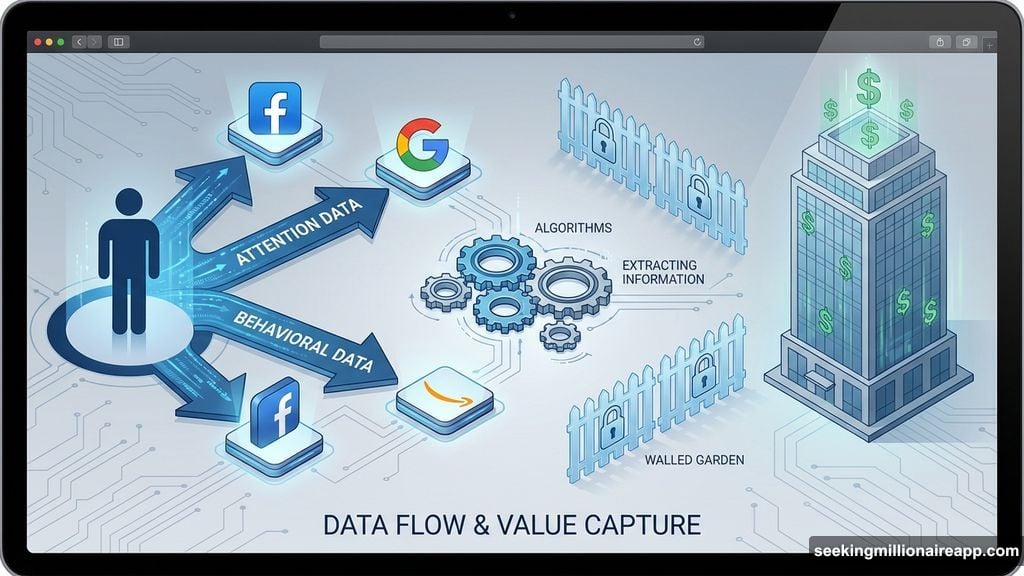
Think sleek branding that hides predatory optimization. Major platforms designed to extract maximum profit from your attention and data. So every feature serves engagement metrics, not you.
The mechanisms are straightforward. Dopamine-driven algorithms keep you scrolling. Manufactured outrage boosts interaction. Mass data collection happens whether you need it or not. Moreover, walled gardens lock you into ecosystems that charge monopolistic fees.
Here’s the kicker. These platforms block interoperability on purpose. Moving your data between services? Good luck. Using competing tools together? Usually impossible. That’s by design, not accident.
Buterin argues this creates an illusion of service while systematically removing your agency. You think you’re choosing how to spend time online. Instead, algorithms optimized for corporate profit make those choices for you.
Sovereignty Used to Mean Dodging Governments
The concept of digital sovereignty evolved dramatically since the early 2000s. Back then, it meant avoiding government censorship. Build tools governments couldn’t shut down. Use encryption they couldn’t break.
That definition feels outdated now. Why? Because corporate control poses a bigger daily threat than government surveillance for most users.
Buterin redefined sovereignty for 2026. It means protecting your psychological autonomy from corporate manipulation. Furthermore, it requires securing independence from what he calls “the meta”—that homogenizing force pushing everyone toward identical behaviors and beliefs.
“Sovereignty means doing things because you believe in them,” Buterin wrote. Not because an algorithm nudged you there. Not because a platform’s business model requires your compliance.
He even praised Bitcoin maximalists for understanding this earlier. Their resistance to ICOs, alternative tokens, and complex financial applications? That kept Bitcoin “sovereign” instead of “corposlop.” In fact, Buterin admitted they were ahead on this specific issue.
The Sovereign Web Requires New Tools
Buterin didn’t just criticize. He outlined specific technical requirements for the sovereign web.
First, developers need privacy-preserving applications. These tools must operate locally whenever possible. So your data stays on your device instead of traveling to corporate servers. Plus, cryptographic protection should be built-in, not optional.
Second, financial tools should support sustainable wealth accumulation. But here’s where Buterin diverges from much of crypto. He explicitly rejected high-leverage speculation platforms. No “sports betting” behavior. No tools that encourage reckless financial decisions.
That’s a direct shot at DeFi protocols offering 100x leverage and similar products. Buterin essentially said those tools contradict the sovereign web vision. Instead, focus on helping people build real wealth through reasonable mechanisms.
Third, artificial intelligence systems must augment human productivity. Not replace it. Not foster passivity. The goal is merging human and machine capabilities in ways that expand what individuals can accomplish.
Moreover, these AI tools should be open. Not proprietary black boxes controlled by corporations. Not systems that harvest your interactions to train models you’ll never access.
Interoperability Matters More Than Features
Buterin emphasized that walled gardens represent a fundamental problem. Platforms that lock you in through incompatibility aren’t providing value—they’re extracting rent.
The sovereign web requires open protocols. Tools that work together regardless of who built them. Standards that let you move data freely between services. So competition happens through better features, not artificial lock-in.
This matters for crypto especially. Many blockchain projects create their own isolated ecosystems. Then they charge fees for bridge transactions. That’s the exact walled garden pattern Buterin criticized.
Instead, the industry needs protocols designed for interoperability from day one. Build tools that assume users will mix and match services. Make portability the default, not an afterthought.
Privacy Can’t Be Optional Anymore
Buterin called for privacy-preserving tools as a core requirement. Not privacy features you can enable. Privacy by default, built into the architecture.
Why does this distinction matter? Optional privacy means most users won’t use it. They’ll stick with convenient defaults that harvest data. So mass surveillance continues despite the availability of private alternatives.
Privacy-first design means you’d need to actively opt into data collection. The default state protects your information. Companies wanting your data must convince you it’s worth sharing.
Current web architecture does the opposite. You must actively opt out of tracking—if you even can. Moreover, many services deny functionality to users who block trackers. That coercive pattern contradicts digital sovereignty.
Zero-knowledge proofs, local-first architecture, and end-to-end encryption represent core technologies for the sovereign web. But implementing them requires rejecting business models built on data extraction. That’s the hard part.
Financial Tools Should Build Wealth, Not Destroy It
Buterin’s critique of speculative crypto platforms hit hard. He distinguished between tools that help users accumulate sustainable wealth versus platforms encouraging reckless gambling.
High-leverage trading. Yield farming with unsustainable APYs. Tokens with no purpose beyond speculation. These products dominate crypto marketing. But they contradict the sovereign web vision.
Instead, Buterin called for financial tools that support long-term wealth building. Think savings protocols with reasonable returns. Investment tools that encourage diversification. Mechanisms that help users understand and manage risk properly.
This represents a minority view in crypto. Most projects prioritize rapid growth and speculative excitement. Higher TVL numbers. More trading volume. Flashier marketing.
But that approach creates cycles of boom and bust. Users who enter during hype phases often lose money. The platforms that encouraged their participation profit regardless. So the cycle continues, extracting value from retail users while enriching insiders.
AI Should Empower, Not Replace
Buterin’s vision for AI tools differs sharply from current trends. He wants systems that augment human capabilities. Not chatbots that encourage you to outsource thinking.
The distinction matters. Passive AI does work for you, potentially making you less capable over time. Augmentative AI expands what you can accomplish while keeping you in control.
Current AI products mostly optimize for replacing human labor. Companies want systems that eliminate positions and cut costs. Users get convenience but sacrifice agency in the process.
The sovereign web needs open AI systems instead. You should control the model, understand its training data, and direct its capabilities toward your goals. Plus, the AI should enhance your skills rather than substitute for them.
Bitcoin Maximalists Called This First
Buterin’s acknowledgment of Bitcoin maximalist foresight struck a surprising note. He admitted their resistance to complex crypto applications preserved Bitcoin’s sovereignty.
Why does Bitcoin remain relatively uncorrupted by corposlop patterns? Simplicity helps. The network does one thing—transfer value—without trying to be everything to everyone.
Meanwhile, platforms offering dozens of features create more attack vectors for corporate optimization. Each additional capability provides another opportunity to extract value or manipulate behavior.
Bitcoin maximalists resisted that complexity instinctively. They pushed back against ICOs not just for technical reasons but because those projects introduced speculative dynamics that prioritized short-term gains over long-term sovereignty.
That doesn’t mean Bitcoin’s approach works for all applications. But it demonstrates that simpler, more focused tools better maintain independence from corporate capture.
The Meta Sucks Your Soul
Buterin’s language about “the meta” deserves attention. He described it as a soul-sucking homogenizing force.
What’s the meta? It’s the dominant strategy everyone feels pressured to follow. In tech, it’s the features every app must include. The business models everyone copies. The design patterns that feel mandatory.
Following the meta means surrendering independent judgment. You build what everyone expects instead of what you believe works. So products converge toward sameness while actual innovation disappears.
The meta also affects users. Social platforms reward certain behaviors and punish others. You learn what gets engagement and modify your behavior accordingly. Over time, everyone starts posting similar content in similar styles.
Breaking from the meta requires conscious resistance. You must believe your different approach adds value despite going against dominant trends. That’s harder than it sounds when algorithms punish deviation.
Developers Face a Clear Choice
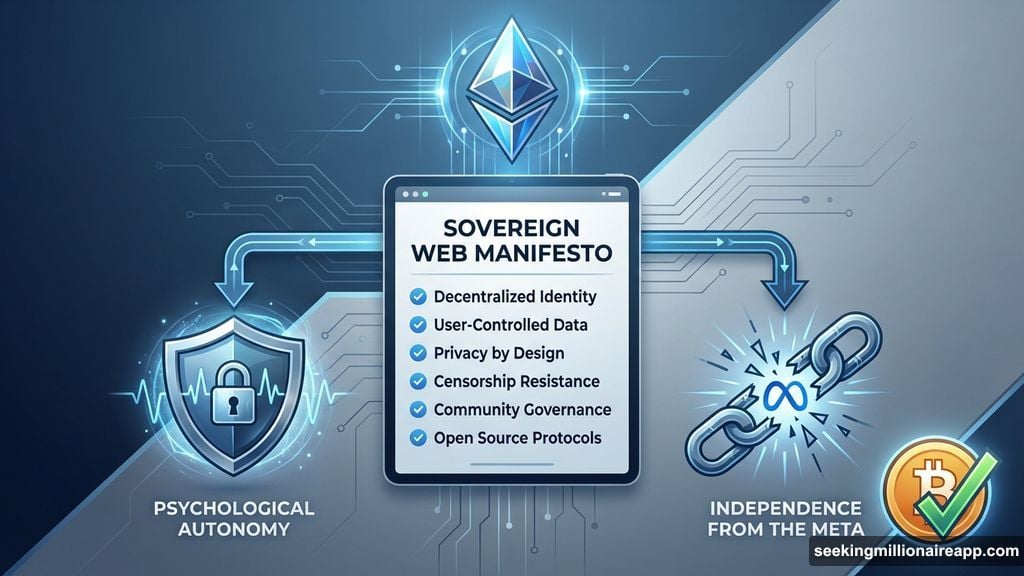
Buterin’s statement presents developers with a binary decision. Build for the corposlop web or build for the sovereign web. No middle ground exists.
Corposlop pays better short-term. Venture capital loves data-harvesting business models. Growth metrics look impressive when you optimize for engagement over user welfare. Plus, you can copy proven patterns from successful companies.
The sovereign web offers no such shortcuts. Privacy-first tools grow slowly. Business models that respect user agency generate less revenue. Investors often ignore projects prioritizing sovereignty over scale.
But that difficulty represents the point. Easy paths lead to corporate capture. Building genuine alternatives requires accepting constraints that protect user independence.
So developers must choose. Chase maximum growth and exit opportunities? Or build tools that actually serve users over the long term? The technical requirements differ completely between those paths.
This Challenges Most Crypto Projects
Buterin’s vision contradicts much of what crypto became. High-leverage DeFi protocols don’t fit. Speculative token launches don’t qualify. Closed ecosystems with monopolistic fees fail the test.
That leaves surprisingly few current projects aligned with the sovereign web. Most prioritized growth and profitability over user sovereignty. They adopted the same extractive patterns as traditional tech platforms.
Consider yield farming protocols. They promise unsustainable returns to attract capital. Users who arrive late lose money when yields crash. But the platforms profit from fees regardless. How does that serve user sovereignty?
Or NFT marketplaces with walled gardens. They lock creators into specific platforms through incompatible standards. Moving your digital assets between services requires technical expertise most users lack. That’s corposlop in crypto clothing.
The industry needs to rebuild with sovereignty as the primary design goal. Not decentralization for its own sake. Not blockchain because it’s trendy. Actual tools that protect user agency from corporate and platform manipulation.
Psychological Independence Matters Most
Buterin’s emphasis on psychological autonomy represents the core insight. Technical sovereignty means nothing if your behavior remains controlled by algorithmic manipulation.
You can own your data while algorithms still determine what you read, watch, and buy. Cryptographic tools protect against external surveillance but not against internal behavior modification.
So the sovereign web requires tools that protect your attention and decision-making processes. Interfaces designed to serve your goals, not platform metrics. Algorithms that surface what you want, not what maximizes engagement.
This demands rethinking fundamental assumptions about software design. Most modern applications optimize for time spent and actions taken. Those metrics align with corporate goals but not user welfare.
Sovereign software would optimize for user satisfaction and goal achievement instead. Time spent becomes irrelevant. Engagement metrics disappear. The only measure that matters is whether the tool helped you accomplish what you wanted.
Open Protocols Beat Proprietary Platforms
The sovereign web must run on open protocols. Not platforms controlled by corporations. Not services that can change terms arbitrarily.
Open protocols let anyone build compatible tools. They prevent monopolistic behavior through technical architecture, not policy. Plus, they ensure users can switch services without losing access to their data or social graphs.
Current platforms fight this model aggressively. They add proprietary extensions to open standards. Build features that only work within their ecosystem. Make interoperability technically possible but practically difficult.
Breaking this pattern requires developers to commit to genuine openness. Publish specifications. Build open-source implementations. Design for compatibility from the start. Moreover, resist the temptation to add proprietary features that lock users in.
That’s harder than it sounds. Proprietary features create competitive advantages. Open standards help competitors. Short-term business incentives push toward closed systems even when developers prefer openness.
The Roadmap Starts Now
Buterin didn’t just philosophize. He outlined specific actions developers should take immediately.
Build privacy-preserving tools using zero-knowledge proofs and local-first architecture. Create financial applications that support sustainable wealth building without speculative excess. Design AI systems that augment human capabilities instead of replacing them.
Moreover, reject business models built on data extraction. Don’t optimize for engagement metrics. Avoid creating walled gardens. Make interoperability a core requirement, not an optional feature.
These principles exclude most current tech business models. That’s intentional. The sovereign web can’t emerge from the same incentives that created the corposlop web. Different values require different economic structures.
So developers face a choice. Continue building what venture capital rewards? Or start creating tools that actually serve user sovereignty despite slower growth and lower returns?