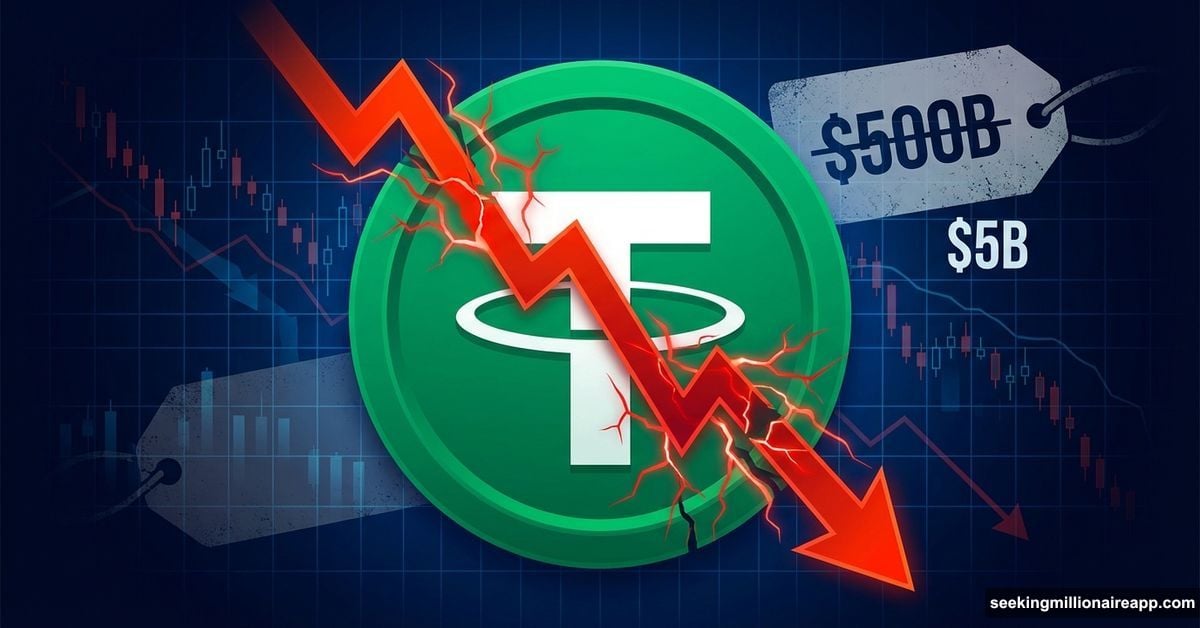
Tether just walked back a massive fundraising plan. That’s putting its long-hyped IPO dreams on ice.
The stablecoin giant originally sought $15-20 billion at a jaw-dropping $500 billion valuation. Now it’s considering just $5 billion. Or maybe nothing at all. Plus, investors flat-out rejected the company’s sky-high price tag.
So what does this mean for the most profitable player in crypto? Let’s break down why Tether’s IPO ambitions are cooling fast.
Investors Said No to Half a Trillion Dollars
Tether floated a $500 billion valuation earlier this year. That would’ve placed it alongside SpaceX, OpenAI, and ByteDance as one of the world’s most valuable private companies.
But investors weren’t buying it. According to the Financial Times, backers balked at the price for three key reasons.
First, regulatory scrutiny continues to dog the company. Despite controlling $185 billion in USDT circulation, Tether faces ongoing questions about compliance and oversight. Second, transparency concerns remain. Critics point to limited disclosure about reserve holdings and custodian creditworthiness.
Third, past allegations of illicit use still linger. While Tether has worked to address these issues, investor caution persists. Moreover, a recent S&P Global Ratings downgrade didn’t help. The agency flagged increased exposure to risky assets like Bitcoin and gold with minimal disclosure.
“S&P said there had been an increase in high-risk assets in Tether’s reserves over the past year, including bitcoin, gold, secured loans, corporate bonds, and other investments, all with limited disclosures,” Reuters reported.
That kind of opacity doesn’t inspire confidence at a $500 billion valuation. So Tether scaled back dramatically.
Profitability Keeps Fundraising Optional
Here’s the twist. Tether doesn’t actually need the money.
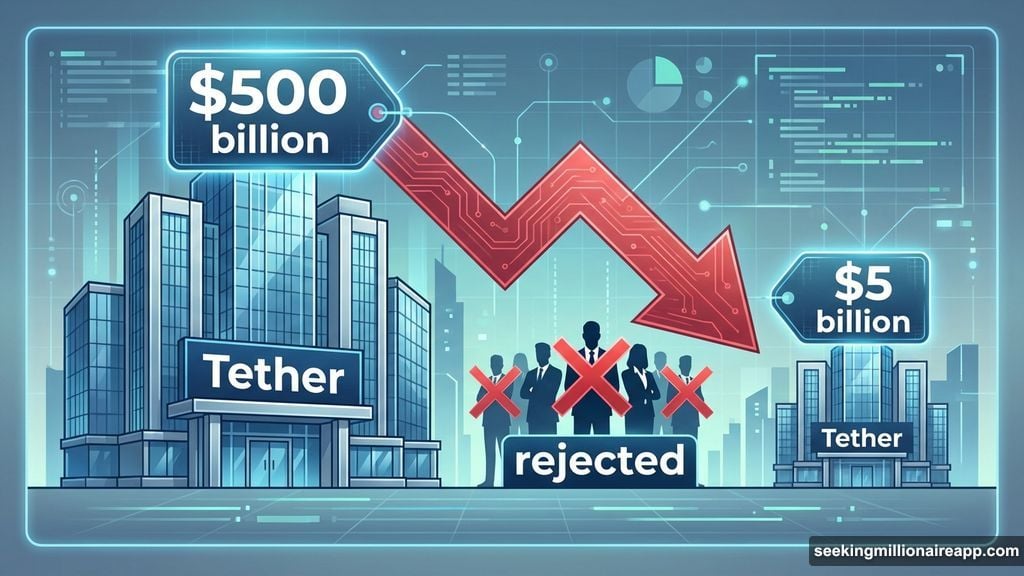
CEO Paolo Ardoino made this clear. He called the $15-20 billion figure a “maximum” rather than a goal. In fact, he said Tether would be “very happy” raising zero capital.
Why the confidence? Profits remain strong despite market headwinds.
Tether reported $10 billion in profits for 2025. That’s down 23% from 2024 due to Bitcoin price declines. But gold holdings offset those losses. Plus, with that kind of profitability, operational funding needs are basically nonexistent.
So this fundraising push appears more about credibility than cash. Bringing in high-profile investors could help legitimize Tether in the eyes of regulators and institutional partners. But financially speaking, the company can operate just fine without new capital.
That’s a luxury most crypto firms don’t have. And it gives Tether negotiating power that other stablecoin issuers would envy.
IPO Dreams Aren’t Dead Yet
The fundraising retreat doesn’t kill IPO hopes entirely. But it definitely cools them.
BitMEX co-founder Arthur Hayes reignited speculation last September. He suggested a Tether public listing could overshadow Circle’s successful USDC debut. At the time, Tether’s revenue structure and massive circulation gave it clear advantages.
But reality proved more complicated. Market conditions deteriorated over the past six months. Crypto valuations crashed across the board. Even the sector’s most profitable player couldn’t command previously expected multiples.
Still, several factors could revive IPO ambitions in 2026. US stablecoin legislation under President Trump creates potential regulatory clarity. Moreover, Tether’s new USAT token aims for federal compliance in the US market.
If these initiatives succeed, they could provide the legitimacy needed for a domestic listing. But expect a recalibrated valuation. The $500 billion figure now looks like fantasy.
Tether CEO Paolo Ardoino previously stated the firm doesn’t need to go public. However, he didn’t rule it out either. “No need to go public,” he posted on X in June 2025.

The Broader Signal for Crypto
Tether’s retreat carries implications beyond one company’s fundraising plans.
This company essentially serves as crypto’s reserve currency. Its Treasury and gold holdings dwarf most competitors. So when Tether pulls back from inflated valuations, it signals something important.
The message? Sustainable growth matters more than hype now.
For other high-valuation crypto firms eyeing public markets, Tether’s experience offers lessons. Investors increasingly demand profitability and transparency over growth-at-all-costs narratives. Moreover, fundamental business strength trumps speculative valuations.
This shift could reshape how crypto companies approach fundraising and IPOs. The days of commanding massive multiples purely on future promise may be ending. Instead, companies need to show they can generate consistent profits while managing regulatory and operational risks.
That’s actually healthy for the industry. It weeds out unsustainable business models. Plus, it forces companies to build real value rather than chasing valuations.
What Happens Next
Tether’s path forward remains uncertain but flexible. The company can continue operating profitably without new capital. Meanwhile, regulatory developments and strategic initiatives keep options open.
A 2026 IPO isn’t impossible. But it would require improved market conditions and a more realistic valuation. Plus, successful launch of the USAT token could demonstrate regulatory compliance in the critical US market.
For now, Tether seems content to watch and wait. With $10 billion in annual profits and no urgent funding needs, patience makes sense. Why rush an IPO at depressed valuations when you can afford to wait for better terms?
The crypto winter that started in 2025 continues to test even the strongest players. Tether’s fundraising pullback shows that winter isn’t over yet. But unlike many competitors, this company has the financial cushion to outlast the cold.