
Ethereum clawed back above $2,000. Most investors celebrated. But one firm quietly doubled down on its bearish bet.
New York-based activist short-seller Culper Research just disclosed it’s actively shorting Ethereum (ETH) and ETH-linked equities, including BitMine (BMNR). Their reasoning goes deeper than price action. And honestly, their argument is worth understanding before you dismiss it.
The Fusaka Upgrade Culper Says Broke ETH Tokenomics
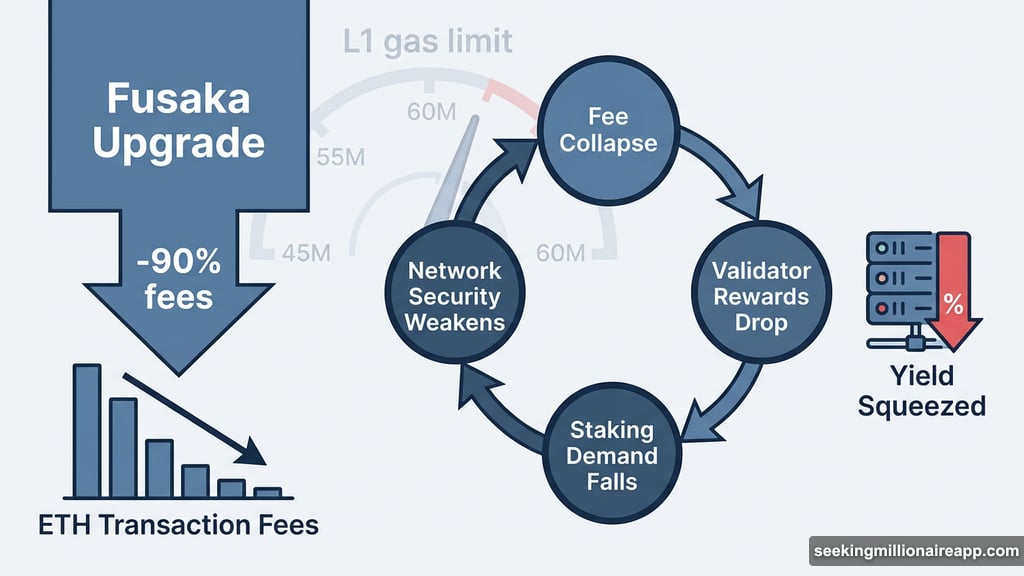
Back in December 2025, Ethereum rolled out its Fusaka upgrade. The goal was straightforward: increase the Layer 1 gas limit from 45 million to 60 million units, lower transaction fees, and attract more users to the network.
Sounds like progress. But Culper says it backfired badly.
According to their report — titled “Ethereum (ETH USD): What Vitalik Knows, and Tom Lee Doesn’t” — transaction fees didn’t just drop modestly. They collapsed by roughly 90%. Culper argues that Vitalik Buterin and validators “miscalculated L1 demand elasticity by 3-9x based on outdated math” that predates EIP-1559 and the rise of Layer 2 networks.
So the upgrade meant to strengthen Ethereum’s economics may have gutted them instead.
Address Poisoning Is Flooding the Network
Here’s where things get interesting. Some Ethereum bulls pointed to surging on-chain activity as proof the network is thriving. Culper says that’s a dangerous misread.
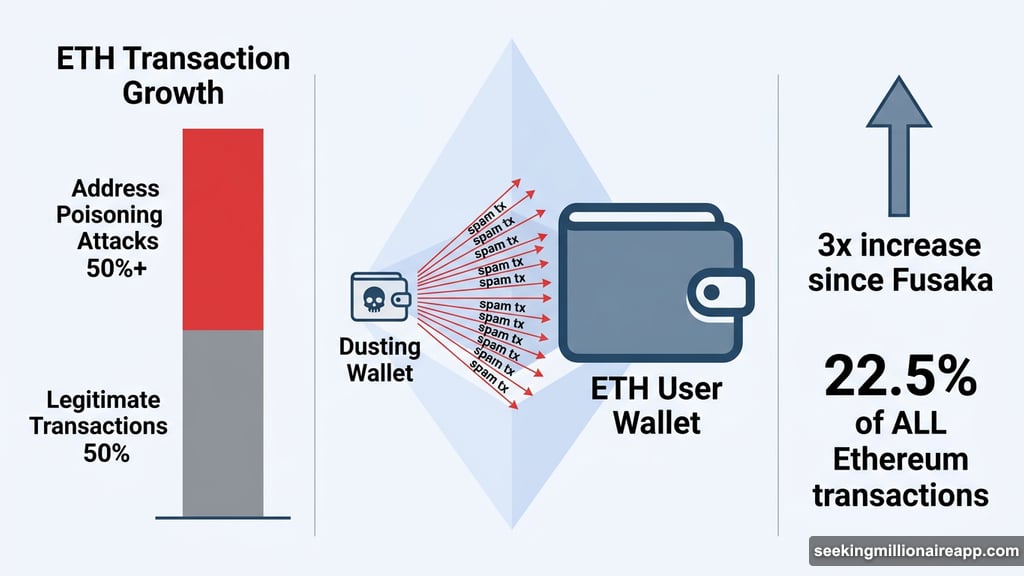
Their on-chain data, covering January 2025 through February 2026, tells a different story. According to Culper, 95% of new wallet growth comes from so-called “dusting” wallets — tiny wallets created specifically for address poisoning attacks. These attacks flood the blockchain with low-value spam transactions designed to trick users into sending funds to fraudulent addresses.
The numbers Culper cites are striking. Poisoning attacks have more than tripled since Fusaka. They now explain over 50% of ETH transaction growth and account for 22.5% of all Ethereum transactions.
So when bulls cite surging network activity as “institutional adoption,” Culper argues they’re mistaking spam for substance.
Validator Rewards Are Shrinking. That’s a Problem.
The fee collapse isn’t just hurting traders. It’s squeezing the people who actually keep Ethereum secure.
Culper’s report warns that validator fees and yields have dropped significantly. Lower rewards mean less incentive to stake ETH. Less staking demand could weaken network security over time. And a less secure network could erode confidence further — creating the kind of reflexive loop that experts have warned about for years.
This is the scenario Culper describes plainly: “Validator fees and yields have collapsed, staking demand falls, and network security deteriorates in a reflexive loop.”
That’s a serious concern, not just bearish noise.
Vitalik’s ETH Sales Are Raising Eyebrows
Culper’s report also flags something most analysts glossed over. Vitalik Buterin, Ethereum’s co-founder, had publicly committed to strategically allocating 16,384 ETH toward long-term initiatives. That framing suggested steady, purposeful deployment of funds.
But on-chain data tracked by OnChain Lens tells a slightly different story. Buterin actually sold 19,318 ETH — more than his stated allocation.
Culper’s interpretation is blunt: “He knows what Tom Lee doesn’t: ETH tokenomics are broken.”
That’s a provocative read. Buterin has continued making public statements about Ethereum’s roadmap and future potential. But Culper treats his selling behavior as the more honest signal of where things stand.
BitMine Is Also in Culper’s Crosshairs
BitMine (BMNR) holds the largest corporate Ethereum position of any company — roughly $4.47 million worth of ETH. Culper is shorting this stock alongside ETH itself.
BitMine’s defense? They argue ETH isn’t in a death spiral because utility is rising. Culper disagrees strongly, saying the utility gains are being masked by address poisoning activity rather than genuine adoption growth.
Ethereum Daily Fires Back
Not everyone agrees with Culper’s analysis. Ethereum Daily, a prominent ETH-focused account on X, published a detailed rebuttal.
Their counterpoints are worth taking seriously. On the fee collapse, they argue cheaper transactions are actually good — they push activity to Layer 2 networks, which is the intended design. Despite lower gas prices, daily ETH burn reportedly remained at $1.2 billion in February 2026, still outpacing 0.8% annual inflation.
On address poisoning, Ethereum Daily claims the problem is overstated. When excluding Layer 2 batch submissions, dust-only transactions account for just about 4% of total activity. They also argue the 117% year-over-year growth in active addresses reflects real users on Layer 2 networks, not scammers.
And on validator health, Ethereum Daily points to block rewards holding at 2 ETH per block, staking APR sitting at 4-5%, and 66% of ETH still staked. They also highlight BitMine’s $350 million in annual staking revenue and over $3 billion in cash equivalents as signs of stability.
Two credible sides. Genuinely different conclusions. That’s what makes this debate worth following.
What ETH Is Actually Doing Right Now
While the argument plays out, Ethereum’s price continues to reflect uncertainty. BeInCrypto Markets data shows ETH dropped nearly 1.7% in the past day, trading at $2,082 at the time of writing.
Breaking back above $2,000 felt like a win. But Culper’s case suggests the fundamental questions around the Fusaka upgrade, fee economics, and network health haven’t been resolved by that price move.
Whether Culper is right or Ethereum Daily has the better read, this is one of the more substantive debates happening in crypto right now. It’s not just about price speculation — it’s about what Ethereum’s tokenomics actually look like after a major protocol change, and whether the data supports the bullish narrative most ETH holders are banking on.
That’s a question worth answering honestly, regardless of which side of the trade you’re on.