Robinhood just made a bold move. The company’s board approved a $1.5 billion share repurchase program on March 24, 2026, right as its stock sits in a painful 39% year-to-date slump.
The timing is striking. When a company buys back its own stock during a steep decline, it’s essentially saying, “We think we’re worth more than the market is giving us credit for.” Whether that confidence is justified is the real question here.
HOOD Stock’s Brutal Slide From Its Peak
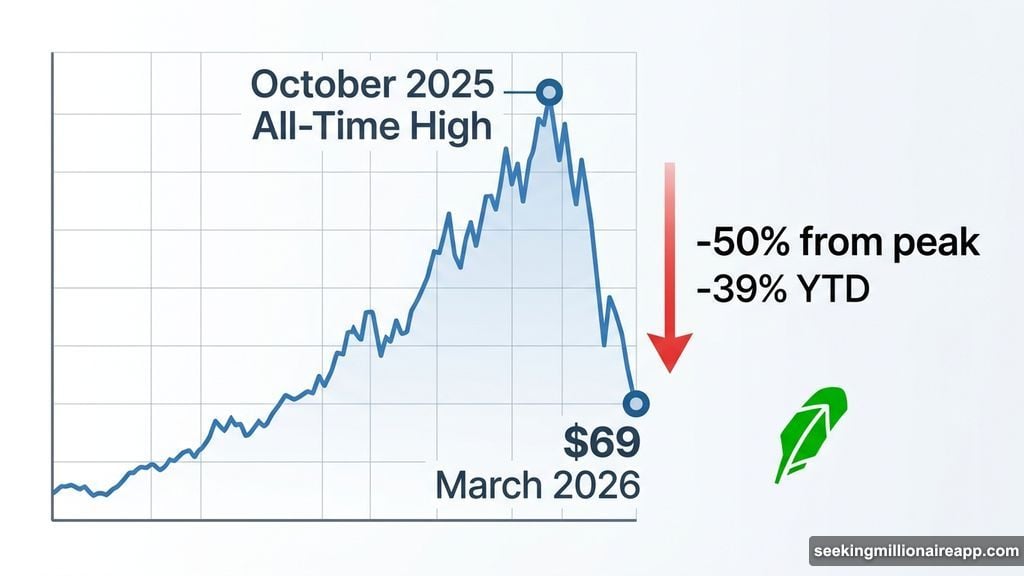
Let’s set the scene first. Robinhood had an incredible run in 2025. The stock tripled over the course of that year, reaching an all-time high in October 2025. That’s the kind of performance that makes investors very happy.
Then things reversed hard. Since that October peak, HOOD has shed more than 50% of its value. In 2026 alone, the stock has dropped roughly 39%, currently trading around $69. So the company that once rode retail investor enthusiasm to dizzying heights is now watching those gains disappear fast.
That context matters a lot when evaluating this buyback announcement.
![Robinhood HOOD stock price chart showing steep decline from October 2025 peak to March 2026 lows]
How the $1.5 Billion Buyback Program Works
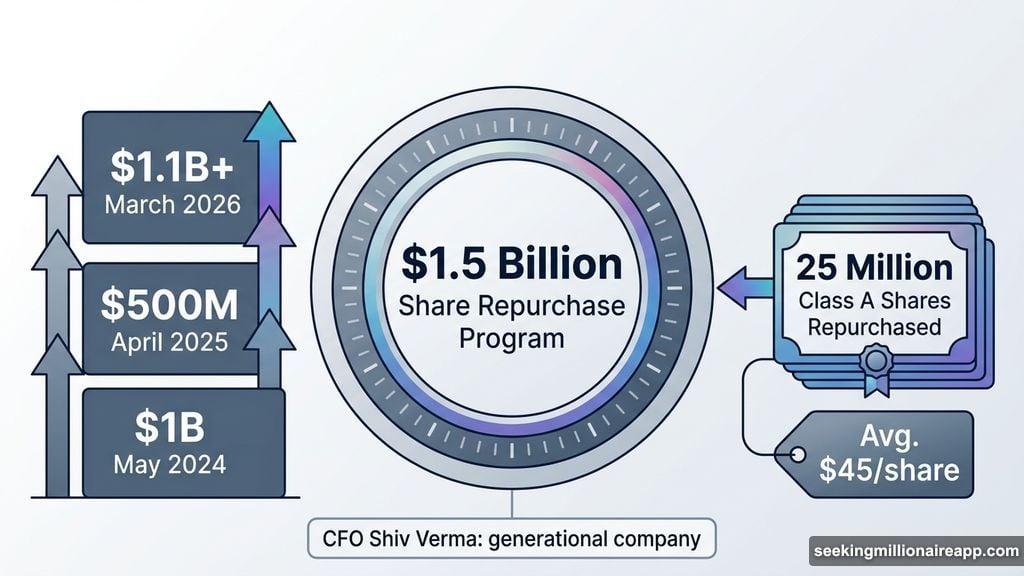
This isn’t actually Robinhood’s first rodeo with share repurchases. The company announced a $1 billion buyback back in May 2024. Then it added another $500 million in April 2025. So there’s a history here of using buybacks as a shareholder return strategy.
The new authorization adds over $1.1 billion in fresh buyback capacity on top of whatever remained from previous programs. Combined, the total authorized repurchase program now sits at $1.5 billion.
As of March 20, 2025, Robinhood had already bought back more than 25 million Class A shares. The average price paid was about $45 per share. That’s well below the current trading price of $69, which means those earlier purchases look like smart timing in hindsight.
For the new authorization, management expects to execute the plan over roughly three years, starting in the first quarter of 2026. There’s no formal expiration date attached, giving the company flexibility to pace the repurchases based on market conditions.
What CFO Shiv Verma Actually Said
Robinhood’s Chief Financial Officer, Shiv Verma, framed the buyback as a confidence signal. His words were direct: “Robinhood is a generational company with a massive long-term opportunity.”
The CFO also described the authorization as a vote of confidence in the company’s product pipeline and its ability to drive shareholder value while returning capital steadily over time.
That’s standard buyback language from a finance executive. But it carries a bit more weight when a company is actively buying shares at a 39% discount to where they started the year. Either management genuinely believes the stock is undervalued, or they need to project confidence to stop the bleeding. Sometimes both things are true at once.
What a Share Repurchase Actually Does
For anyone not deep in the weeds of corporate finance, here’s the simple version. When a company buys back its own shares, it reduces the total number of shares outstanding in the market. Fewer shares means each remaining share represents a slightly larger ownership stake in the company.
So if you hold HOOD stock right now, a buyback program is generally good news. It signals management confidence and can support the share price by creating consistent buying demand.
The flip side is that buybacks use cash that could theoretically go toward other things, like expanding products, hiring talent, or making acquisitions. So investors sometimes debate whether buybacks represent the best use of capital or just financial engineering to prop up a falling stock price.
With Robinhood, the company seems to be arguing it can do both: invest in its product pipeline AND return capital to shareholders.
![Robinhood share repurchase program timeline showing 2024 and 2025 buyback announcements alongside 2026 authorization]
The Bigger Picture for Robinhood
Robinhood built its reputation as the platform that made investing accessible to everyday people. Zero-commission trading, a clean mobile interface, fractional shares for investors who couldn’t afford whole shares of expensive stocks. That story resonated strongly during the pandemic-era retail investing boom.
The company has been expanding aggressively since then. Cryptocurrency trading, options, retirement accounts, and a growing suite of financial products have all been added to the platform. That product expansion is presumably what Verma was referencing when he mentioned the company’s “product pipeline.”
But the stock market doesn’t care much about long-term narratives when short-term sentiment turns sour. A 50% drop from all-time highs suggests investors have gotten more skeptical about Robinhood’s growth trajectory, or at least about the valuation the stock commanded at its peak.
The buyback is Robinhood’s answer to that skepticism. Management is putting $1.5 billion behind the argument that the selloff has gone too far.
Whether that call proves right will depend on what Robinhood actually delivers over the next three years. The buyback buys time and signals conviction. Execution will do the rest.
Right now, the bet is on the table. HOOD investors are watching to see if the company can back it up.