
A memecoin bearing Japan’s prime minister’s name and face was controversial enough. Now new audio evidence suggests her office may have known about it all along.
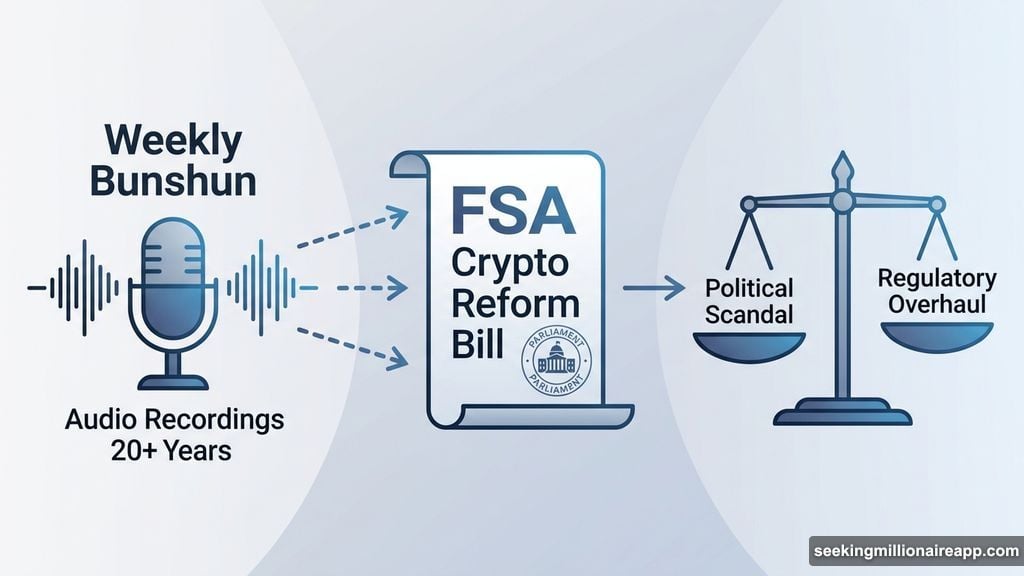
The SANAE TOKEN saga has taken a sharp turn, and the timing couldn’t be more awkward. Just as fresh allegations hit the headlines, Japan’s Financial Services Agency dropped a landmark crypto reform bill in parliament. Political scandal and regulatory overhaul landed in the same week.
How SANAE TOKEN Launched and Then Crashed
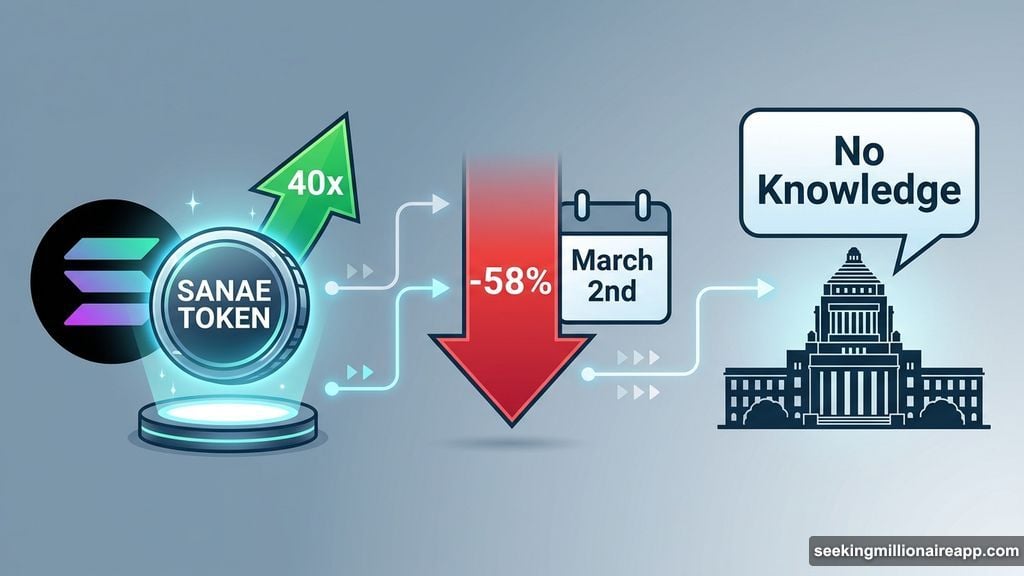
The token launched on Solana on February 25th. A community group called NoBorder DAO — led by serial entrepreneur Yuji Mizoguchi — created it as part of a “Japan is Back” initiative. The project website featured Prime Minister Sanae Takaichi’s name, likeness, and a full timeline of her political career.
Markets responded immediately. The token surged more than 40 times its launch price on day one. Then came March 2nd, and everything reversed.
Takaichi issued a public denial. She said neither she nor her office had any knowledge of the token. That statement triggered a 58% crash almost instantly.
After the denial, the FSA opened a probe into NoBorder DAO for allegedly operating without a crypto exchange license. The token’s operators halted issuance shortly after. What started as meme-driven enthusiasm quickly became a regulatory and political headache.
New Audio Claims Contradict the Official Story
Now Japanese tabloid Weekly Bunshun has entered the picture. The publication is well-known in Japan for breaking political and celebrity scandals, and it’s making a serious claim.
According to the magazine, developer Ken Matsui told them his team explicitly informed Takaichi’s office that the project was a crypto asset. That directly contradicts her denial.
But here’s where it gets more complicated. Weekly Bunshun says it obtained audio recordings of Takaichi’s chief secretary spanning more than 20 years, and those recordings reportedly describe the project in favorable terms.
Another Japanese online outlet noted that Takaichi’s office had not responded to media inquiries on the matter as of Tuesday. Also worth noting: Takaichi has held no press conference since February 18th, when her second cabinet was officially inaugurated.
So the political dimension remains wide open. Whether she knew or didn’t know may eventually surface through further reporting or an official response. For now, the silence is speaking loudly.
Japan’s FSA Just Submitted a Landmark Crypto Bill
While the tabloid drama plays out, Japan’s financial regulators moved on a much bigger stage. The Financial Services Agency submitted its crypto reform bill to parliament this week, as reported by Asahi Shimbun.
This is genuinely significant. The legislation would move crypto out of the Payment Services Act and into the Financial Instruments and Exchange Act. In plain terms, that means digital assets would be reclassified as financial instruments for the first time in Japan’s legal history.
The practical consequences are substantial. Maximum prison terms for unlicensed crypto sales would triple, jumping from the current level to ten years. Fines would also increase sharply, rising from 3 million yen to 10 million yen.
Plus, the Securities and Exchange Surveillance Commission would gain criminal investigation powers over crypto operators — authority it has never previously held.
The Sanae Token Case Is Already Shaping the Law
Here’s the part that connects both stories directly. Nikkei explicitly cited the SANAE TOKEN case in its reporting on the legislative push. The scandal isn’t just tabloid noise — it actually appears to be accelerating Japan’s regulatory response.
One specific provision in the bill stands out. It would void transactions with unregistered operators by default. That makes it far easier for investors to seek refunds when dealing with unlicensed platforms.
That provision maps almost perfectly onto what happened with SANAE TOKEN. Investors who bought in, watched it crash, and are now sitting on losses would have a clearer legal path to recourse under the new rules.
What This Means for Crypto in Japan
Japan has long been one of the more developed crypto markets globally, with formal licensing requirements and a relatively clear regulatory environment. But this bill represents a meaningful escalation.
Moving crypto into securities law territory brings stricter oversight, but it also brings more investor protections. That’s a trade-off some in the industry will welcome and others will resist.
The SANAE TOKEN situation showed exactly how quickly a poorly structured launch can unravel — and how easily retail investors can get caught in the mess. Whether the prime minister’s office was involved or not, the episode exposed gaps in existing rules.
Japan’s legislature now gets to decide how to close those gaps. The bill’s passage isn’t guaranteed, and parliamentary debates will likely be heated. But the direction of travel is clear. Tokyo is tightening its grip on crypto, and the political scandal sitting at the center of this moment may have just given lawmakers the momentum they needed to push it through.