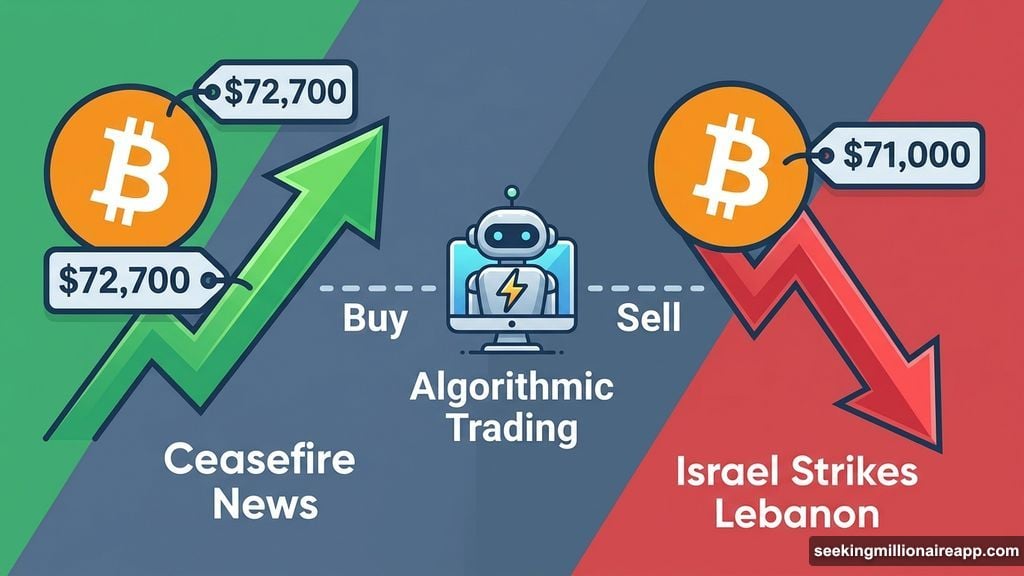
Wednesday looked promising for crypto bulls. Bitcoin climbed to $72,700 on news of a US-Iran ceasefire deal, and traders started feeling hopeful. Then, within hours, fresh Middle East violence wiped out those gains entirely.
By end of day, Bitcoin had retreated below $71,000. The rally was real. It just didn’t have enough legs to last.
Israel Strikes Lebanon, Oil Surges Back
The optimism shattered fast. Israel launched its largest assault on Lebanon yet, hitting over 100 Hezbollah sites across Beirut in under ten minutes.
Iran’s parliament speaker made things worse. He declared that three ceasefire clauses had already been violated, instantly reigniting tensions that markets had briefly celebrated as resolved.
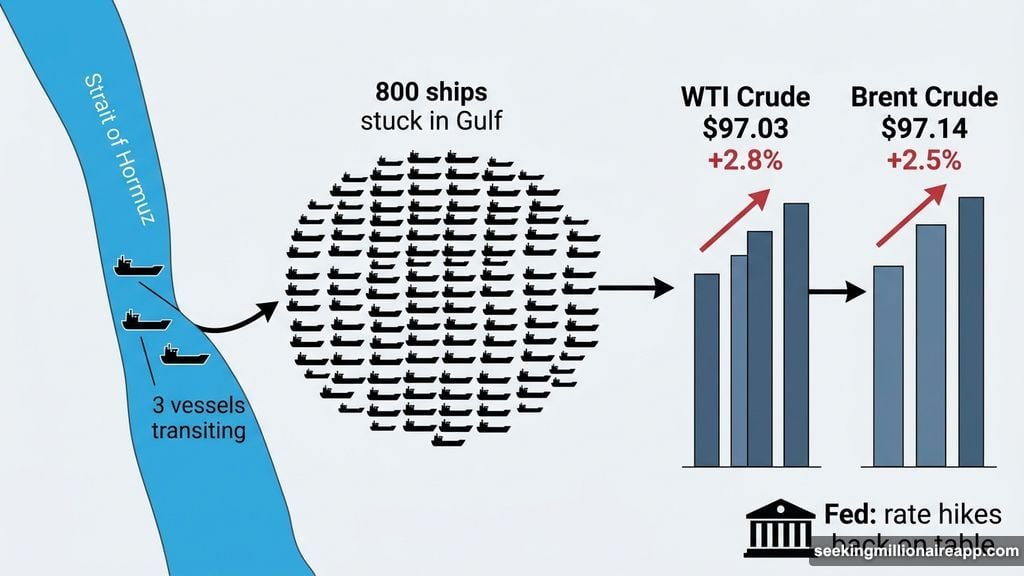
Oil responded immediately. WTI crude jumped 2.8% to $97.03 a barrel. Brent crude climbed 2.5% to $97.14. That reversed most of the previous session’s dramatic 16% plunge in a matter of hours.
The Strait of Hormuz Problem Nobody Can Ignore
The Strait of Hormuz normally handles around 135 ships daily. On Wednesday, just three vessels made the transit.
That stat alone tells you how serious the situation is. Over 800 ships remain stuck in the Gulf right now, waiting for clarity on whether safe passage is even possible.
So energy supply disruption isn’t a theoretical risk anymore. It’s actively happening. And that creates a ripple effect across every major market, including crypto.
Ether dropped 1.1% to $2,185, tracking Bitcoin’s retreat as risk appetite weakened broadly. Gold edged slightly lower to $4,713. The dollar held steady, which suggested markets were cautious but not yet in full panic mode.
Algorithmic Trading Drove the Rally. That’s a Problem.
Market analysts noted something important about Wednesday’s Bitcoin surge. The bounce was driven largely by algorithmic and momentum strategies, not genuine fundamental improvement.
In plain terms, automated systems detected ceasefire news and bought fast. But those same systems have no loyalty when conditions change. Once geopolitical pressure returned, the selling was just as quick.
That kind of rally is fragile by design. Without real, lasting improvement in the macro situation, momentum-driven gains tend to evaporate exactly like this one did.
Fed Minutes Add a Second Layer of Pressure
As if Middle East chaos wasn’t enough, the US Federal Reserve dropped its own concerning signal on Wednesday.
Minutes from the Fed’s March meeting showed policymakers growing increasingly worried about persistent inflation. Some officials argued the Fed should keep rate hikes on the table, specifically if oil prices stay elevated for an extended period.
Here’s why that matters for Bitcoin. A prolonged Hormuz blockade keeps energy costs high. High energy costs keep inflation stubborn. Stubborn inflation gives the Fed every reason to delay any rate cuts that crypto markets have been quietly counting on.
Higher interest rates historically weigh on risk assets. Bitcoin included. So the combination of war uncertainty and a hawkish Fed creates genuinely tough conditions for bulls right now.
What This Means for Bitcoin Going Forward
The macro backdrop for Bitcoin sits in uncomfortable territory. Ceasefire hopes faded almost as quickly as they arrived. The Fed is in no rush to ease. And oil markets remain deeply unsettled.
None of these conditions are permanent. Geopolitical situations shift, sometimes quickly. But until there’s genuine resolution in the Middle East and clearer signals from the Fed, expect Bitcoin to remain sensitive to every headline.
Wednesday’s price action was a useful reminder. In markets this volatile, a $72K touch means very little if the underlying conditions haven’t changed. And right now, they haven’t.