
Online scams just hit a brutal new milestone. The FBI’s latest Internet Crime Report reveals that cyber theft surpassed $20 billion in losses for the first time ever, with more than 1 million complaints filed in 2025 alone.
That’s a massive jump from the $16.6 billion recorded in 2024. And if you’re wondering what’s fueling the surge, two things stand out: cryptocurrency fraud and AI-powered deception are both getting dramatically worse.
FBI Internet Crime Complaints Crossed 1 Million
The FBI’s Internet Crime Complaint Center (IC3) tracks more than two dozen categories of online crime each year. In 2025, phishing and spoofing topped the list with 191,561 complaints. Extortion came in second with 89,129 complaints.
But those headline numbers don’t capture the full picture. The FBI acknowledges that many crimes simply go unreported. In an email to CNET, an FBI representative confirmed the agency “cannot speculate on how many instances of cyber-enabled crime victimization are unreported each year.”
So the real damage could be far higher than $21 billion.
Crypto Investment Scams Hit $11 Billion
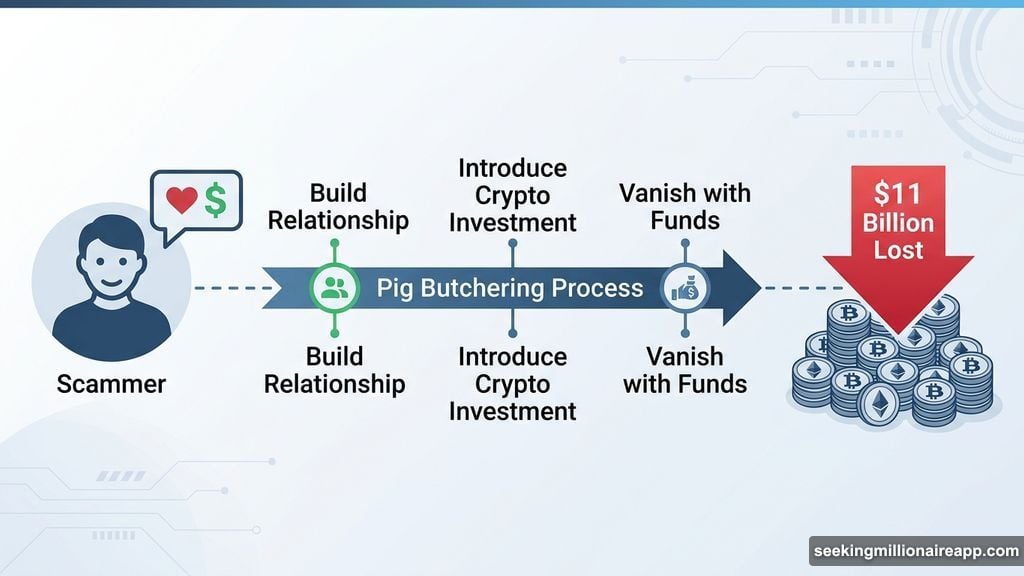
Cryptocurrency fraud remains the single biggest driver of financial losses. The FBI received 181,565 crypto-related complaints in 2025. Investment scams alone accounted for more than $11 billion in losses for US citizens.
These aren’t random opportunists operating from basements. According to the report, “these scams are largely perpetrated by organized criminal enterprises based in Southeast Asia using victims of human trafficking as forced labor to run the scam operations.”
The scams typically follow a familiar pattern called “pig butchering.” A stranger builds a relationship online, gradually introduces the idea of a lucrative crypto investment, and then vanishes with everything once the victim deposits enough money. They’re patient, professional, and devastatingly effective.
Elder Fraud Climbed 37% in a Single Year
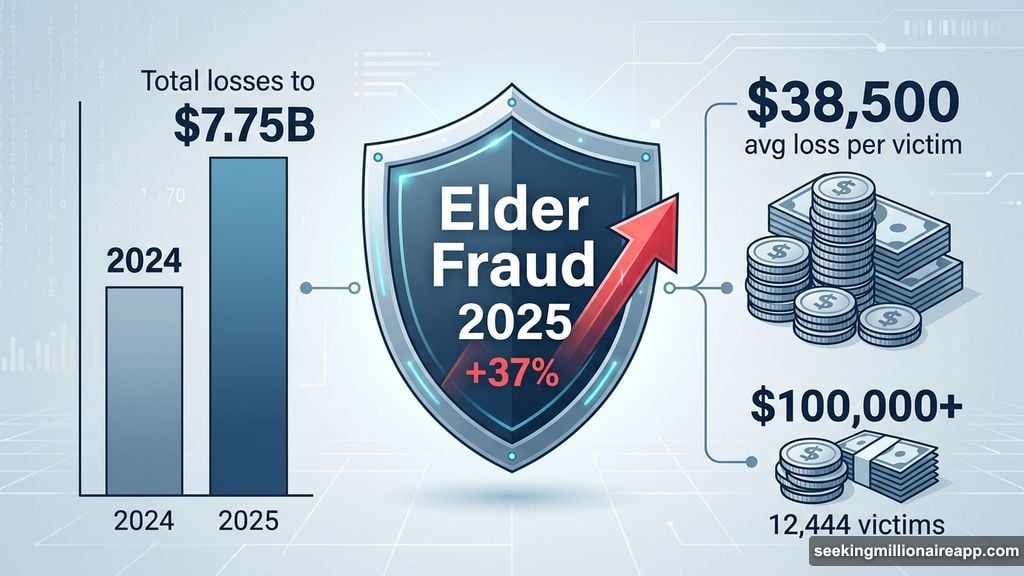
The over-60 demographic continues to take the hardest hits. Elder fraud generated 201,266 complaints and $7.75 billion in reported losses in 2025. That’s a staggering 37% increase from 2024, with an average loss of $38,500 per victim.
Perhaps most alarming is this number: 12,444 people each lost more than $100,000 to scammers. That’s life savings, retirement funds, and home equity wiped out by criminals who specialize in building trust before stealing everything.
AI Voice Cloning Makes Scams Nearly Impossible to Spot
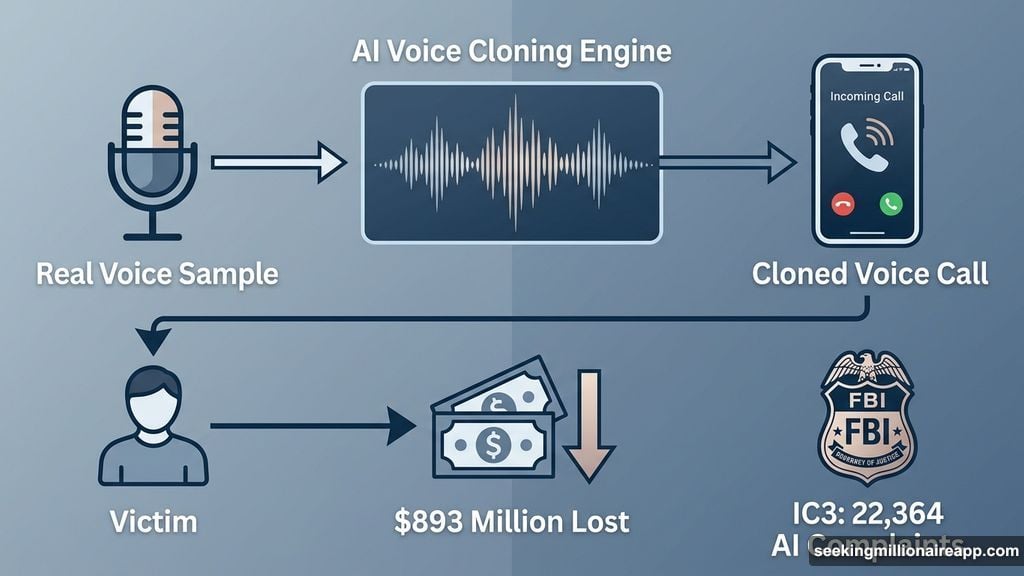
Artificial intelligence is changing the fraud landscape fast. The FBI received 22,364 AI-related complaints costing victims $893 million in 2025. And the National Consumer League published findings showing AI has more than doubled average financial losses year over year.
Two AI-powered scam types are spreading quickly right now.
First, romance and confidence scams now use convincing AI-generated profiles and scripts that mimic genuine human conversation. It becomes genuinely difficult to tell whether you’re talking to a real person or a sophisticated chatbot designed specifically to manipulate you.
Second, grandparent scams have gotten terrifyingly convincing. AI voice cloning can replicate a relative’s voice well enough to make someone believe their grandchild is stranded, injured, or in legal trouble. The emotional urgency overwhelms critical thinking, and victims wire money before verifying anything.
What the FBI Is Doing to Fight Back
The IC3 Recovery Asset Team isn’t standing still. Out of 3,900 reported incidents, the team successfully froze $679 million in assets from $1.2 billion in attempted theft. That’s a 58% success rate, which is genuinely impressive given how fast criminals move funds.
Beyond asset recovery, the FBI launched a new Scam Center Strike Force specifically targeting cryptocurrency investment fraud. The team focuses on identifying the Southeast Asian compounds and criminal leaders behind these operations.
Operation Level Up is another active program worth knowing about. It proactively identifies scams in progress and notifies potential victims. Remarkably, 78% of those contacted had no idea they were being scammed. The operation also targets call center fraud, ransomware attacks, and data breaches.
How to Protect Yourself Right Now
The scale of these numbers feels overwhelming, but there are practical steps that actually reduce your risk.
Be suspicious of any unsolicited investment opportunity, especially those involving cryptocurrency. If someone you met online is enthusiastic about helping you make money through crypto, that’s a red flag regardless of how genuine they seem.
If you receive a distressing call claiming a relative is in danger, hang up and call that family member directly on a number you already have. AI voice cloning is convincing, but it can’t intercept your call to a number saved in your contacts.
For phishing and spoofing attempts, the FBI advises verifying any link before clicking. Look for slight misspellings in URLs, check that the domain matches the company’s official website, and when in doubt, navigate directly to the site rather than clicking through an email.
Report anything suspicious to IC3.gov. Even if you didn’t lose money, reports help the FBI identify patterns and shut down active operations before more people get hurt. The 1 million complaints filed in 2025 represent real intelligence that drives investigations. Your report could be the one that makes a difference.