The Ether Machine’s bold plan to become the premier publicly traded Ethereum treasury company is officially dead.
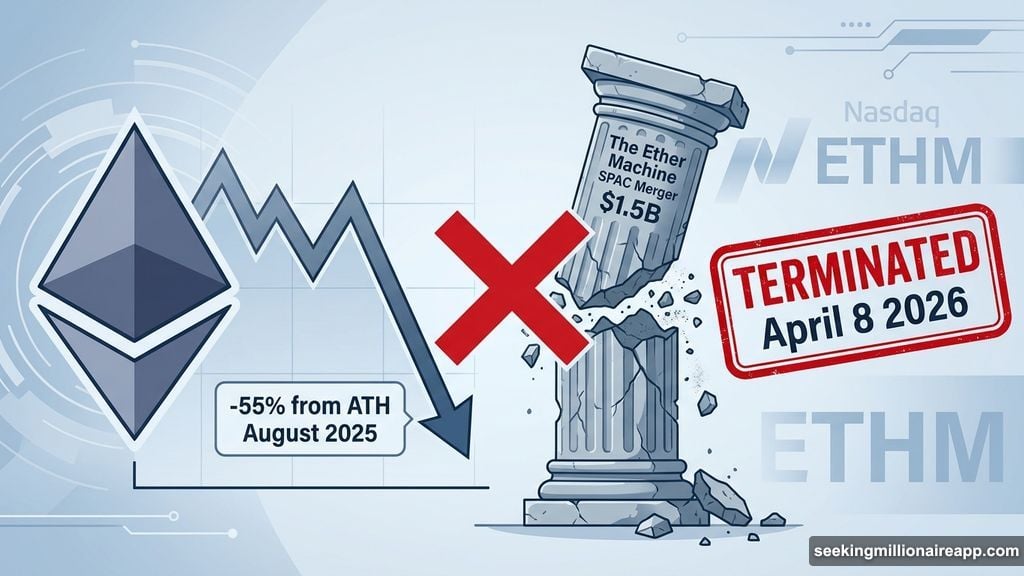
On April 8, 2026, The Ether Machine and Dynamix Corporation mutually terminated their $1.5 billion SPAC merger agreement. The stated reason? Unfavorable market conditions. And the exit comes with a steep cost — a $50 million termination payment due within 15 days.
This wasn’t a small, quiet deal falling apart. It was one of crypto’s most ambitious corporate plays of the past year. Now it’s gone.
A $1.5 Billion Bet That Never Made It to the Starting Line
The Ether Machine first announced its plans to go public back in July 2025. The vision was genuinely impressive — over $1.5 billion in fully committed capital and an initial treasury of more than 400,000 ETH.
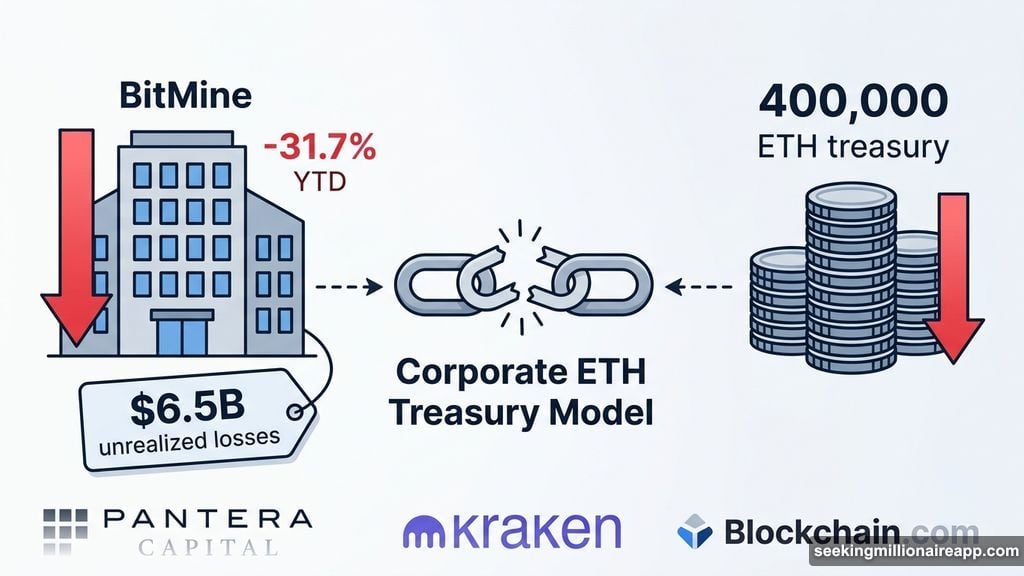
Big names backed the deal. Pantera Capital, Kraken, and Blockchain.com all signed on as supporters. The concept was simple but bold: build a publicly listed company whose entire purpose was holding Ethereum, modeled directly after MicroStrategy’s Bitcoin treasury strategy.
But the market had other ideas.
The firm confirmed the collapse in a post on X, stating the Business Combination Agreement with Dynamix Corporation (Nasdaq: ETHM) was terminated “effective immediately, as a result of unfavorable market conditions.” No ambiguity there.
ETH’s 55% Decline Is the Real Story
The timing tells you everything you need to know about why this deal fell apart.
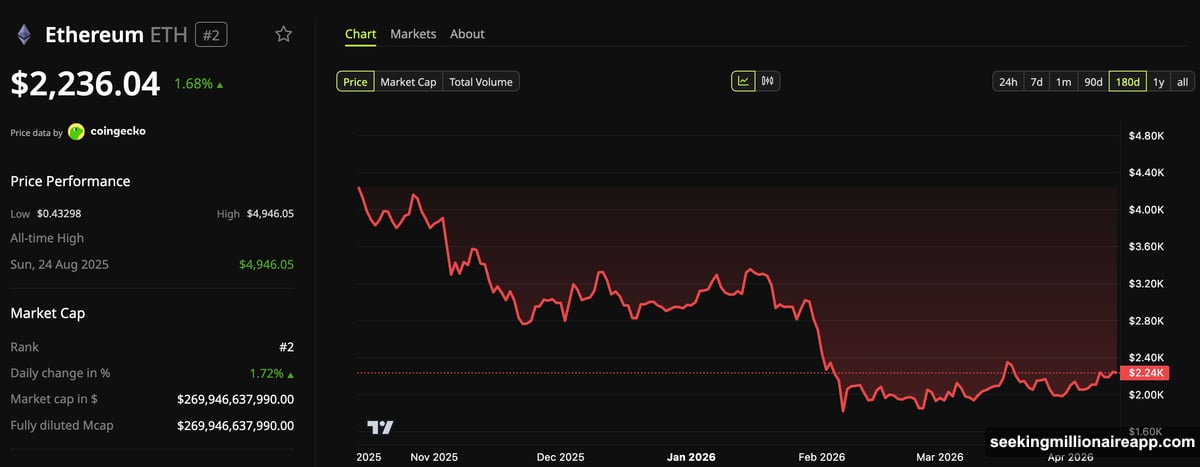
Ethereum has dropped roughly 55% below its all-time high, which was set in August 2025. Asset prices across the crypto market have declined sharply since October. Q1 2026 only added more pressure. Even brief relief from geopolitical tensions wasn’t enough to meaningfully reverse ETH’s slide.
So launching a public company whose entire value proposition depends on ETH going up? Not an easy sell to institutional investors right now.
And The Ether Machine isn’t the only casualty of this environment. BitMine, currently the largest corporate ETH holder, is sitting on roughly $6.5 billion in unrealized losses. Its stock is down 31.7% year to date. That’s a brutal number for any company, but especially one whose core strategy is simply holding a single digital asset.
Bitcoin treasury firms are feeling similar pressure. Some have already moved to liquidate holdings rather than hold through further losses. The corporate crypto treasury model is under serious stress across the board.
What the SEC Filing Actually Says
The termination isn’t just a handshake goodbye. According to the 8-K filing with the SEC, the agreement includes mutual releases, a covenant not to sue, and non-disparagement clauses on both sides.
The financial terms are significant. The designated “Payor” must send $50 million to Dynamix within 15 days of the termination date. On top of that, both parties carry indemnification obligations covering potential legal actions from their respective investor bases.
The indemnification structure is fairly detailed. The Payor covers Dynamix, its sponsor, and their affiliates against losses from actions brought by certain ETHM investors. Dynamix, in turn, covers the other parties against losses from actions brought by its own shareholders. Both sides are legally protected — but both also carry real financial exposure.
Dynamix Now Has a Deadline
With the merger gone, Dynamix Corporation faces its own clock. The SPAC has until November 22, 2026, to complete a new business combination. If no deal comes together by then, the company faces liquidation.
In that scenario, public shareholders would receive pro-rata redemptions from the trust account. It’s not the worst outcome for individual investors, but it represents a total failure of the SPAC’s original purpose.
That’s a roughly seven-month window to find a new partner and close a deal — in a market that just rejected a $1.5 billion Ethereum treasury company backed by some of the biggest names in crypto.
The Bigger Picture for Ethereum Treasury Firms
The collapse of The Ether Machine deal is worth paying attention to even if you’ve never heard of Dynamix Corporation.
The whole premise of crypto treasury companies — holding large amounts of a single asset on behalf of public market investors — works beautifully in a bull market. It falls apart fast when prices drop and don’t recover. MicroStrategy’s Bitcoin strategy looked genius when BTC was climbing. It looked terrifying when prices crashed.
Ethereum’s 55% decline from its all-time high has exposed the same vulnerability for ETH-focused treasury firms. BitMine’s $6.5 billion unrealized loss is a stark illustration of that risk at scale.
The corporate Ethereum treasury model isn’t dead forever. But right now, market conditions have made it almost impossible to launch one successfully. The Ether Machine’s team read that situation clearly — and chose a $50 million exit over an even more expensive failure.
Whether the broader crypto market recovers enough to make these strategies viable again depends entirely on where ETH goes from here. For now, the answer seems clear: investors aren’t willing to bet on it.