
Bitcoin has climbed roughly 20% from its February lows. Most people credit ETF inflows or macroeconomic shifts. But Bitwise CIO Matt Hougan says the real engine behind this rally is sitting inside one company’s balance sheet.
That company is Strategy, formerly known as MicroStrategy. And the funding mechanism powering its Bitcoin buying spree is a preferred stock called STRC.
Strategy’s Bitcoin Hoard Is Getting Massive
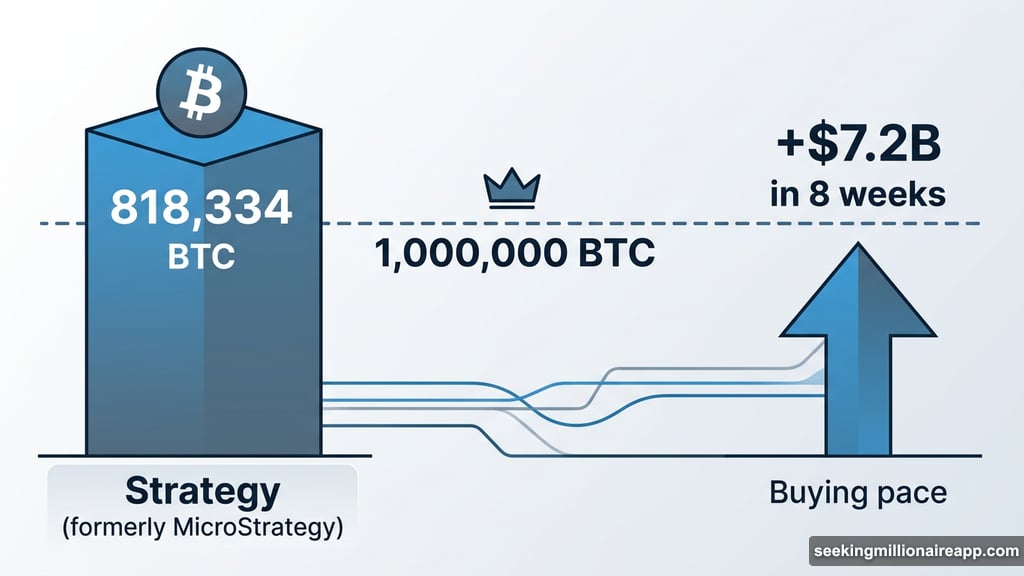
Strategy has purchased $7.2 billion in Bitcoin over just the last eight weeks. That’s not a typo. Eight weeks. The firm now holds 818,334 BTC in total, sitting about 181,666 coins short of the 1 million mark.
To put that in perspective, Galaxy Research head Alex Thorn projects that Strategy could surpass Satoshi Nakamoto’s estimated 1.1 million BTC stash within two years if the current pace continues. That would make Strategy the single largest known Bitcoin holder on the planet.
Hougan put it plainly in a memo published Tuesday: “Bitcoin is up roughly 20% from its February lows, trading around $76,000. Everyone is wondering if the rally can continue. To a large degree, the answer lies with Strategy.”
STRC Preferred Stock Is Doing the Heavy Lifting
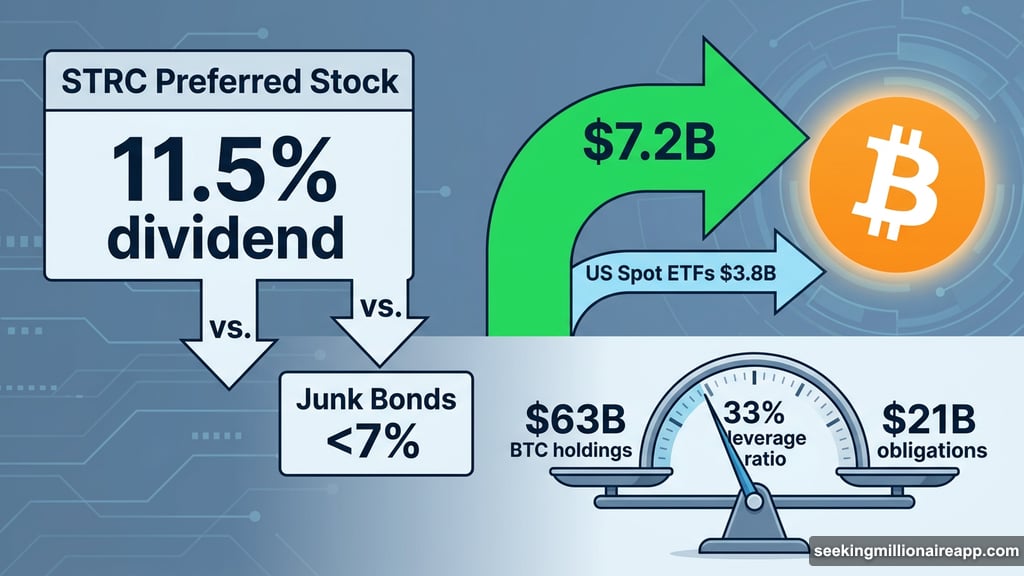
So where is Strategy finding the cash to buy billions in Bitcoin? The answer is STRC, its preferred stock offering that carries an 11.5% dividend.
That yield looks very attractive right now. Junk bonds are currently offering under 7%, and capital is slowly rotating out of private credit markets. So investors hungry for yield are finding STRC genuinely compelling by comparison.
Hougan also highlighted that in 2026 alone, Strategy’s STRC has financed ten times more Bitcoin buying than the entire US spot ETF market combined. That’s a staggering gap that most market watchers haven’t fully absorbed yet.
“I don’t think we’re done STRC-ing at all,” Hougan wrote. And the math backs him up. Strategy currently holds about $63 billion in Bitcoin against $21 billion in total obligations, putting its leverage ratio at roughly 33%. Hougan believes the company has room for another $10 to $15 billion in STRC issuance before investors start raising serious concerns.
ETF Inflows Added Fuel to the Fire
Strategy isn’t the only buyer propping up Bitcoin prices. ETF inflows have contributed meaningfully too, pulling in $3.8 billion since March 1. Plus, long-term holders have been quietly accumulating through the dip.
But Hougan was direct about the pecking order. Strategy, he argued, has been the single biggest factor in BTC’s recovery. The sheer scale of its weekly purchases creates sustained demand pressure that ETFs and individual buyers simply can’t match right now.
Not Everyone Is Convinced
Strategy’s approach hasn’t gone unchallenged. Economist Peter Schiff has been a persistent critic, warning that the Bitcoin-backed yield model powering STRC could eventually unravel. His concern centers on a potential feedback loop where falling Bitcoin prices erode the collateral backing Strategy’s obligations, making new STRC issuance harder to justify.
Hougan acknowledged this risk indirectly. He identified the key metric to watch as Strategy’s total obligations, meaning debt plus preferred equity, as a percentage of its Bitcoin holdings. At 33% today, there’s still meaningful headroom. But if that ratio climbs toward 50%, the market will start asking harder questions.
The Number That Could Slow This Rally Down
Bitcoin’s near-term trajectory now depends heavily on whether Strategy keeps buying. And Strategy’s ability to keep buying depends on STRC demand holding steady.
That 33% leverage ratio is the canary in the coal mine. If Bitcoin prices drop significantly, that ratio rises fast. A sharp price decline could compress Strategy’s buying capacity precisely when the market needs it most. For now, though, the math supports continued accumulation, and Hougan sees no signs of that changing soon.
Whether you view Strategy’s approach as visionary treasury management or a high-stakes bet, one thing is clear. It’s moving markets in a way that few anticipated. And Bitcoin watchers who aren’t tracking STRC issuance alongside price charts are missing a significant piece of the puzzle.