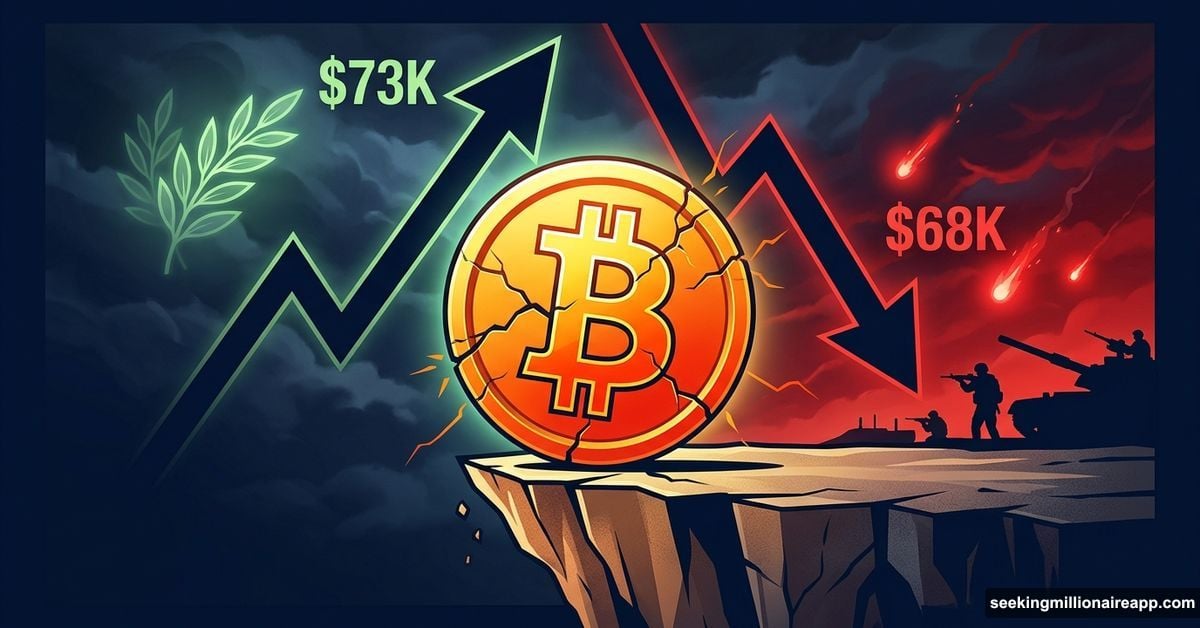
Bitcoin’s relief rally feels exciting. But right now, it’s hanging by a diplomatic thread.
Iran’s parliament speaker just threw a wrench into weekend peace talks before they even started. That single political statement could determine whether Bitcoin pushes toward $80,000 or retreats back to $68,000. Here’s what’s happening and why the next two days matter so much.
Iran’s Preconditions Threaten Islamabad Talks
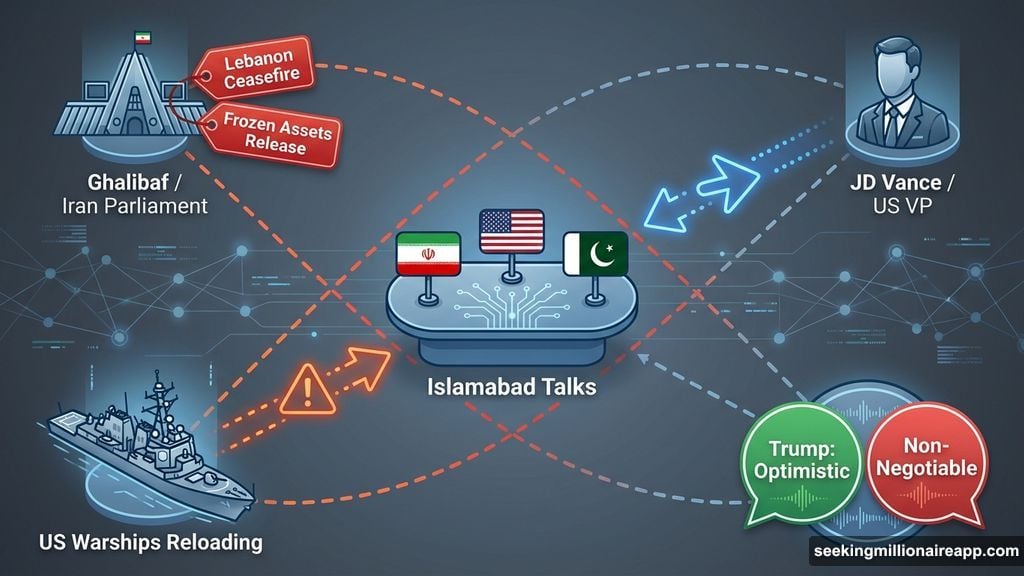
Mohammad Bagher Ghalibaf, Speaker of Iran’s Parliament, publicly stated that two conditions must be met before Tehran will engage in weekend negotiations. Iran wants a Lebanon ceasefire and the release of frozen Iranian assets first. These aren’t suggestions. Ghalibaf called them non-negotiable.
The timing stings. His statement arrived just hours before US Vice President JD Vance departed for Pakistan-brokered talks in Islamabad. So negotiations haven’t even started yet, and the conditions for starting them are already contested.
Meanwhile, President Trump told the New York Post that US warships are being reloaded in case talks collapse. The White House separately told Fox News that Trump remains “optimistic a deal can be reached.” Both things are true at the same time, which pretty much sums up how fragile this moment is.
A CNN report added another layer. Trump reportedly had a tense phone call with Israeli Prime Minister Benjamin Netanyahu shortly before Israel announced steps toward direct Lebanon ceasefire talks. Sources suggest Trump pushed Netanyahu to de-escalate, partly to satisfy Iran’s preconditions. Whether that pressure worked is still unclear.
Bitcoin’s 5% Jump Already Shows What a Deal Could Do
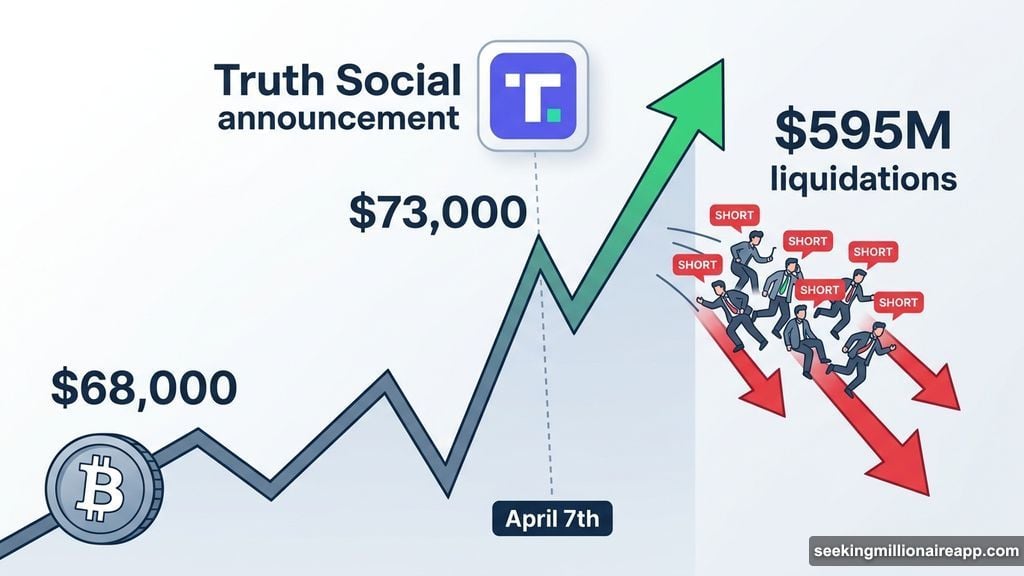
When Trump announced a two-week ceasefire with Iran via Truth Social on April 7th, Bitcoin surged 5% almost immediately. BTC climbed to $72,700, eventually settling just under $73,000 where it trades today.
That single announcement also triggered roughly $595 million in crypto futures liquidations. Short sellers absorbed most of those losses, which tells you how many traders had been betting against a recovery.
![A split-screen chart showing Bitcoin price action spiking on April 7th ceasefire news alongside a diplomatic tension meter, representing geopolitical risk impact on BTC price]
The jump made sense. Easing geopolitical tension reduces the risk premium baked into volatile assets like Bitcoin. When war fears loosen, money flows back into trades that felt too risky days before. Plus, softer inflation signals had already been nudging crypto higher heading into that week.
But here’s the thing. BTC surged on the announcement of a ceasefire, not the confirmation of a lasting deal. There’s a big difference between those two things.
Crypto Derivatives Markets Stay Cautious
A Bybit and Block Scholes derivatives report released April 10th found that trader sentiment hasn’t fully flipped bullish despite the price move. Options markets show narrowing downside premiums, which is encouraging. But there’s no decisive shift toward bullish positioning yet.
That’s the derivatives market quietly saying: we’re not convinced this holds.
Experienced traders have seen this pattern before. An asset pops on good news. Retail buyers chase the move. Then the geopolitical situation complicates itself and the pop unwinds fast. The cautious positioning in options markets suggests sophisticated traders aren’t fully committing to the upside scenario yet.
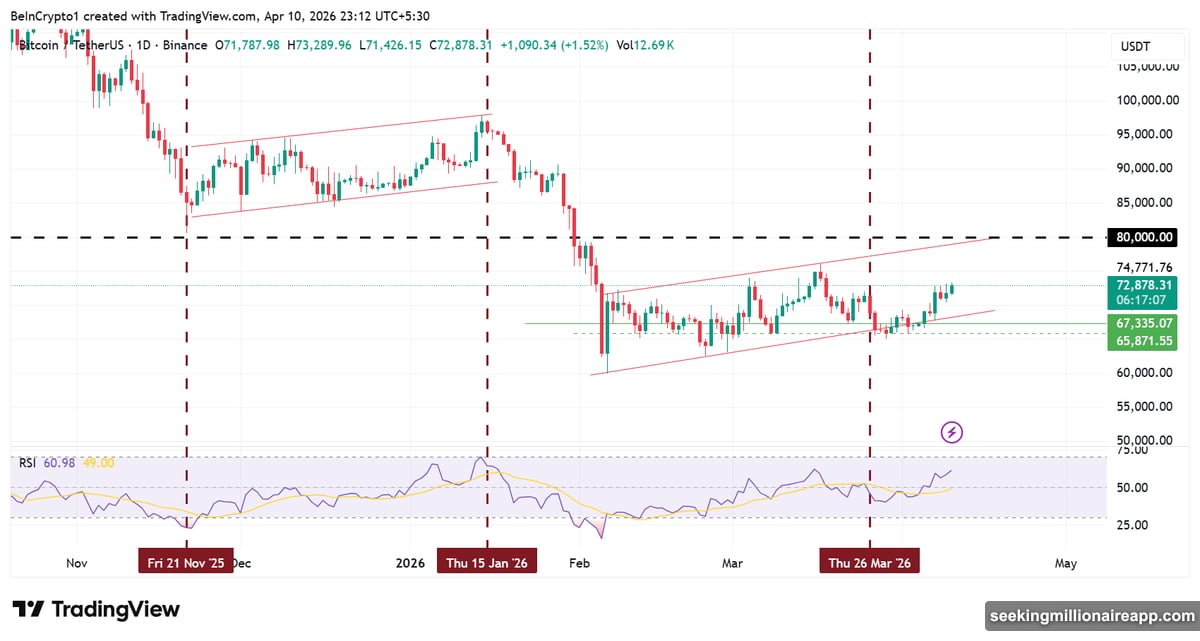
BTC currently sits at the very top of the $65,000 to $73,000 trading range that has contained price action since the conflict began in late February. The range matters because breaking above it with conviction requires sustained positive news, not just a 48-hour ceasefire announcement.
What a Deal or No Deal Means for BTC Price
The math here is fairly straightforward, even if the diplomacy isn’t.
A successful outcome from Islamabad could push BTC toward $75,000 to $80,000. Geopolitical risk premiums would continue unwinding, investor confidence would build, and the technical breakout above $73,000 would attract fresh buyers. That’s the bull case.
A collapse in talks carries the opposite risk. Failed negotiations could trigger renewed concerns about Hormuz Strait disruptions, which would spike oil prices and shake risk assets broadly. In that scenario, BTC risks retesting $68,000 support, which would wipe out most of this week’s gains.
![Map graphic of the Middle East with Bitcoin price range overlaid showing $68K support and $80K resistance zones, illustrating how geopolitical outcomes could push price in either direction]
VP Vance gave a hint about the US negotiating posture before departing. “If Iranians are willing to negotiate in good faith, we’re certainly willing to extend the open hand. If they try to play us, they’ll find the negotiating team isn’t very receptive,” he said. The president, according to Vance, has issued “pretty clear guidelines” for the team.
That’s diplomatic language for: we want a deal, but we have limits.
Why This Weekend Is Different From Normal Volatility
Most Bitcoin price swings come from internal crypto market dynamics. Liquidation cascades. Whale movements. ETF flows. Exchange drama. Traders understand those mechanisms and price them in relatively quickly.
What’s harder to price is genuine geopolitical uncertainty with this many moving pieces. You have Iran setting preconditions. You have Trump simultaneously projecting optimism and reloading warships. You have Netanyahu under pressure from multiple directions. And you have a Pakistan-brokered negotiation session that hasn’t officially started yet.
Each of those variables can shift independently. A single tweet, statement, or news leak over the weekend could move Bitcoin by thousands of dollars in either direction within minutes.
So the caution showing up in derivatives markets makes complete sense. Smart money is hedging rather than betting big because the outcome genuinely depends on diplomacy happening in real time over the next 48 hours.
Personally, this feels like one of those rare moments where macro news genuinely outweighs everything else in crypto. The technical chart, the on-chain data, the macro rate expectations, all of it becomes secondary to what happens in Islamabad this weekend.
Watch the diplomatic headlines closely. Bitcoin’s next major move is being decided in a negotiating room, not on a trading floor.