
The crypto market just got a massive jolt from Washington. And short sellers paid a brutal price for not seeing it coming.
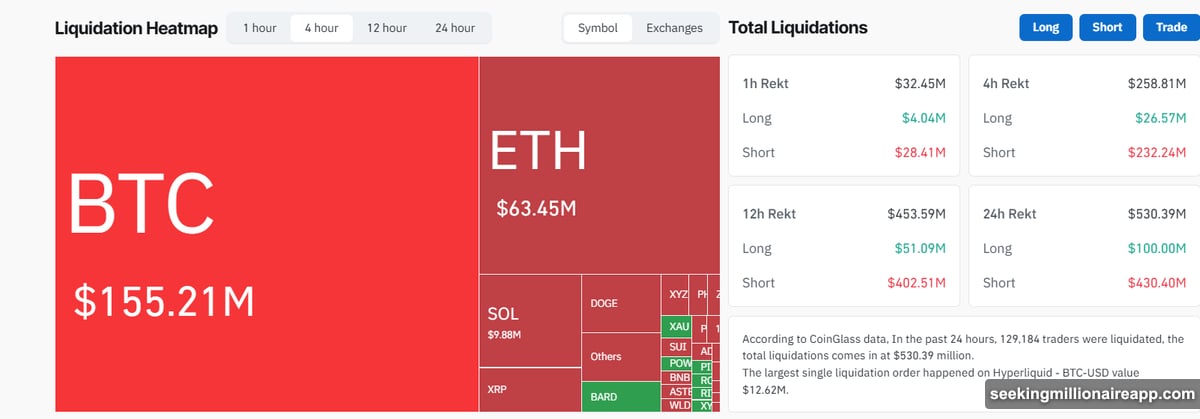
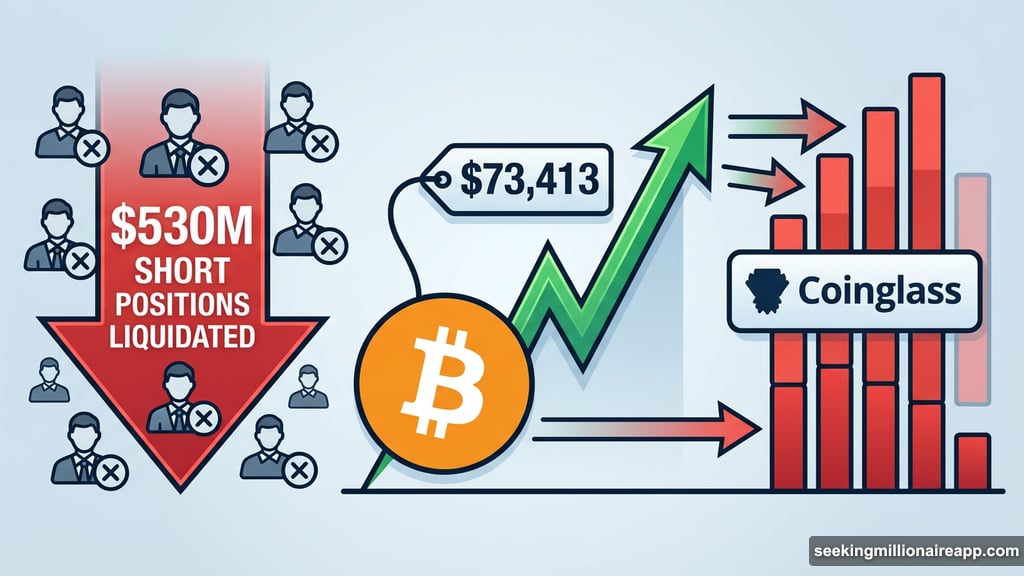
Over $530 million in Bitcoin short positions were liquidated in a single 24-hour window on March 4, 2026. Nearly $30 million of that got wiped out in just one hour. The trigger? The White House officially nominated Kevin Warsh — a former Federal Reserve Governor with a well-known soft spot for digital assets — as the next Fed Chairman.
Markets moved fast. And traders betting against Bitcoin got absolutely steamrolled.
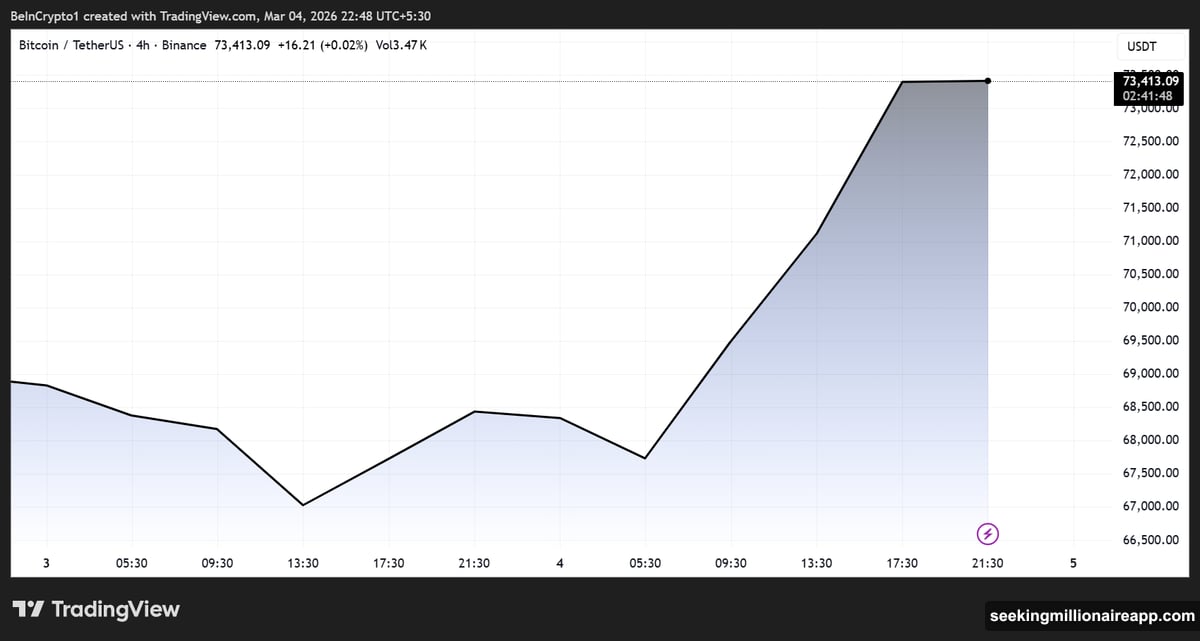
Bitcoin Smashes Past $73,000 on the Warsh News
Bitcoin didn’t just inch upward. It surged almost 11% from the previous day, reclaiming the $73,000 psychological level and trading at $73,413 at the time of writing. That rally added roughly $123 billion to Bitcoin’s total market cap in under 12 hours.
Ethereum joined the party too. ETH climbed 11% over the same period, adding about $26 billion to its market cap. The entire crypto derivatives market felt the shockwave.
So what exactly happened to those short sellers? When prices spike this sharply, traders who bet on prices falling get forced into automatic buybacks. Those buybacks push prices even higher, which triggers more liquidations. It’s a brutal feedback loop — and Coinglass data confirmed the scale of the carnage.
Kevin Warsh’s Nomination Flipped the Macro Script
The White House announcement was direct and specific. Warsh was nominated as Chairman of the Board of Governors of the Federal Reserve System for a four-year term, along with a 14-year membership term starting February 1, 2026.
Why does this matter so much for crypto? Warsh isn’t just neutral on digital assets. He’s widely seen as sympathetic toward them — a sharp contrast to some of his predecessors. Markets immediately interpreted his nomination as a potential policy shift toward a more Bitcoin-friendly Federal Reserve environment.
That kind of macro signal is enormously powerful. Institutional investors don’t just trade on today’s price. They position around what they think policy will look like months from now. And a pro-Bitcoin Fed Chair is a very different signal than a skeptical one.
Gold Drops 3% While Bitcoin Surges — That’s Not a Coincidence
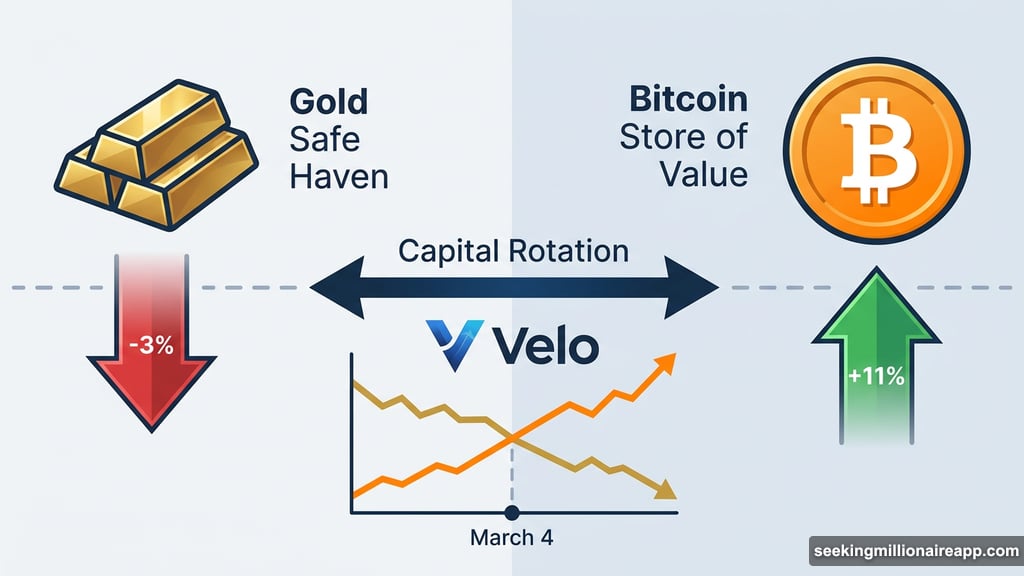
Here’s where things get really interesting. While Bitcoin climbed nearly double digits, Gold fell 3% on the same day. That’s a sharp divergence — and it tells a story about where capital is moving.
Traditional safe haven assets like Gold typically attract money during periods of uncertainty. But this time, investors appeared to rotate out of Gold and into Bitcoin instead. That kind of capital flow suggests a growing number of large players now view Bitcoin as a legitimate store of value in its own right.
The contrast between the two assets on March 4 was striking enough that market analytics platform Velo flagged it publicly, calling the divergence “wild.” It’s hard to argue with that description.
Michael Saylor Adds Fuel to the Fire
Meanwhile, MicroStrategy’s Michael Saylor didn’t stay quiet. As prices surged, he posted a pointed message: “We can buy more Bitcoin than they can sell.” It was a direct shot at short sellers — and a signal that institutional buyers remain aggressive.
Saylor’s public stance matters because MicroStrategy remains one of the largest institutional holders of Bitcoin. When he signals continued buying intent during a short squeeze, it reinforces upward pressure. Short sellers aren’t just fighting price momentum. They’re fighting institutional conviction backed by real balance sheets.
The combination of Warsh’s nomination and Saylor’s posture points to a market increasingly shaped by macro policy expectations and institutional positioning — not just retail speculation.
What This Moment Actually Means
Short squeezes happen. But this one was different in scale and cause. A single policy announcement from the White House reshaped market dynamics in real time, triggering hundreds of millions in forced liquidations within hours.
That kind of sensitivity tells you something important. Bitcoin’s price isn’t just about supply and demand on exchanges anymore. It’s deeply connected to monetary policy expectations, Federal Reserve leadership, and how institutional players interpret Washington’s posture toward digital assets.
If Warsh gets confirmed and takes a genuinely crypto-friendly stance at the Fed, March 4, 2026 might look like the beginning of something much larger. Short sellers who missed that signal today will be watching very carefully from here on out.