
Ethereum just cleared a technical hurdle that’s haunted blockchain developers for years. Vitalik Buterin claims the network finally solved the “trilemma” problem through production-ready code already running on mainnet.
But here’s the catch. Full security won’t arrive until 2027 at the earliest. Some critical upgrades might not land until 2030. So Ethereum’s big breakthrough comes with a multi-year implementation timeline that tests everyone’s patience.
What Changed Under the Hood
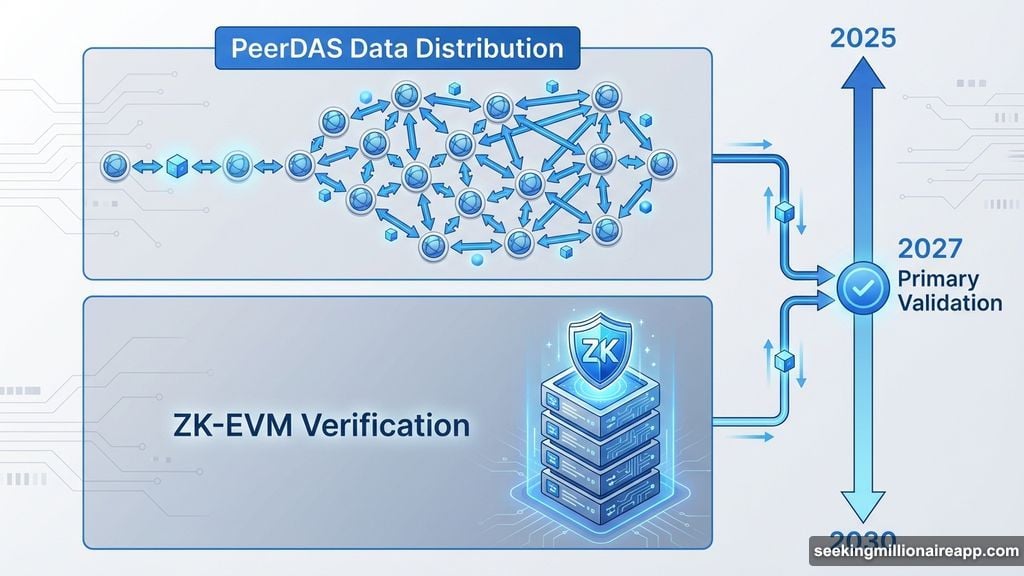
Buterin pointed to two technologies working together. First, zero-knowledge Ethereum Virtual Machines reached alpha stage. These ZK-EVMs verify transactions faster and cheaper without exposing the underlying data.
Second, PeerDAS went live on mainnet. This data distribution method handles massive information loads across the network. Think BitTorrent-style file sharing but with blockchain consensus baked in.
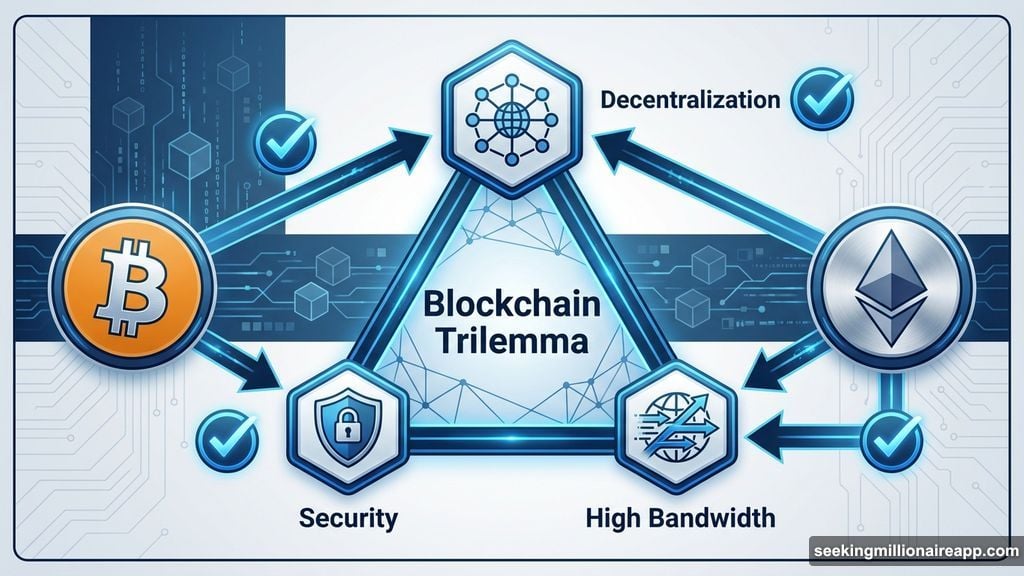
Together, they tackle the notorious blockchain trilemma. That’s the engineering challenge of balancing three things at once: decentralization, security, and high bandwidth. Most blockchains nail two but stumble on the third.
Bitcoin prioritizes decentralization and security. Yet it struggles with data throughput. Newer chains boost speed but often sacrifice decentralization. Ethereum’s upgrade aims to deliver all three simultaneously.
Production Quality Doesn’t Mean Ready
Buterin emphasized the distinction between working code and battle-tested systems. The technology performs well right now. However, safety hardening takes years of real-world stress testing.
ZK-EVMs won’t become the primary validation method until sometime between 2027 and 2030. That’s when they’ll handle core block verification instead of just supporting Layer 2 solutions.
Meanwhile, Ethereum plans incremental improvements throughout 2025. The gas limit will likely increase this year. New protocol changes would separate transaction proposers from block builders. That separation lets each block handle more computational work without overwhelming validators.
Plus, the network wants to expand how much data each block can process. More data capacity means higher throughput without forcing nodes to store impossible amounts of information.
Distributed Block Building Changes Everything
Buterin outlined a longer-term vision called distributed block building. Right now, single entities construct complete transaction sets. That creates centralization risks and potential censorship vulnerabilities.
Distributed building spreads this work across multiple parties. No single validator or builder can see or control an entire block. Transactions get processed more evenly across geographic regions. Censorship becomes nearly impossible.
However, Buterin acknowledged this represents a “holy grail” scenario years away from implementation. The network doesn’t need it immediately. But he argues Ethereum should develop the capability even if deployment happens far in the future.
This approach reflects lessons learned from years of scaling debates. Quick fixes often create new problems. Better to build robust infrastructure slowly than rush flawed solutions to production.
Why This Matters Beyond Ethereum
Ethereum faces brutal competition from faster, cheaper blockchains. Solana, Avalanche, and newer chains offer transactions that cost fractions of a cent and settle in seconds.
Ethereum’s average transaction fees remain higher despite significant improvements through Layer 2 rollups. Users notice when competing chains deliver similar security at lower prices. Developers increasingly launch projects on alternative platforms first.
These competitive pressures force Ethereum to accelerate development without cutting corners on security. The ZK-EVM and PeerDAS combination attempts to thread that needle. Deliver massive performance gains while maintaining the decentralization that defines Ethereum’s value proposition.
Other blockchain projects watch closely. If Ethereum successfully deploys these technologies, expect competitors to adopt similar approaches. The technical breakthroughs benefit the entire ecosystem regardless of which chain you prefer.
Reality Check on the Timeline
Buterin’s enthusiasm makes sense from a technical standpoint. The core technologies work. Tests show promising results. Code runs on mainnet today.
Yet “production-quality performance” and “mainnet ready” mean different things. Ethereum processes hundreds of billions in value daily. Every upgrade carries enormous risk. One critical bug could freeze transactions or expose user funds.
That explains the conservative rollout schedule. Better to take five years getting it right than rush changes that compromise network security. Users and developers might grumble about the wait. But nobody wants another major exploit or network halt.
The question becomes whether Ethereum can maintain market position during this extended transition. Competitors won’t pause development. New scaling solutions emerge constantly. Five years in crypto equals multiple technology generations in traditional industries.
Ethereum bets its established network effects, developer community, and security reputation carry it through. Meanwhile, the technical foundation shifts underneath everything. It’s ambitious. Maybe necessary. Definitely risky.
Keep watching those deployment dates. The real test comes when these systems handle billions in daily volume without breaking. Talk is cheap. Working code proves everything.