
Millions of altcoins died after 2024. Gen Z didn’t quit crypto—they just found a better game.
Young traders are abandoning long-shot token bets for binary prediction markets like Polymarket and Kalshi. Why? Faster results, clearer odds, and no more waiting for worthless tokens to moon. When your salary can’t cover rent, quick wins beat three-year roadmaps.
The Dead Coin Graveyard Left Gen Z Holding Bags
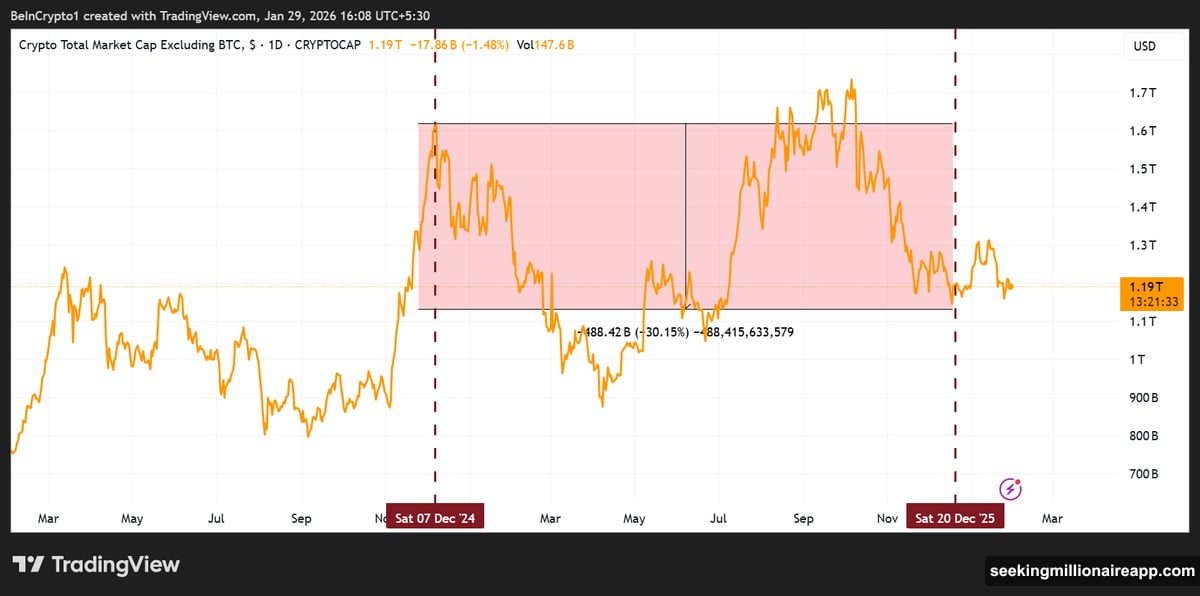
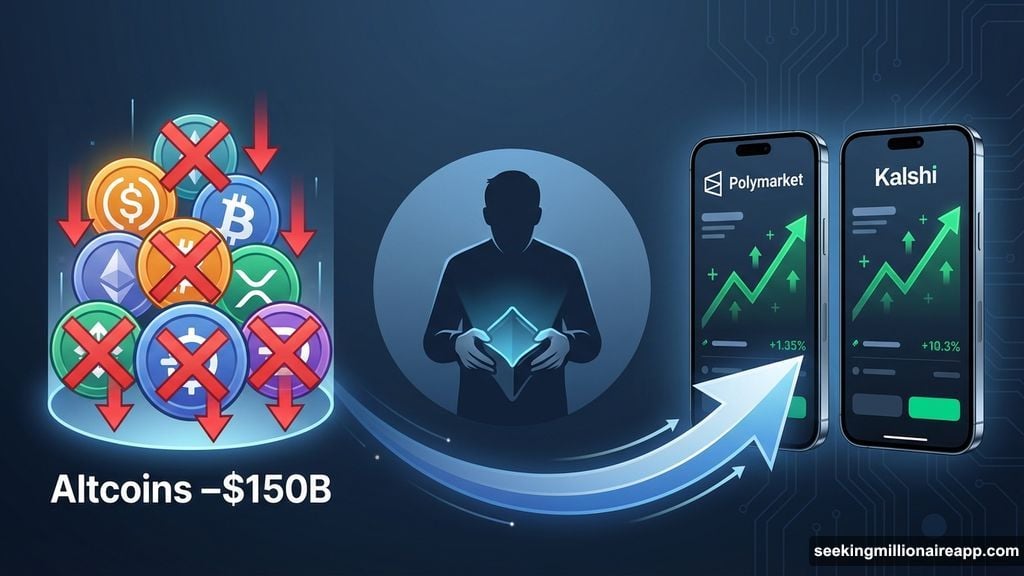
Altcoins crashed $150 billion between late 2024 and late 2025. Millions of tokens went to zero as liquidity vanished and insiders cashed out.
Gen Z got wrecked. They watched coins with fancy whitepapers and influencer hype turn into digital dust. Auto-liquidations hit wallets hard. Team unlocks dumped supply on retail buyers. The narrative-driven token game stopped working.
But here’s the twist. They didn’t leave crypto. They just stopped believing in promises and started betting on outcomes instead.
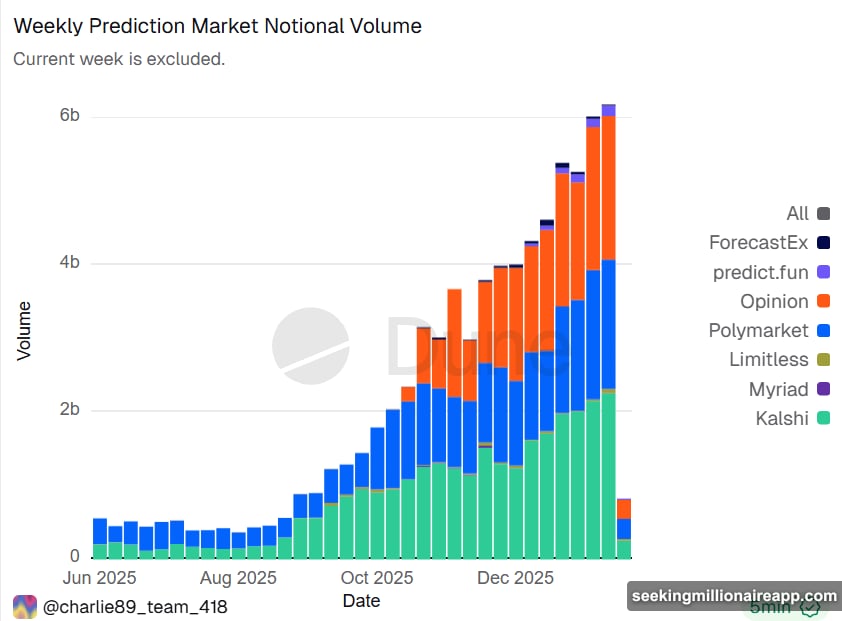
Prediction market volumes tell the story. Weekly activity exploded from $500 million in mid-2025 to nearly $6 billion by January 2026, according to Dune data. Meanwhile, crypto exchange app downloads dropped while Polymarket and Kalshi installs multiplied several times over.
Your $39K Salary Won’t Buy Token Dreams
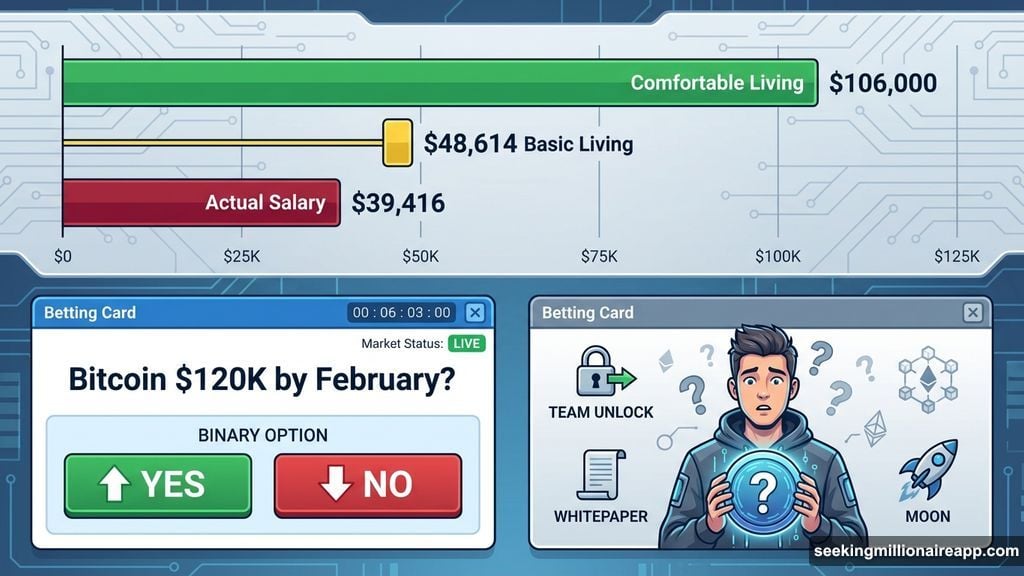
The math is brutal for Gen Z. Average salary sits at $39,416 per year. That’s $9,000 below the $48,614 needed for basic living. Comfortable living requires around $106,000.
So traditional advice—save for retirement, invest long-term, wait for compound growth—feels like fantasy. When rent eats most of your paycheck, slow-growth strategies don’t cut it.
Crypto tokens promised quick wealth. Instead, they delivered slow losses and locked liquidity. Prediction markets offer something different: binary bets that resolve fast against real events.
Plus, there’s no complex tokenomics to decode. No unlock schedules to fear. No team wallets dumping on you after six months. You bet yes or no. The market resolves. You get paid or you don’t.
That simplicity matters when you’ve been burned before.
Binary Bets Beat Belief-Based Tokens
Prediction markets strip speculation down to pure outcomes. Will Bitcoin hit $120K by February? Yes or no. Will Trump win the next debate? Binary.
Compare that to meme coins. You buy a token because someone tweeted a funny dog picture. You hold because “community” and “vibes.” You wait for… what exactly? A listing? A partnership announcement? Another tweet?
The narrative game requires constant belief maintenance. Prediction markets require probability assessment. That’s a huge shift in how Gen Z approaches crypto risk.
Survey data from The New Consumer and Coefficient Capital shows 17% of Gen Z and Millennials know about Polymarket. Only 4% of Gen X and older users do. That 4x awareness gap mirrors how earlier crypto products spread—DeFi, NFTs, perpetual futures—before going mainstream.
In fact, prediction markets might be blockchain’s most durable consumer use case yet. Every function runs on-chain: custody, settlement, payouts. Stablecoins power the system. Wallets are the interface. Even crypto itself ranks among top markets by volume, with Bitcoin price contracts constantly trading.
Low Attention Creates Next Opportunity
Search interest for prediction markets recently dropped to six-month lows. Some see that as a warning sign. Others recognize the pattern.
Low attention has historically preceded the next crypto adoption wave. Right now, less competition means better odds for early participants. Regulatory pressure is easing. Mainstream platforms are integrating prediction products. A generation of traders already knows how to use crypto rails.
Meanwhile, Gen Z keeps optimizing for speed over belief. Fast binary bets fit tighter incomes better than multi-year token narratives. Liquidity and autonomy matter more than yield when you can barely cover rent.
Speculation Didn’t Die. It Just Got Smarter
Gen Z isn’t less speculative than before. They’re more selective about where they take risk.
The shift from meme coins to prediction markets isn’t a rejection of crypto infrastructure. It’s a repricing of speculation itself. The 2021-2024 cycle rewarded narrative belief and token proliferation. The post-crash environment favors clarity, outcome-driven risk, and fast settlement.
For a generation facing wage pressure and limited capital buffers, that’s a rational response. Probability beats promises when you’re starting from behind financially.
The trade changed. The appetite for risk didn’t. And prediction markets now capture what meme coins used to provide: accessible speculation, clear mechanics, and the chance to win fast.
Only this time, the game isn’t rigged from the start.