Free Bitcoin sounds like a dream. But it used to be very real — and Jack Dorsey thinks it’s time to bring that idea back.
Dorsey, co-founder of Twitter (now X) and CEO of Block, recently hinted at reviving the Bitcoin faucet. The crypto community immediately took notice. And honestly, it makes a lot of sense given where Bitcoin stands today.
What a Bitcoin Faucet Actually Does
Think of a faucet like a sample table at a grocery store. Instead of a cracker with cheese, you get a tiny amount of Bitcoin — just enough to try it out.
Users typically complete simple tasks to earn their share. Solving a captcha, watching a short ad, or signing up for a service. The idea isn’t to make you rich. It’s to get Bitcoin into your hands so you can see how it works firsthand.
That hands-on introduction matters more than most people realize. Reading about wallets and transactions is one thing. Actually sending and receiving real BTC is something else entirely.
Bitcoin Faucets Once Changed Everything
Back in 2010, Bitcoin developer Gavin Andresen built one of the first well-known faucets. It gave away up to 5 BTC per user — just for completing a captcha.
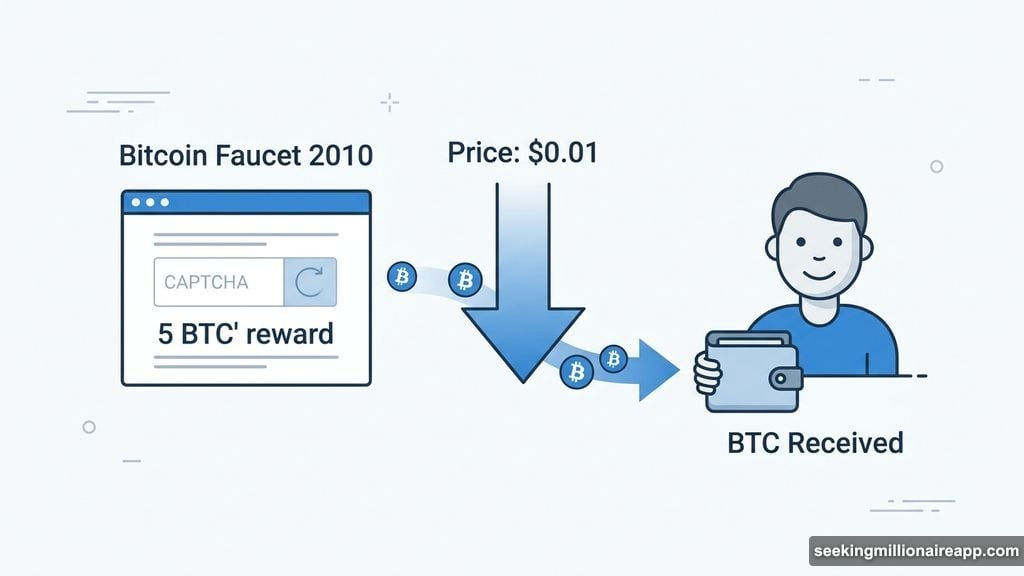
At the time, those 5 BTC were worth almost nothing. In hindsight, they represented one of the most generous onboarding tools in crypto history. Thousands of users learned how Bitcoin worked without risking a single dollar of their own money.
But as Bitcoin’s price climbed from cents to thousands of dollars, giving it away became impossible to sustain. Faucets quietly faded into the background. The window for free BTC essentially closed.
Why Dorsey’s Signal Matters Right Now
Timing is everything here. Bitcoin isn’t the obscure experiment it was in 2010. Spot Bitcoin ETFs just received approval in the United States. Payment system integration keeps growing. Some governments are even exploring Bitcoin as part of strategic financial reserves.
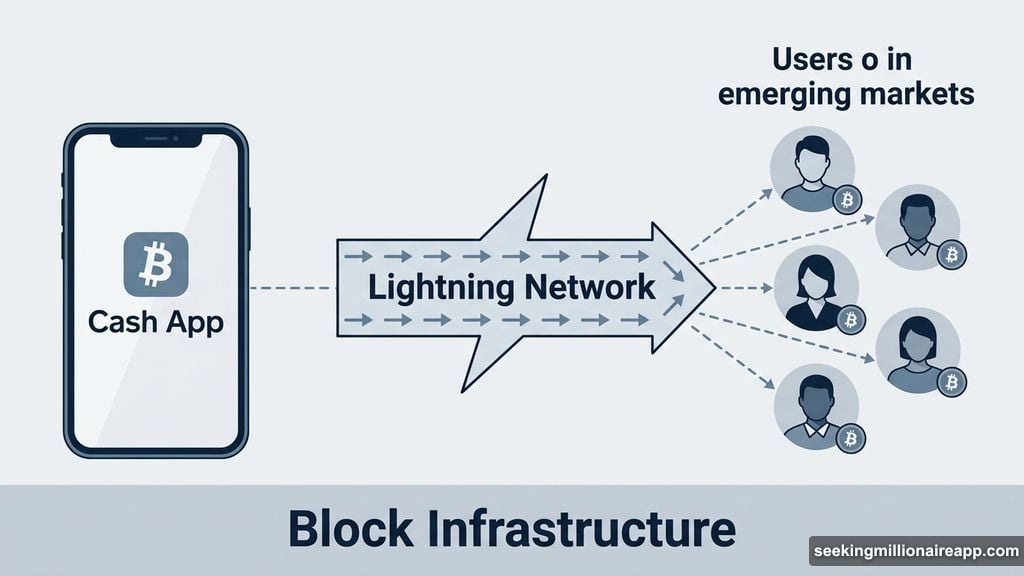
Block already helps millions of users buy and hold Bitcoin through Cash App. A faucet could serve as the on-ramp for people who still feel intimidated — particularly users in emerging markets where traditional banking remains out of reach.
So this isn’t just nostalgia for the early days. A Block-backed faucet could trigger a genuine onboarding wave at a moment when Bitcoin adoption is already accelerating on multiple fronts.
Modern Faucets Have Grown Up Too
Today’s faucets look very different from Gavin Andresen’s simple captcha page. Many now include gamified learning modules, referral systems, and micropayment rewards tied to real engagement.
One big unknown is whether Dorsey’s version would use the Lightning Network. Lightning enables instant, low-cost Bitcoin payments — making it far more practical for distributing tiny amounts at scale. Block has invested heavily in Lightning infrastructure, so that connection seems natural.
Still, Block hasn’t released any technical details yet. How much BTC gets distributed, whether limits apply, and exactly how users earn their share all remain open questions.
The Bigger Idea Behind Free Bitcoin
Dorsey has always pushed for Bitcoin as an open financial system — not just a speculative asset for investors. That perspective matters here.
Faucets reflect Bitcoin’s original ethos: peer-to-peer money that anyone can use, regardless of wealth or geography. Getting Bitcoin into new hands without requiring an upfront purchase is the most direct expression of that philosophy.
Some community members are already drawing comparisons to the early days. The excitement feels genuine rather than hype-driven. A well-executed faucet backed by Block’s infrastructure could make that founding vision tangible for millions of new users.
The market is watching closely. What Block reveals in the coming days will determine whether this hint becomes history — or just another interesting idea that never quite materialized.