
Crypto just crossed a line that the industry has been trying to reach for years. Kraken has become the first digital asset company to secure a master account at the Federal Reserve, giving it direct access to the same payment rails that thousands of U.S. banks and credit unions use every single day.
This isn’t a minor regulatory tweak. It’s a fundamental shift in how crypto fits into the American financial system. And the timing couldn’t be more interesting.
Fed Master Account: What That Actually Means
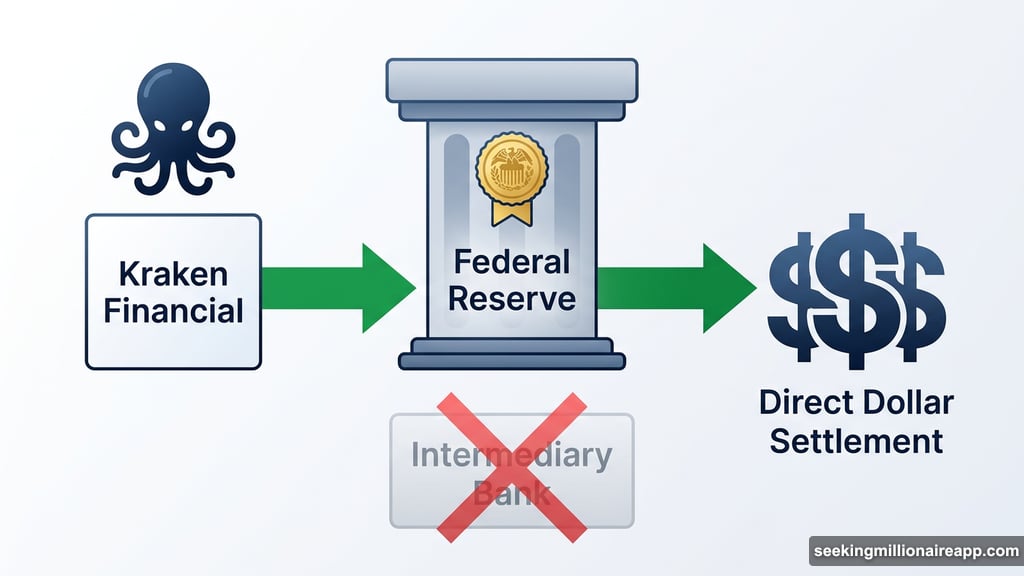
A Federal Reserve master account is basically a golden ticket to the heart of U.S. monetary infrastructure. Banks with master accounts can settle dollar transactions directly through the Fed, without needing an intermediary bank to sit in the middle.
Until now, crypto companies couldn’t touch this. They had to rely on traditional banking partners to move money through the system. That added friction, cost, and counterparty risk with every transaction.
Kraken Financial, the exchange’s Wyoming-chartered banking arm, now bypasses all of that. Dollar settlements flow directly through Fed infrastructure. For institutional clients and professional traders, that means faster, cleaner transactions with fewer moving parts.
There’s one caveat worth noting. Kraken won’t enjoy the full suite of traditional bank benefits. Earning interest on reserves held at the Fed, for example, stays off the table. But direct settlement access alone represents a massive leap forward.
Wyoming Bank Charter Laid the Foundation
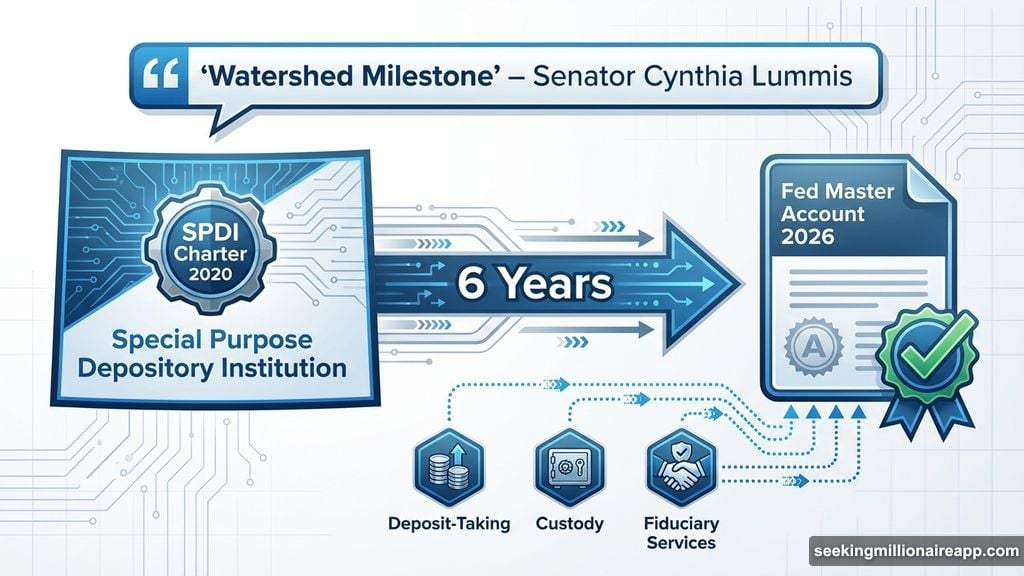
This milestone didn’t happen overnight. It builds on groundwork Kraken laid back in 2020. That year, the company became the first digital asset firm in U.S. history to receive a bank charter recognized under both federal and state law.
Specifically, Kraken obtained a Special Purpose Depository Institution (SPDI) charter from Wyoming. That charter allowed it to offer regulated deposit-taking, custody, and fiduciary services designed for blockchain companies. It was the foundation that made today’s Fed approval possible.
“Our vision is to become the world’s trusted bridge between the crypto economy of the future and today’s existing financial ecosystem,” Kraken said when that charter was granted. Six years later, the Fed master account makes that bridge considerably more real.
Senator Cynthia Lummis, one of Washington’s most vocal crypto advocates, didn’t hold back on the significance. The Wall Street Journal quoted her calling it “a watershed milestone in the history of digital assets.” That’s not hyperbole. It genuinely is.
Political Tailwinds Made This Easier
Timing matters in regulation, and Kraken’s approval lands in a notably favorable political environment. Under President Donald Trump, who has publicly committed to making the U.S. the “crypto capital of the world,” the regulatory mood around digital assets has shifted considerably.
Industry-friendly appointments at key agencies and growing legislative momentum around crypto frameworks have changed what’s politically possible. The kind of institutional access Kraken just secured would have faced far steeper headwinds in previous years.
That doesn’t diminish what Kraken accomplished. But it does help explain why this happened now rather than sooner.
Kraken’s IPO Gets a Lot More Interesting
Strategically, this development arrives at a pivotal moment for the exchange. Kraken has been moving aggressively toward a public listing, completing six acquisitions in roughly a year and reportedly targeting a $500 million raise at a valuation of around $15 billion.
Fed master account access changes the IPO story in meaningful ways. Institutional investors evaluating Kraken now see a company with a bank charter, an expanding product lineup, and direct integration with U.S. monetary infrastructure. That combination is hard to dismiss.
So the question for prospective IPO investors shifts slightly. The core concern isn’t regulatory legitimacy anymore. Kraken has cleared that bar. The real question becomes whether acquisition-driven growth translates into durable, compounding revenue over time. Fast expansion and financial sustainability don’t always travel together.
Still, the exchange has undeniably strengthened its hand. The Fed master account gives institutional credibility that no press release can manufacture.
A Door That’s Been Closed for Years
The crypto industry has spent the better part of a decade trying to plug into core U.S. financial infrastructure. Most attempts ran into regulatory walls, skeptical banking partners, and outright hostility from established institutions that viewed digital assets as a threat.
Kraken just walked through a door that everyone else was told was locked. And it didn’t do it by abandoning what crypto is. It did it by building a regulated, chartered banking entity that could speak the language of traditional finance while serving the digital asset economy.
What comes next matters. Other exchanges and crypto firms will now watch closely to see whether this access translates into real competitive advantages for Kraken. If it does, expect more applications for SPDI charters and more pressure on the Fed to extend similar access to other qualified digital asset companies.
Crypto moving closer to the center of the U.S. financial system isn’t a future prediction anymore. It’s a present-tense fact.