
MicroStrategy isn’t backing down from Bitcoin. Not even with prices hovering dangerously close to what the company paid.
The software firm turned crypto treasury just raised dividends to 11.25% to fund more BTC purchases. That’s a bold move when your $55 billion Bitcoin stash barely sits above breakeven. Executive Chairman Michael Saylor posted “More Orange” on Sunday, signaling another buying spree despite the market’s recent struggles.
But here’s the uncomfortable truth. Strategy’s aggressive dividend hikes could backfire spectacularly if Bitcoin stalls or drops.
The Numbers Tell a Tight Story
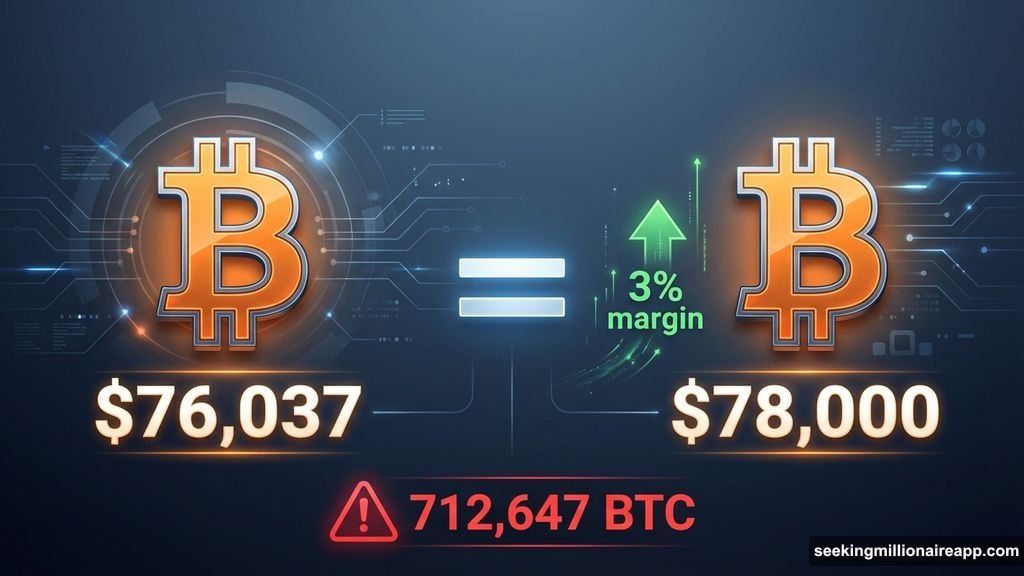
Strategy holds 712,647 BTC purchased at an average price of $76,037 per coin. Bitcoin traded around $78,000 on Sunday. That means the company’s unrealized gains shrank to less than 3%.
Think about that for a second. A $55 billion position with barely any cushion.
The company celebrated 2,000 days of its “Bitcoin Standard” recently. Yet those two thousand days of accumulation now hang on a razor-thin margin. Plus, Bitcoin tumbled hard from its six-figure highs last autumn. So the timing couldn’t be worse for such tight spreads.
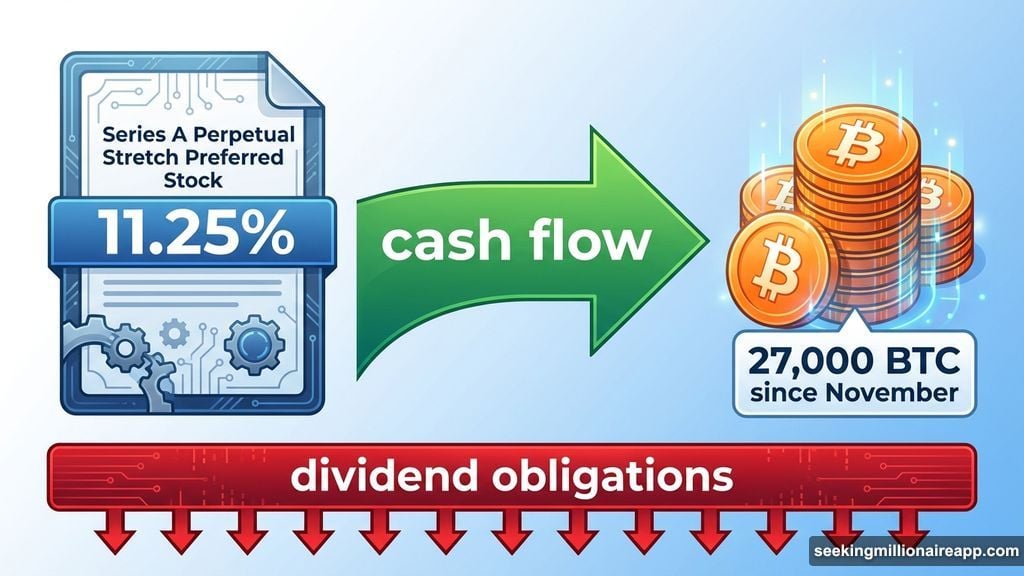
Moreover, Strategy raised the dividend on its Series A Perpetual Stretch Preferred Stock by 25 basis points. The new 11.25% yield for February 2026 represents a massive premium over typical corporate bonds. That premium reflects both capital hunger and the volatility baked into this bitcoin-centric model.
STRC Dividends Fund the Bitcoin Spree
Strategy’s Stretch Preferred Stock became the primary engine for bitcoin acquisitions. Data shows STRC sales alone funded over 27,000 BTC purchases since November.
The variable-rate security sits alongside products like Strike, Stride, and Strife in Strategy’s “fixed-income” suite. However, calling these instruments fixed-income feels generous when they’re essentially funding extremely volatile crypto bets.
Here’s where things get dicey. The 11.25% payout creates serious cash-flow obligations. If Bitcoin price remains flat or drops below $76,000, Strategy faces a painful squeeze. The company must service those high dividends regardless of whether Bitcoin cooperates.
In fact, market critics already raised red flags about this exact scenario. Paying out 11.25% annually while your core asset barely moves creates unsustainable math. So Strategy needs Bitcoin to rally just to justify the dividend expense.
Saylor’s Bet on Perpetual Growth
Michael Saylor appears completely undeterred by the risks. His “More Orange” post signals continued buying despite the narrow margins. Strategy still has billions available under its at-the-market offerings for future purchases.
But this strategy only works if Bitcoin keeps climbing. The company essentially doubled down on perpetual appreciation. Any extended sideways action or decline puts enormous pressure on the balance sheet.
Furthermore, Strategy transformed from an enterprise software company into a leveraged Bitcoin play. The firm now functions more like a crypto hedge fund than a traditional software business. That shift magnifies both potential gains and catastrophic losses.
Critics point out the obvious problem. Strategy’s model requires constant capital raises to buy more Bitcoin. Those raises now cost 11.25% annually on preferred shares. So the company needs Bitcoin to outperform that rate just to break even on the financing costs.
What Happens If Bitcoin Drops Below $76,000
The math gets ugly fast if Bitcoin breaches Strategy’s average purchase price. The company’s unrealized gains would flip to unrealized losses. Plus, those expensive dividend obligations don’t disappear.
Strategy would face a brutal choice. Keep servicing high-cost dividends while sitting on underwater Bitcoin positions. Or cut dividends and risk shareholder backlash. Neither option looks appealing.
Meanwhile, the company holds over 700,000 BTC. That massive position makes exit strategies nearly impossible. Any attempt to sell meaningful amounts would likely crash the market. So Strategy’s essentially locked in regardless of price action.
The firm’s 2,000-day Bitcoin journey now faces its most significant test. Those tight margins combined with expensive financing create a fragile situation. One extended downturn could unravel years of accumulation.
The Market Doesn’t Care About Your Average Cost
Strategy’s $76,037 average price means nothing to Bitcoin markets. The asset trades based on supply, demand, and macro conditions. Not on what one company paid for its stack.
Yet Strategy’s entire model depends on Bitcoin consistently exceeding that number. The company raised expensive capital specifically to buy more. So it needs appreciation to justify the costs.
Remember, this isn’t Strategy’s first rodeo with tight margins. But never before has the company committed to such expensive financing. The 11.25% dividend rate represents a massive bet that Bitcoin will deliver returns well above that threshold.
Industry observers note the irony. Strategy champions Bitcoin as sound money and a store of value. Yet the company’s financial engineering looks increasingly precarious. High-cost dividends funding volatile asset purchases doesn’t exactly scream conservative treasury management.
Strategy’s All-In Approach Raises Stakes
For now, Strategy shows no signs of changing course. Saylor’s latest post confirms continued buying. The company still has capacity for more capital raises. So expect more Bitcoin purchases regardless of price action.
But each new purchase at higher financing costs raises the stakes. Strategy needs bigger Bitcoin gains to cover those expensive dividends. The company essentially operates a leveraged long position with mandatory carrying costs.
Critics argue this approach works brilliantly in bull markets and fails catastrophically in bear markets. Strategy enjoyed massive unrealized gains when Bitcoin hit six figures. Now those gains evaporated as prices retreated.
The next few months will prove critical. If Bitcoin rallies back above $90,000, Strategy’s bet pays off handsomely. If prices stall or drop, those 11.25% dividends start looking like an anchor.
Strategy’s response to volatility remains clear: buy more. That philosophy worked for 2,000 days. Whether it works for 2,000 more depends entirely on Bitcoin cooperation.
The market doesn’t care about conviction or commitment. Only price action matters. Strategy’s betting it all that Bitcoin delivers returns above 11.25% annually. That’s a expensive gamble with $55 billion on the line.