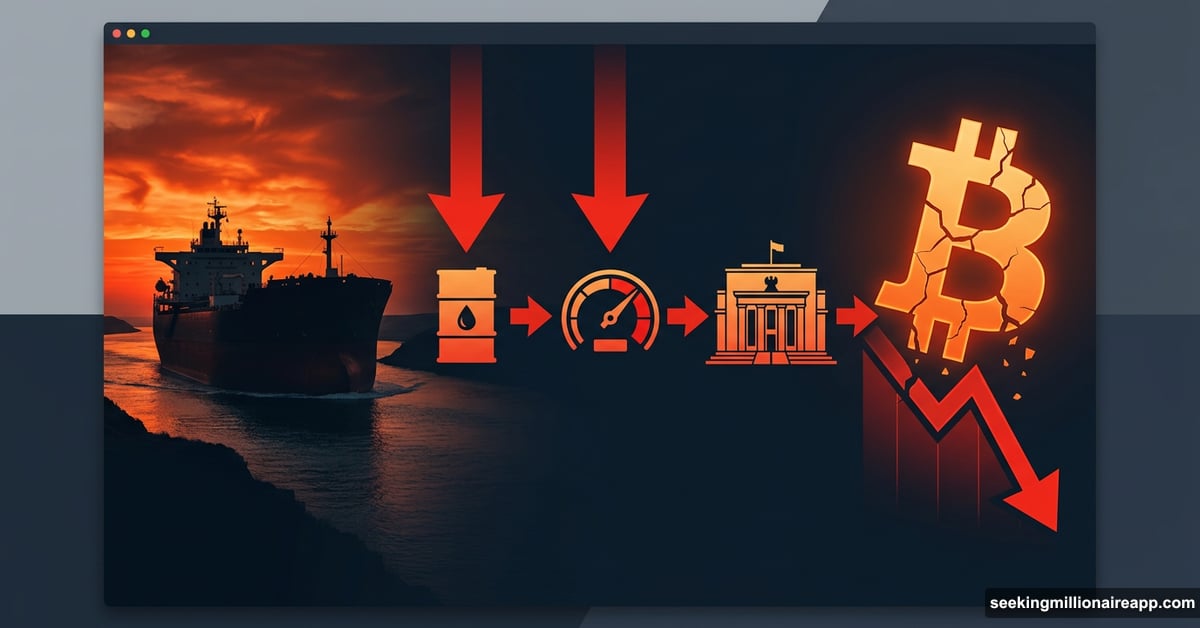
Oil is back in the driver’s seat for crypto markets. And that’s bad news for Bitcoin holders.
Tensions around the Strait of Hormuz are escalating fast. President Trump has warned the conflict with Iran could stretch four weeks. That timeline alone is enough to rattle financial markets. But for crypto, the real danger isn’t oil itself — it’s what higher crude prices do to liquidity.
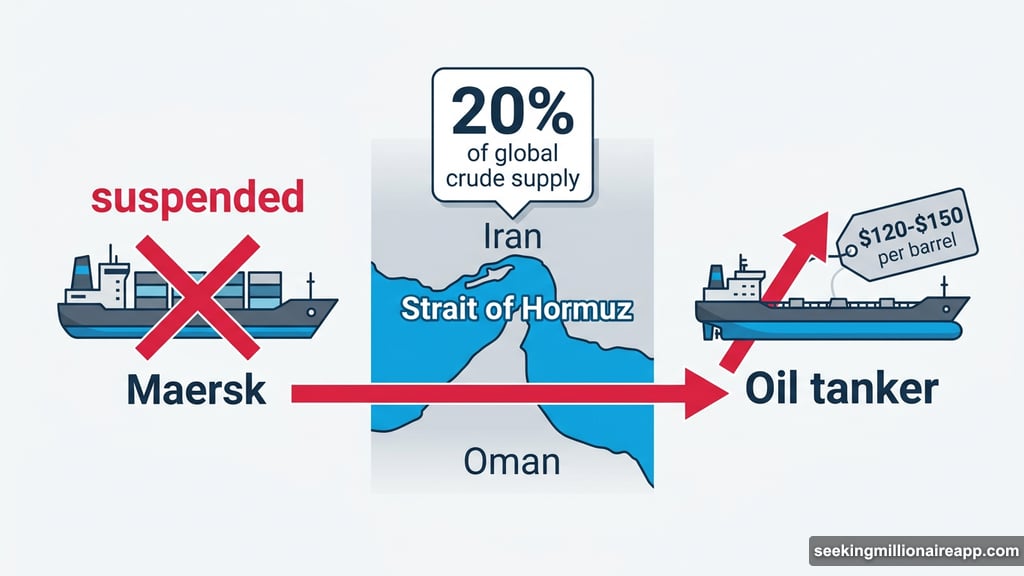
Maersk Suspends Transit. Tanker Insurance Premiums Surge.
Shipping giant Maersk has already suspended all transit through the Strait of Hormuz. That’s a massive move. Roughly 20% of global crude supply flows through that narrow passage between Iran and Oman.
Tanker insurance premiums have spiked dramatically. Traders are already pricing in potential supply shocks. And we haven’t even seen a confirmed full blockade yet.
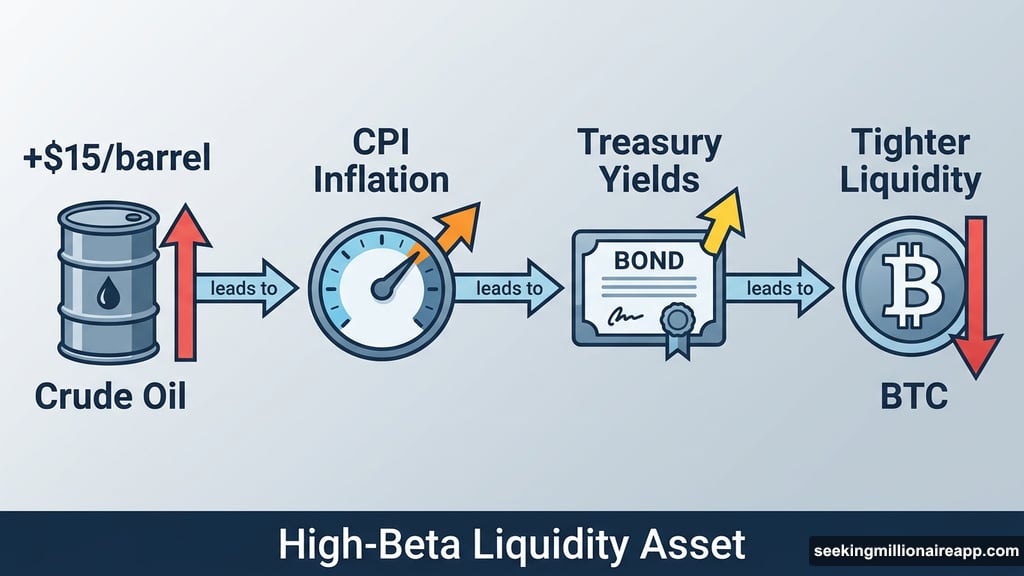
Goldman Sachs has laid out the math clearly. A full one-month closure without any offsets — like tapping spare pipeline capacity or releasing strategic petroleum reserves — could push oil’s fair value up by $15 per barrel. A partial disruption would have more muted effects. But in extreme scenarios, some analysts are floating crude prices reaching $120 to $150.
Markets remain divided on how serious this gets. The Kobeissi Letter noted that oil briefly erased nearly 70% of its weekend spike, dropping back below $70 per barrel. Still, that wild swing shows just how fragile sentiment has become right now. “This is NOT World War 3. Ignore the noise,” wrote analysts at the Kobeissi Letter. Fair point — but the macro mechanics still deserve serious attention.
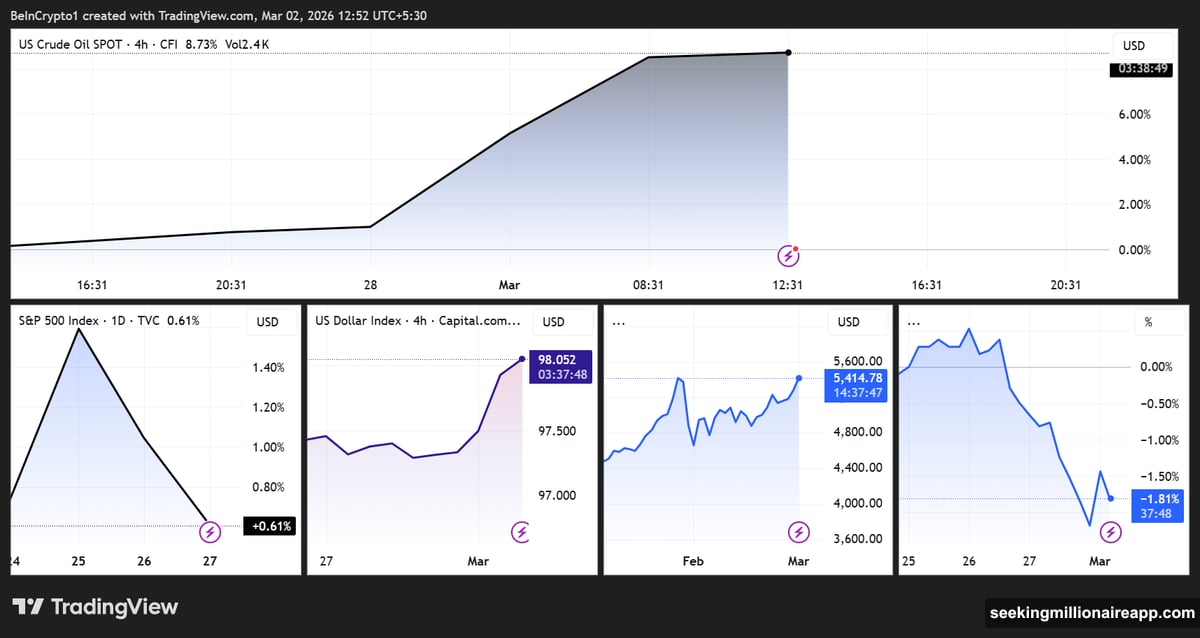
Higher Oil Means Higher Inflation. Fewer Rate Cuts. Tighter Liquidity.
Here’s where crypto gets caught in the crossfire. The risk isn’t geopolitical directly — it’s the chain reaction oil sets off.
Higher crude prices feed straight into transportation and manufacturing costs. That pushes consumer price index (CPI) prints higher. And when inflation expectations rebound just as markets were positioning for rate cuts, central banks get forced to delay easing. That’s precisely where we are right now.
Rising inflation expectations push Treasury yields higher. When real yields rise, liquidity tightens across all risk assets. Bitcoin has repeatedly traded as a high-beta liquidity asset — meaning it amplifies market moves in both directions. During prior tightening cycles, higher yields pulled capital toward bonds and away from speculative markets including digital assets.
So the transmission mechanism here is purely mechanical. Higher oil leads to higher inflation expectations, which leads to fewer rate cuts, which leads to rising yields, which leads to tighter liquidity, which leads to pressure on Bitcoin and altcoins simultaneously.
Bloomberg analysts put it bluntly: “With 24/7 crypto markets having already digested US-Iran tensions over the weekend, digital-asset traders are on the defensive as they assess potential contagion risks from crude oil prices when US markets open.”
Bitcoin Deleveraging Can Happen Instantly
One thing traditional markets forget about crypto: it never closes.
When bond yields spike alongside crude, leveraged positions across Bitcoin and altcoins can unwind in minutes. No waiting for market open. No circuit breakers. Just immediate liquidation pressure washing through the system.
BeInCrypto previously flagged this exact risk — an oil shock can trigger a liquidity selloff without any geopolitical catastrophe actually occurring. The fear alone is enough to kick off the chain reaction.
There’s also a second layer of risk worth watching. Analysts have flagged potential spillover effects toward the Taiwan Strait, which would compound global trade risk significantly. A domino effect across two of the world’s most critical shipping corridors simultaneously would represent a fundamentally different macro environment for risk assets.
What the Next Four Weeks Actually Mean for Crypto Prices
The next month is essentially a stress test. Two very different outcomes are possible.
If tensions de-escalate and crude prices stabilize, risk appetite could recover quickly. Crypto markets would likely bounce hard. Bitcoin has shown it can snap back fast when macro fear subsides.
But if disruption through the Strait of Hormuz persists for the full four weeks Trump described, the narrative shifts from temporary geopolitical noise to something more serious — a sustained liquidity event. And in liquidity events, digital assets are reliably among the first assets to feel the pressure.
Some analysts are projecting Bitcoin dropping below $30,000 in an extreme escalation scenario. Ethereum below $800. Solana below $30. Those numbers feel severe right now. But they reflect what happens when leveraged crypto positions meet a genuine tightening of global liquidity conditions.
Oil Is Now Crypto’s Leading Indicator
Watch crude prices more closely than usual over the next four weeks. They’ll telegraph what’s coming for Bitcoin before traditional crypto sentiment indicators do.
A sustained oil spike rewires the entire macro environment — inflation expectations, central bank timelines, Treasury yields, and ultimately the risk appetite that drives speculative asset prices. Crypto sits at the end of that chain. It gets hit last but potentially hardest.
The Strait of Hormuz situation is moving fast. And whether or not this becomes a full-scale conflict, the financial mechanics of a four-week oil disruption are already set in motion. Crypto traders would be wise to track crude charts alongside their Bitcoin price feeds right now.