
Tom Lee isn’t hedging. The BitMine chairman went on CNBC and made a clean, direct call: the stock market has bottomed, and a rally back to all-time highs is coming.
That’s a bold stance when plenty of investors are still nervous. But Lee’s reasoning is worth understanding. His argument isn’t just optimism. It’s built on some specific signals that, honestly, make a lot of sense when you look closely.
War Resilience Gave Lee the Confidence
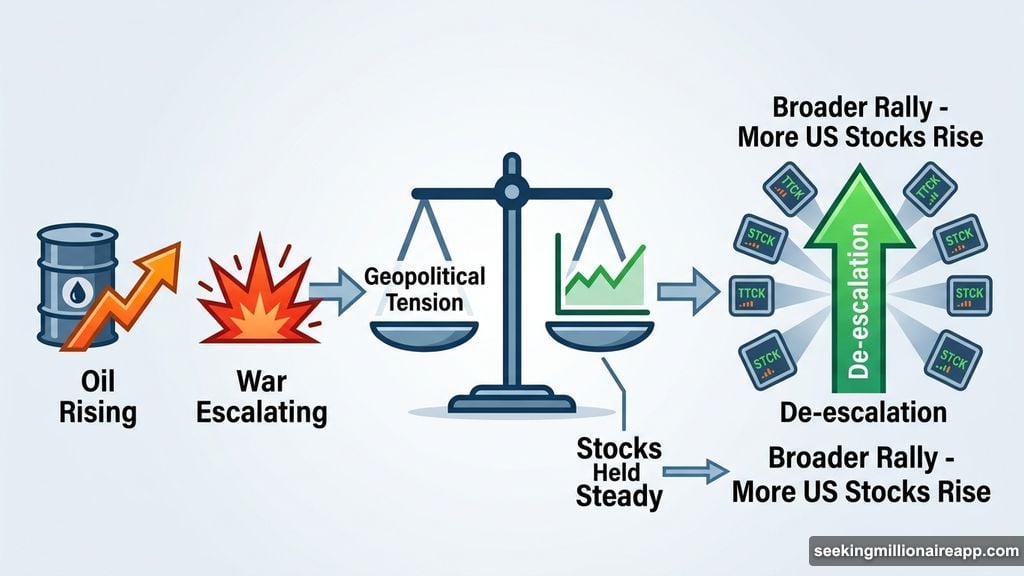
Here’s the thing about last week’s trading that caught Lee’s attention. The war was getting worse. Oil prices were climbing. And yet stocks didn’t fall.
That combination matters. Normally, rising oil and escalating geopolitical tension would send markets lower. So when stocks held steady through that pressure, Lee read it as a sign of real underlying strength.
“The bottom is in,” he told CNBC, “because last week was a period where the war was getting worse and oil was going up, but stocks weren’t going down.”
Now, with de-escalation signals starting to emerge, he believes that resilience sets the stage for a recovery. His words: stocks are “in the process of going back to their all-time highs.”
S&P 500 Target of 7,300 Is Back on the Table
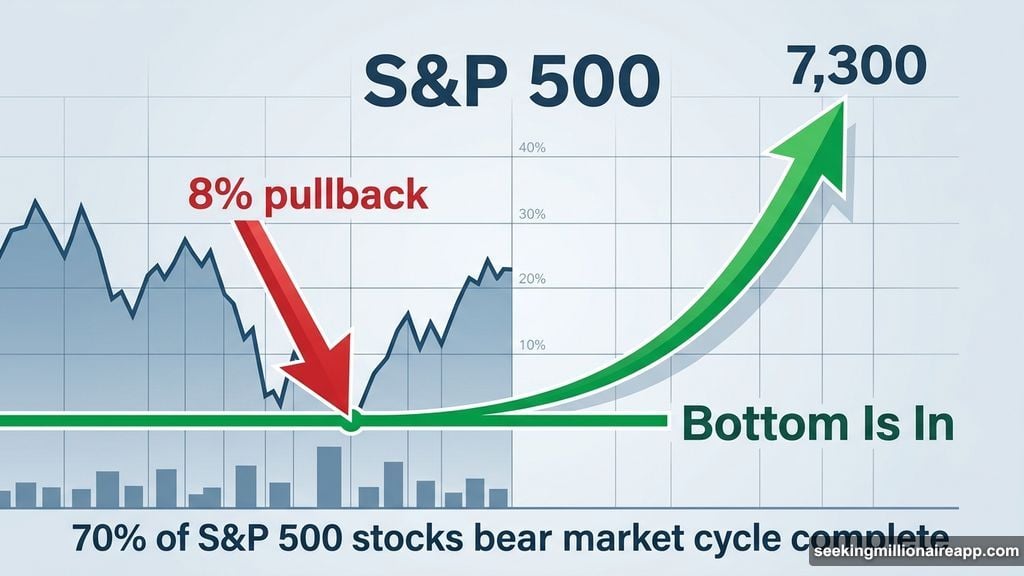
Lee isn’t just calling a bottom. He’s putting a number on the recovery.
He forecasts the S&P 500 reaching 7,300 by the end of the year, a target he had already set before recent volatility hit. After an 8% pullback in the index, that level might feel far away to some investors. But Lee thinks the path there is cleaner than people expect.
Part of his confidence comes from something called the rolling bear market thesis. Before this year’s turbulence, energy and financial stocks already went through their painful corrections. Then the Mag-7 and software sectors took their turn. By now, roughly 70% of S&P 500 stocks have already weathered a full bear market cycle.
So the damage, in many ways, is already done. That’s actually good news for what comes next.
A Summer Dip, But a Shallower One
Lee isn’t pretending the road ahead is perfectly smooth. He still expects an inflation shock to hit at some point. Markets rarely travel in straight lines.
But here’s why he thinks any summer weakness will be milder than feared. The index has already pulled back 8%. Most of the selling has already happened across a wide swath of the market. And with the US demonstrating economic and geopolitical resilience during wartime, Lee expects more investors to rotate back into US equities.
“The broadening is that more US stocks rise,” he said, pointing to a wider rally rather than one led by a narrow group of mega-cap tech names.
That’s an interesting shift from recent years, where market performance was heavily concentrated in just a handful of companies. A broader rally would be healthier and potentially more sustainable.
Seasonality Is Also on the Market’s Side
Lee’s bullish view gets some extra support from historical patterns. Over the past 25 years, the MSCI World Index has delivered positive returns in April 75% of the time, with an average monthly gain of 2.0%. That makes April the strongest month on the calendar historically.
US stocks drive most of that performance, accounting for about 70% of the MSCI World Index. And the S&P 500 specifically averages a 1.3% gain in April since 1928, making it the second-best month of the year behind only July.
None of that guarantees anything. But it does mean the seasonal winds are blowing in the same direction as Lee’s call.
Should You Take This Seriously?
Tom Lee has a track record of being willing to make specific, time-bound predictions when others stay vague. Sometimes he’s right. Sometimes he’s early. But he rarely says nothing.
The core of his current argument is actually pretty grounded. Stocks holding firm during bad news is a genuinely bullish signal. A broad portion of the market having already corrected removes a big chunk of downside risk. And if inflation concerns and geopolitical fears start fading together, that combination could release a lot of pent-up buying pressure.
Whether 7,300 on the S&P 500 happens this year is anyone’s guess. But the logic Lee is using to get there isn’t wishful thinking. It’s worth paying attention to.