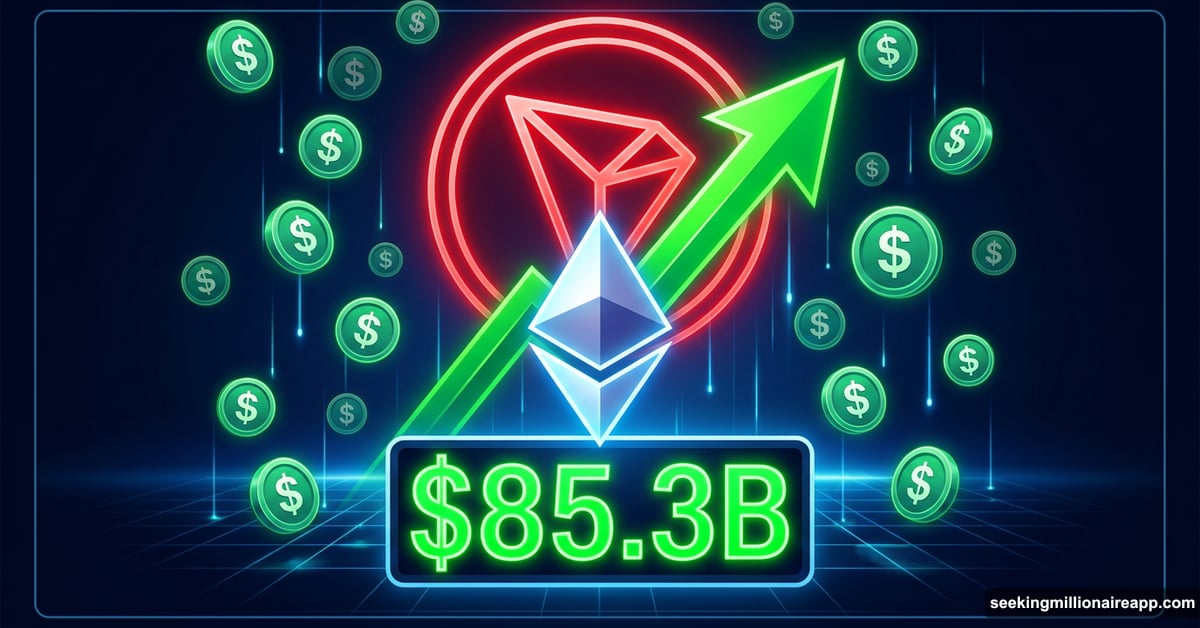
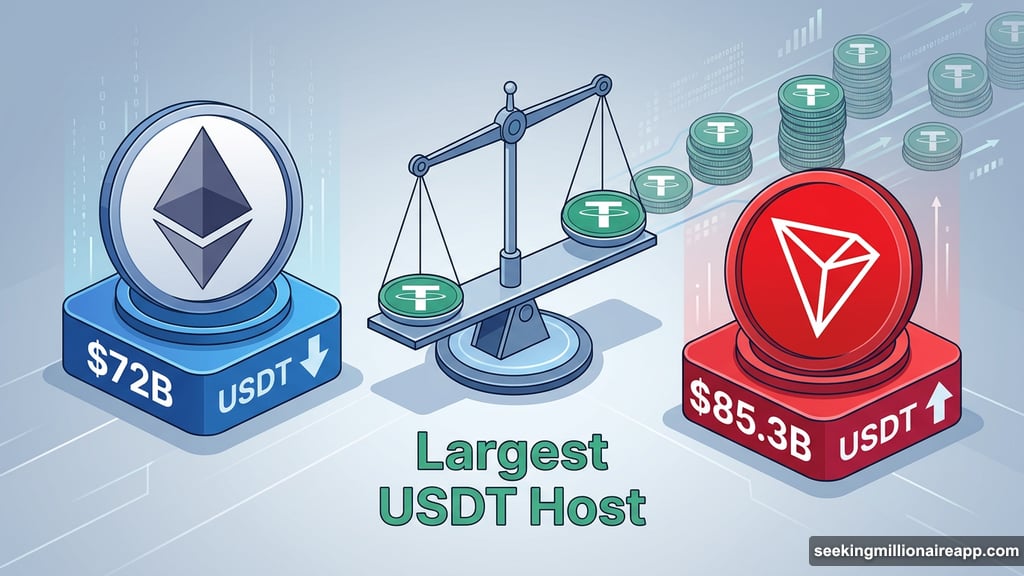
Tron just hit a milestone that most crypto investors completely missed. The total USDT supply on the TRON network crossed $85.3 billion, officially surpassing Ethereum as the largest host of the world’s most-used stablecoin.
That’s not just a bragging-rights number. It has real implications for TRX demand, network revenue, and where the token goes from here.
Stablecoin Supply on TRON Reaches Historic High
Tether recently minted an additional 1 billion USDT directly on the TRON network. That single mint pushed total circulating USDT on TRON past $85.3 billion, flipping Ethereum for the top spot.
But it doesn’t stop there. When you count every stablecoin running on TRON, the total market cap across the whole network now exceeds $86.6 billion. That’s the highest figure ever recorded.
So why does this matter for TRX specifically? It comes down to how the network handles transactions.
TRX Burns Drive the Connection Between Stablecoins and Token Demand
TRON doesn’t use Ethereum’s gas fee model. Instead, it runs on a system called Bandwidth and Energy. To execute any transaction on the network, including sending USDT, users need to burn TRX to access those resources.
That makes the relationship between stablecoin activity and TRX demand almost mechanical. More stablecoin transfers mean more TRX burned. More TRX burned means consistent demand for the token.
And stablecoin transfers on TRON are booming. According to Artemis Analytics, weekly stablecoin transfer volume on the network has grown from under $80 billion to $160 billion over the past three years. That’s a 100% increase. In 2025 alone, TRON processed $7.9 trillion in stablecoin transaction volume for the full year.
TRON’s Revenue Now Leads the Entire Market
Here’s a number that should turn heads. According to DefiLlama, TRON currently generates more revenue from transaction fees than any other blockchain network. That includes Ethereum, Solana, BNB Chain, and Base, across the 24-hour, 7-day, and 30-day windows.
Revenue in this context means TRX burned as fees. So the higher that figure climbs, the more deflationary pressure the network creates on TRX supply.
For a network that rarely gets as much media attention as Ethereum or Solana, that’s a genuinely impressive performance.
Agentic AI Payments Could Push Demand Further
TRON DAO recently joined the Agentic AI Foundation as a Gold member and board representative. This is a Linux Foundation project focused on building open infrastructure for autonomous AI systems, known as agentic AI.
Justin Sun, TRON’s founder, summed up the thesis directly. “AI needs real-time settlement. TRON is where stablecoins move at scale.”
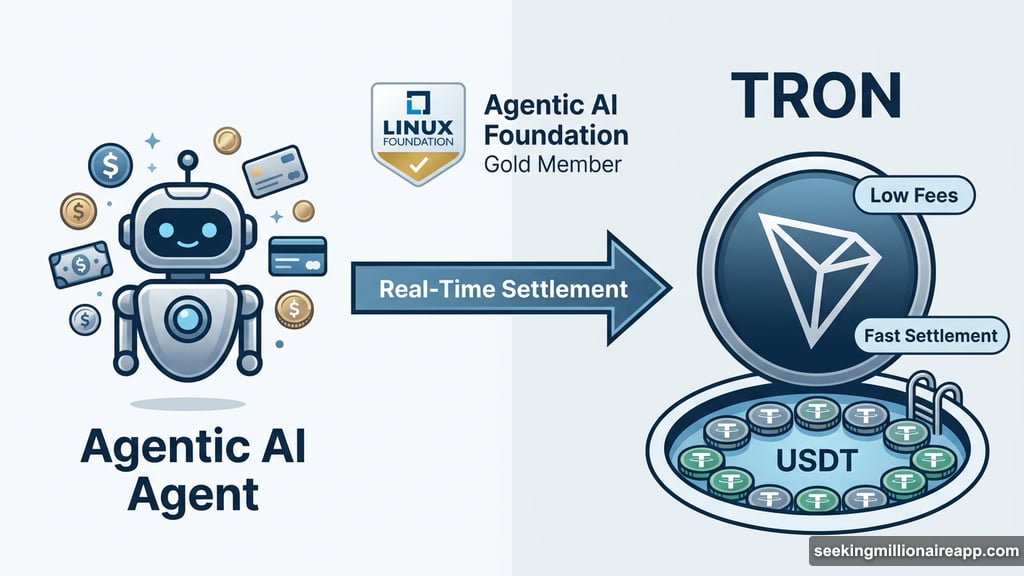
The idea here is that autonomous AI agents will need to make payments and transactions in real time. TRON’s low fees, fast settlement, and massive stablecoin liquidity make it a natural fit for that use case. If agentic AI payment systems take off, TRON stands to benefit more than most networks.
SEC Lawsuit Officially Dismissed
March brought another significant development. The lawsuit filed by the US Securities and Exchange Commission against the Tron Foundation and Justin Sun has officially concluded. A judge approved the final ruling and permanently dismissed all allegations with prejudice.
That case had been hanging over TRX since 2023. Its removal clears a legal cloud that likely kept some institutional investors on the sidelines. Plus, a clean legal record makes it easier for exchanges, funds, and payment platforms to engage with TRX without compliance concerns.
Where TRX Price Stands Right Now
Despite all of this positive momentum, TRX hasn’t recovered yet in price terms. According to BeInCrypto data, the token has dropped about 20% since August of last year and currently trades around $0.29.
That might seem contradictory. Record stablecoin supply, leading network revenue, clean legal status, and a new AI angle — yet the price is still down? The broader crypto market has been cautious about altcoins generally, and TRX is not immune to that sentiment.
But the fundamentals are genuinely strong. The correlation between stablecoin transfer volume and TRX price that Artemis Analytics identified has held consistently over three years. As stablecoin activity continues to grow, and especially if agentic AI payments develop into a real use case, the demand side for TRX looks solid.
The legal overhang is gone. The stablecoin dominance is real. The revenue leadership is documented. Whether the market prices that in quickly or slowly is the remaining question. But the pieces are in place for a recovery that makes fundamental sense.