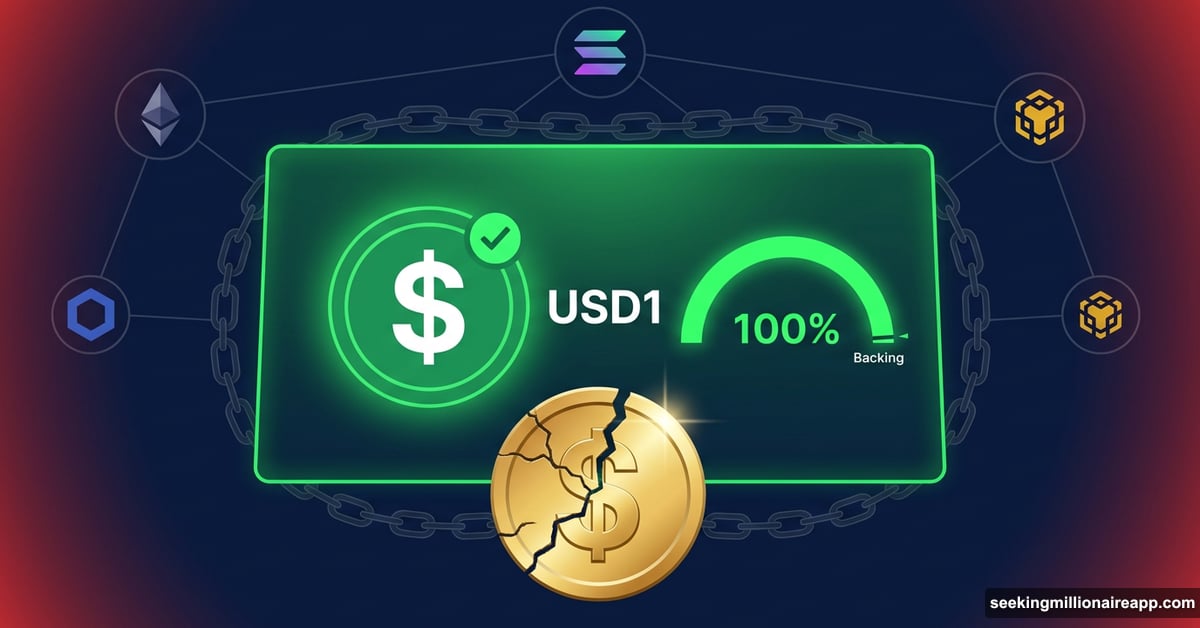
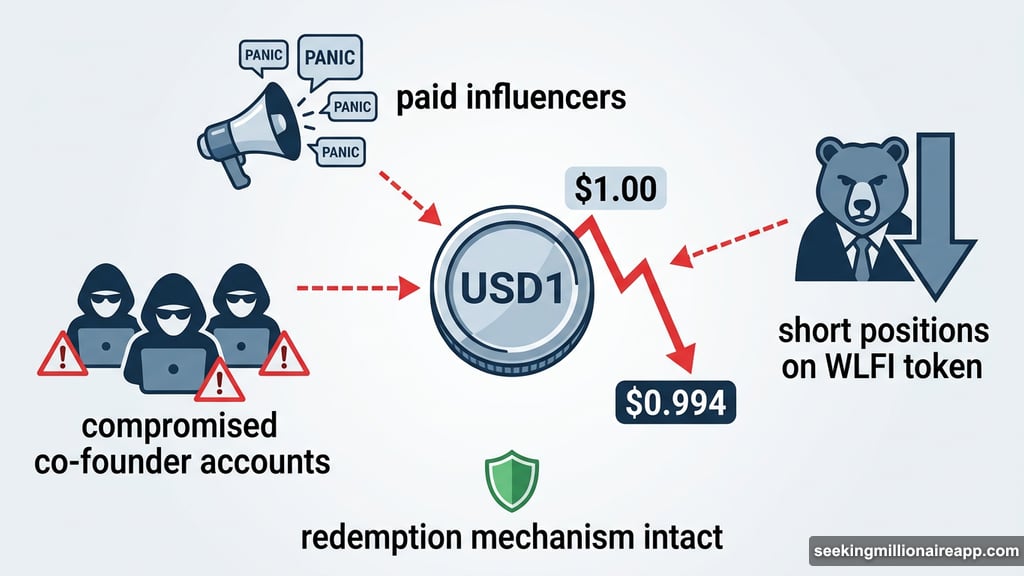
World Liberty Financial just made a significant move to rebuild confidence. After a brief but alarming depeg incident sent USD1 sliding to $0.994, the Trump family-linked crypto protocol launched a real-time, on-chain proof-of-reserves system for its $4.7 billion stablecoin.
The timing is no accident. Markets want answers. So the question now is whether a live dashboard actually fixes the deeper problems this incident exposed.
USD1 Drops Monthly Attestations for Live Chainlink Data
Before this upgrade, USD1 relied on monthly attestation reports. That was already better than most stablecoins, which only publish quarterly. But monthly reporting still means roughly 30 days of data lag while accountants do their work.
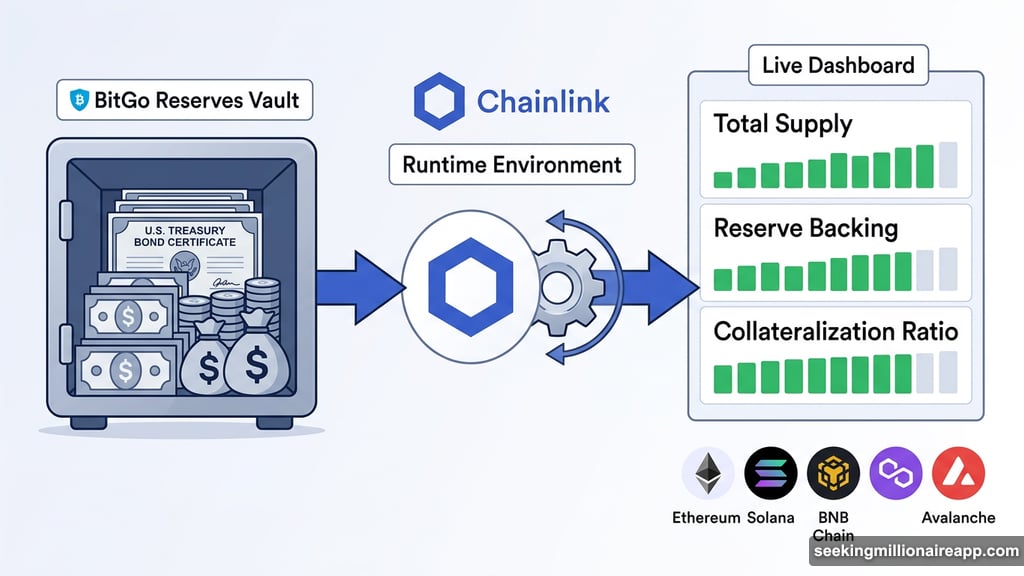
World Liberty Financial announced the fix on February 27. The new system uses the Chainlink Runtime Environment to continuously pull reserve data straight from crypto custodian BitGo. No waiting. No delays.
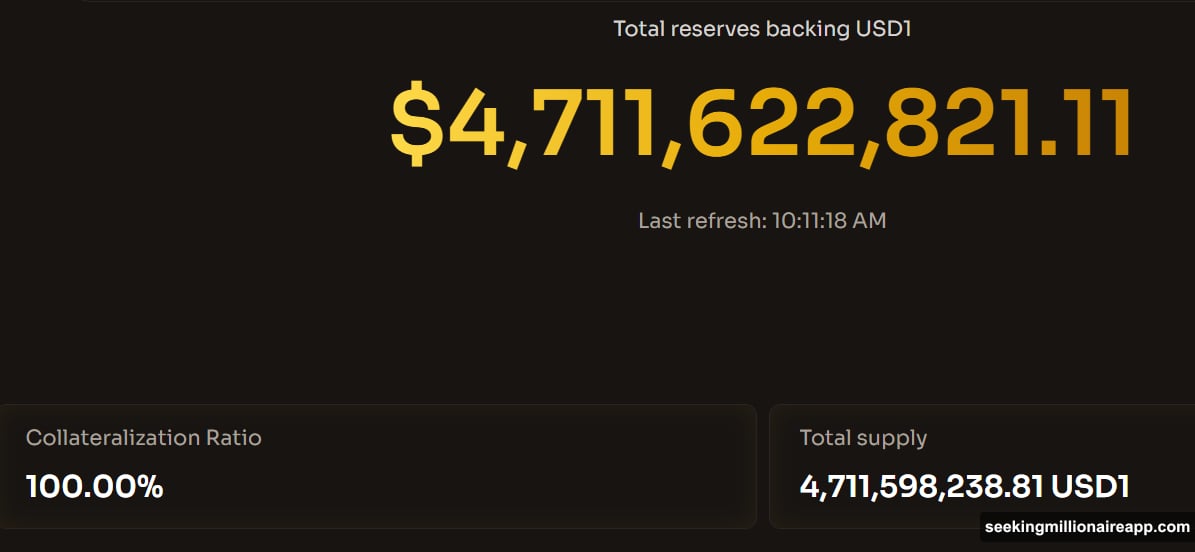
Now, USD1 users can monitor three key metrics in real time across five blockchain networks, including Ethereum, Solana, and BNB Chain:
- Total stablecoin supply in circulation
- Reserve backing held at BitGo
- Live collateralization ratio
Those reserves consist of $4.7 billion in short-term U.S. government treasuries and cash equivalents. The on-chain proof-of-reserves system makes all of that visible at any moment.
What Actually Caused the Depeg
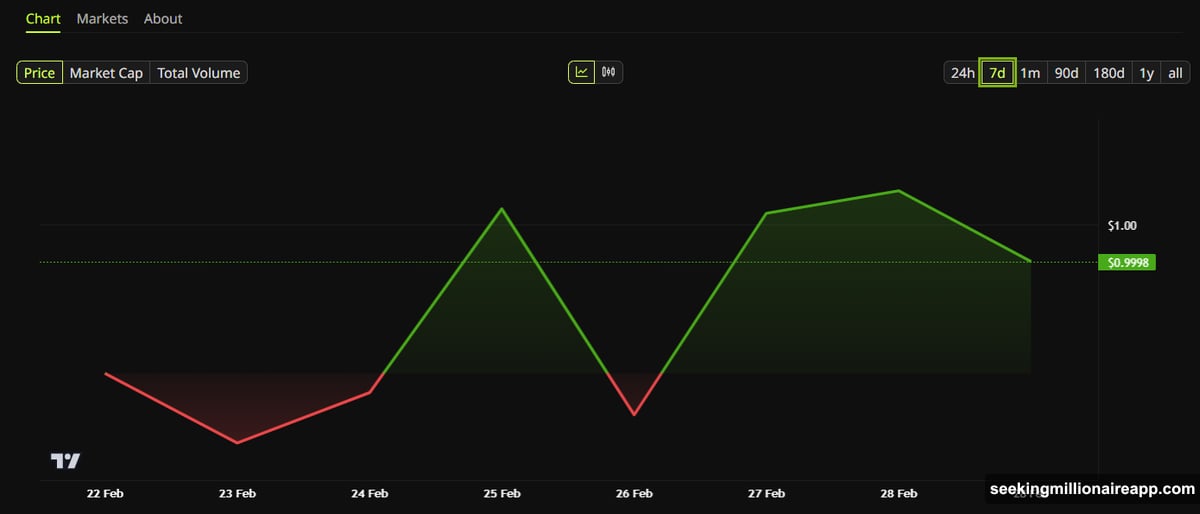
Just days before this announcement, USD1 lost its dollar peg and briefly dropped to $0.994. That might sound like a small slip, but for a stablecoin, any break from $1.00 triggers serious alarm bells.
World Liberty Financial blamed a coordinated attack. According to the team, malicious actors hacked multiple co-founder accounts, paid influencers to spread panic online, and opened large short positions against WLFI’s native token to profit from the manufactured chaos.
The core redemption mechanism stayed functional throughout the incident. That’s ultimately what prevented a much worse outcome.
But the explanation raises its own uncomfortable questions. If several executive accounts at a multi-billion dollar protocol can be compromised simultaneously, that points to real gaps in operational security. A stablecoin managing institutional capital at this scale needs airtight security practices, not just a sound mint-and-redeem mechanism as its last line of defense.
The Dashboard Helps, But Gaps Remain
Industry analysts are generally positive about the transparency upgrade. Continuous on-chain reserve data is genuinely better than delayed attestation reports. For everyday users, being able to verify reserves at any moment builds meaningful trust.
Still, experts point out what the dashboard does not solve.
A live collateralization ratio tells you the reserves exist right now. It does not tell you how quickly those assets could be liquidated if a large wave of redemptions hit at once. Short-term treasuries are generally liquid, but during a genuine bank run scenario, immediate liquidity profiles matter enormously.
The dashboard also cannot protect the protocol from future smart contract vulnerabilities. And it does nothing to reduce the elevated scrutiny that comes with USD1’s unique political profile. A stablecoin directly tied to a sitting president’s family will always attract more adversarial attention than a typical crypto project. That’s simply the reality WLFI operates in.
Real-Time Transparency Is a Good Start
The proof-of-reserves upgrade is a meaningful step forward. Publishing live, on-chain reserve data through Chainlink sets a higher standard than most of the stablecoin industry currently meets. WLFI deserves credit for moving quickly after the depeg scare rather than waiting months to respond.
But transparency tools and security infrastructure are two very different things. Knowing the reserves exist in real time is valuable. Preventing executive accounts from being hacked is equally critical, and no dashboard addresses that.
USD1 survived this incident because its redemption mechanism held. The next test may not be so forgiving. For a $4.7 billion stablecoin operating in one of the most politically charged environments in crypto history, surviving is not the same as thriving. WLFI will need to treat security as seriously as it now treats transparency if it wants institutional confidence to stick.