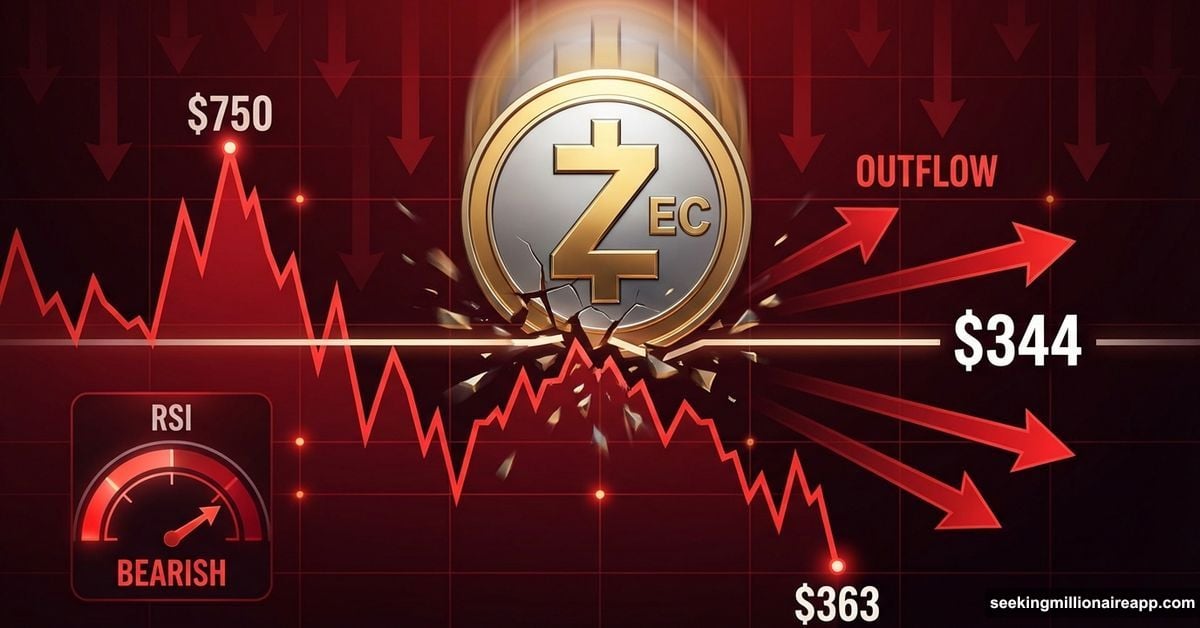
Zcash took a beating this week. The privacy-focused cryptocurrency dropped below $350, and now it’s fighting just to hold support levels that seemed solid days ago.
The problem? ZEC lost over half its value since November’s peak near $750. Now it’s trading around $363, desperately clinging to the $344 support line. Plus, technical indicators show zero signs of a quick recovery.
Momentum Died Completely
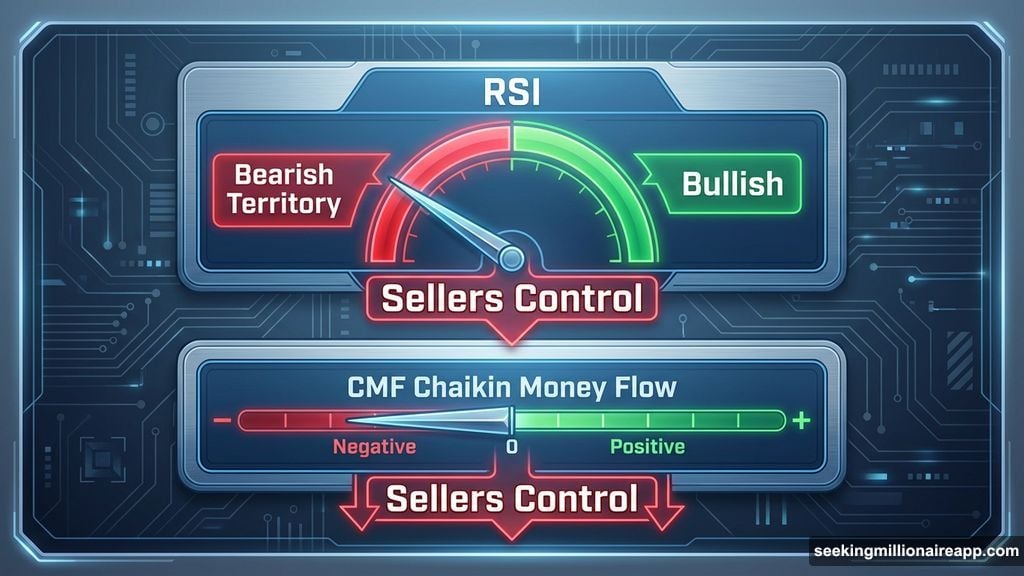
The Relative Strength Index tells a brutal story. ZEC’s RSI remains stuck in bearish territory, showing that buyers simply aren’t interested right now.
This matters because the RSI measures momentum. When it stays negative for extended periods, it signals that sellers control the market. Moreover, Zcash can’t attract new capital while sitting in this zone.
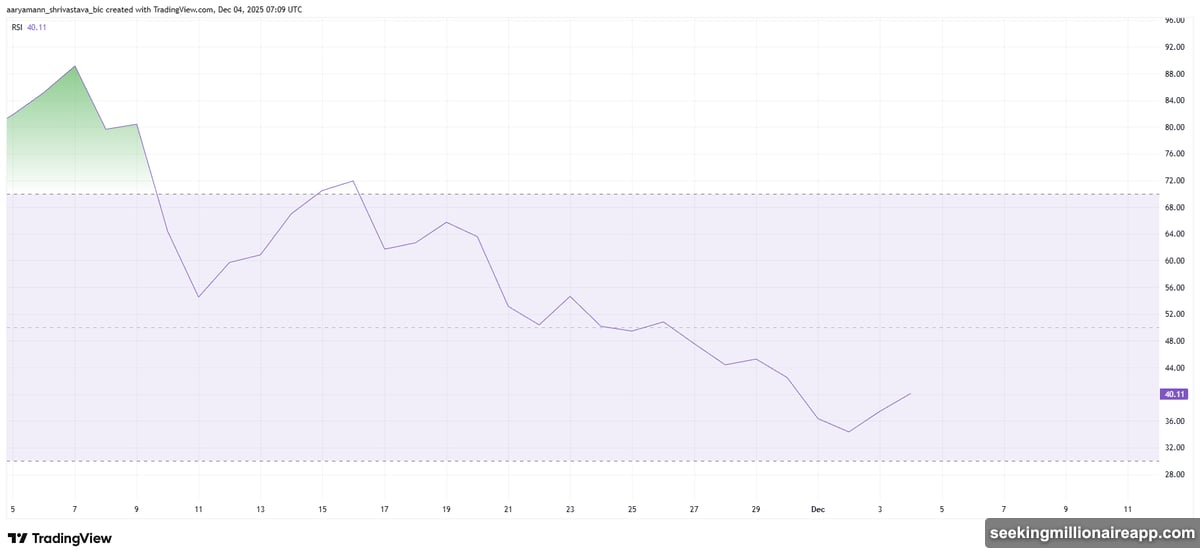
Here’s what makes it worse. Other cryptocurrencies are seeing selective buying interest. But ZEC? Nobody’s jumping in to catch this falling knife. The lack of participation shows traders would rather park money elsewhere until Zcash proves it can stabilize.
Technical indicators don’t lie. They reflect actual buying and selling pressure. So when the RSI stays bearish this long, recovery becomes exponentially harder.
Capital Keeps Flowing Out
The Chaikin Money Flow indicator reveals another problem. Money continues leaving Zcash at a steady pace.
CMF tracks capital inflows and outflows. Right now, it’s firmly negative. That means more investors are selling than buying. And it’s been this way for weeks.
Why does this matter? Because price can’t rise without fresh capital. You need new buyers willing to purchase at current levels. Instead, Zcash is watching existing holders bail out while new investors stay away.
One critical detail: these outflows started before the recent price drop. That suggests smart money saw trouble coming and left early. Retail investors who stayed are now underwater, creating even less incentive for others to buy in.
Support Levels Look Shaky
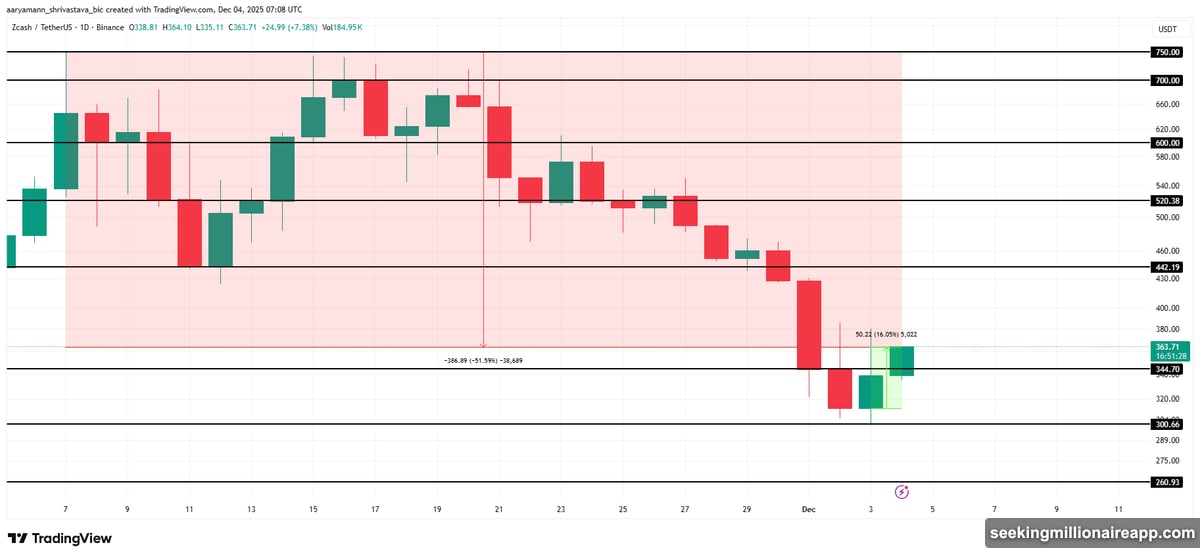
Zcash is trading at $363 right now. The immediate support sits at $344.
Holding that level is crucial. If ZEC falls through $344, the next stops are $300 and potentially $260. That would mark a devastating 65% decline from November’s highs.
But here’s the real kicker. Even if Zcash defends $344 and starts climbing, it faces a brutal journey upward. The nearest meaningful resistance sits at $442. From there, ZEC would need to push through $520 before even thinking about retesting $750.
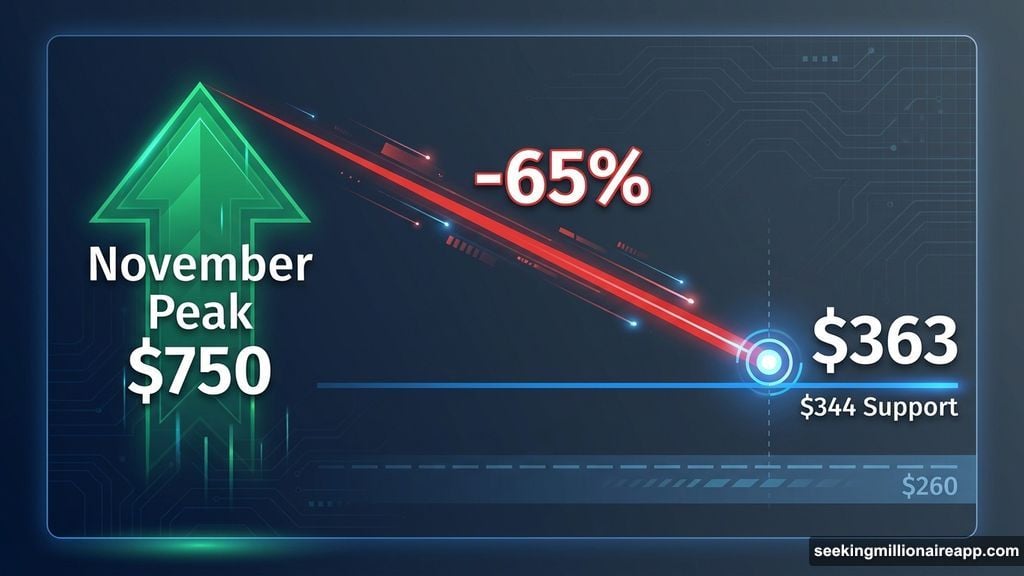
That’s a 101% rally just to revisit November’s peak. In current market conditions, with no momentum and declining capital flows, that seems wildly optimistic. Most cryptocurrencies struggle to double in weeks, even with strong tailwinds.
Market Conditions Aren’t Helping
Broader crypto markets remain choppy. Fear dominates trading decisions. Investors are rotating into safer assets while waiting for clarity.
Zcash doesn’t benefit from this environment. Privacy coins face additional regulatory scrutiny. So risk-averse traders aren’t touching ZEC even when they’re willing to buy other altcoins.
Plus, there’s no catalyst on the horizon. No major partnership announcements. No protocol upgrades generating excitement. Just a cryptocurrency that ran too hot in November and is now paying the price.
Recovery Timeline Looks Long
Could Zcash bounce back? Sure. Anything’s possible in crypto.
But realistically, ZEC needs the entire month of December just to establish a solid base. First, it must defend $344 convincingly. Then it needs to attract fresh buying interest. Only after those steps can price attempt to climb toward $442.
That’s assuming everything goes right. If market conditions worsen or ZEC loses $344, we’re looking at a much uglier scenario. Prices could easily test $300 or lower before finding real support.
Here’s my take. Zcash rode momentum in November without building sustainable demand. Now that momentum vanished, there’s nothing holding up the price. Smart traders will wait for clearer signals before touching this one.
Privacy coins serve important purposes. But right now, Zcash offers more risk than reward. Better opportunities exist elsewhere until ZEC proves it can stop bleeding.