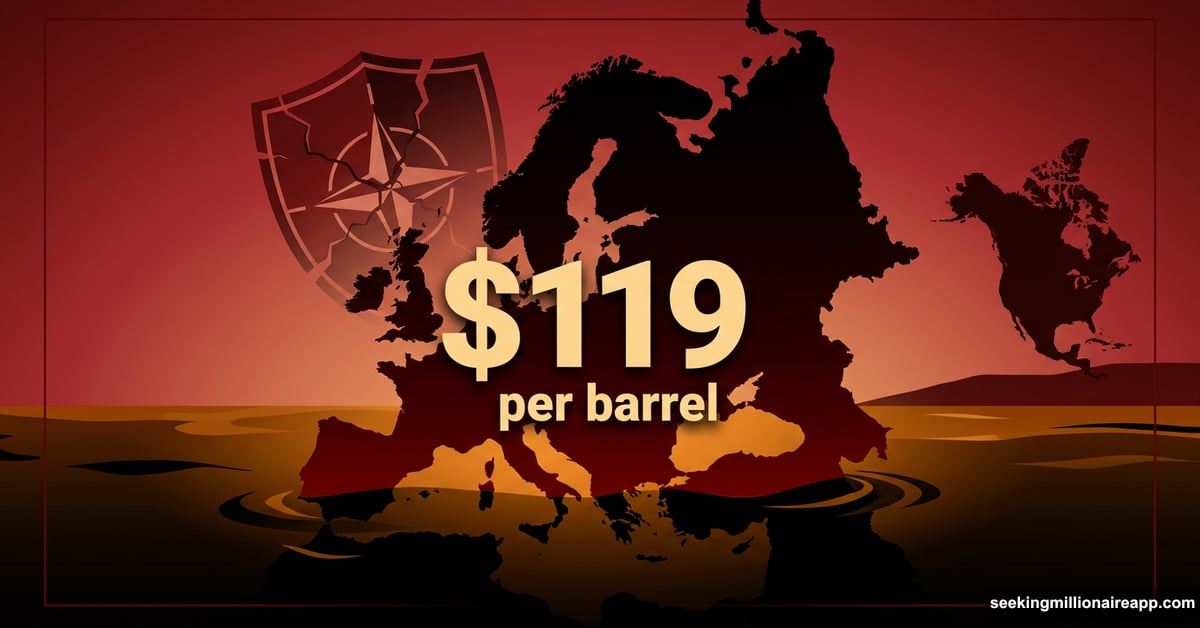
The Iran war isn’t hitting everyone equally. And former UK Prime Minister Rishi Sunak thinks Europe is about to feel the pain much longer than most people realize.
In a recent column, Sunak laid out a stark case for why the United States will bounce back from the 2026 conflict faster than the UK and Europe. His argument cuts straight to the bone: America’s structural advantages give it a buffer that European economies simply don’t have.
America’s Energy Edge Changes Everything
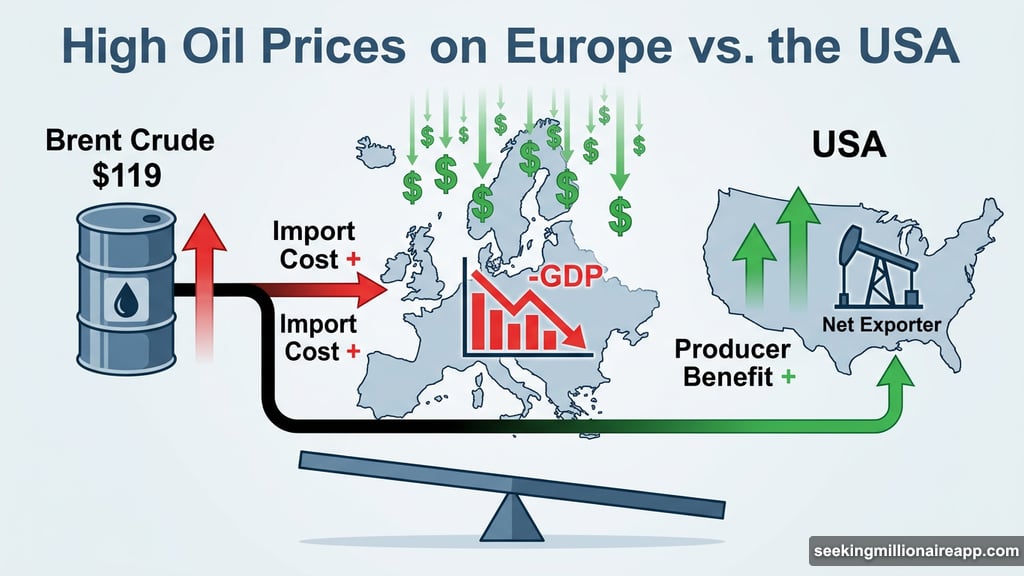
Here’s the core difference. The US is a net energy exporter. When oil prices spike, American producers actually benefit. European countries, by contrast, depend heavily on oil imports.
Since the Strait of Hormuz was disrupted in early March, Brent crude surged past $119 per barrel. That’s a price level not seen since June 2022. A fragile two-week ceasefire brokered in early April brought some temporary relief, but oil still trades above $90.
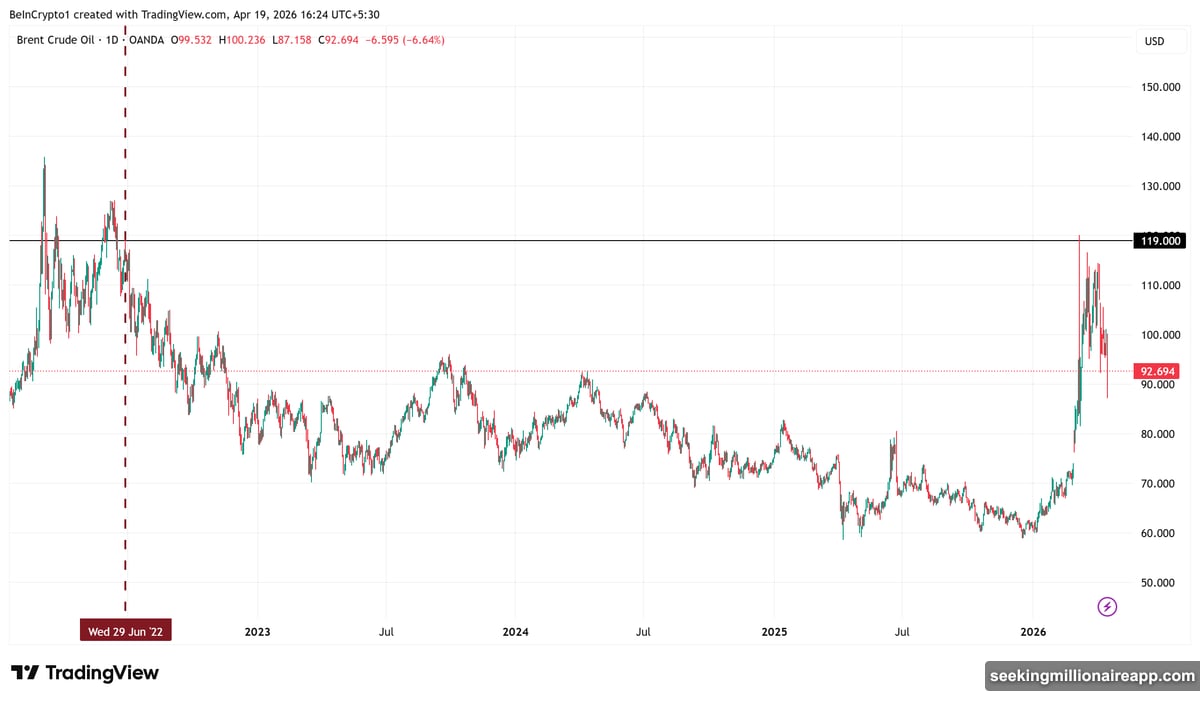
For European economies that rely on imported energy, every dollar added to the oil price squeezes household budgets, raises production costs, and drags on growth. American consumers and businesses face far less of that pressure.
Trade Exposure Leaves Europe Vulnerable
Energy isn’t the only gap. Sunak pointed to a dramatic difference in how much each economy depends on trade.
Trade accounts for roughly 25% of US GDP. For the UK, that figure sits closer to 60 to 70 percent. Europe broadly shares a similar level of trade exposure. So when global supply chains get disrupted by geopolitical conflict, European economies take a much harder hit.
Think of it this way. If your income comes mostly from local sources, a storm that blocks the harbor hurts less than if most of your income depends on ships getting through. America’s relative self-sufficiency acts like a natural shock absorber. Europe’s trade dependence makes it far more fragile when global routes break down.
Fraying Security Arrangements Add to the Problem
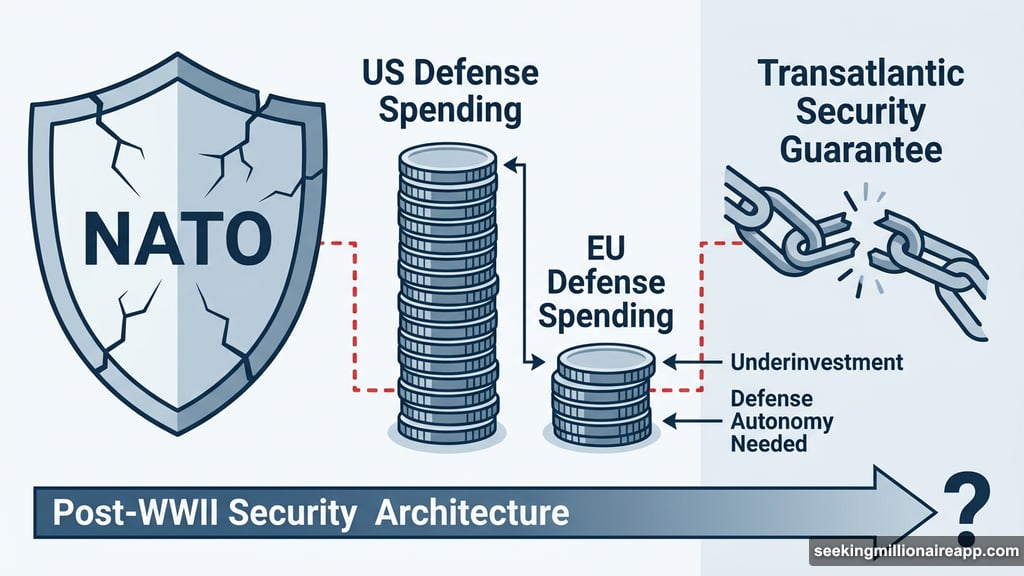
Beyond energy and trade, Sunak raised a third concern that may prove even more consequential over time. The post-World War II security architecture that has underpinned European stability is showing serious cracks.
NATO allies have long underinvested in defense while counting on American commitments to carry the load. That arrangement worked under a certain kind of US foreign policy. But Sunak warned that a more transactional American approach, regardless of which administration holds power, is accelerating a long-overdue reckoning.
In short, Europe can no longer assume America will always step in. And building genuine defense autonomy takes time and money that European governments haven’t yet committed.
Sunak’s Call for European Self-Reliance
Sunak framed his warning not as doom-saying but as a call to action. His message to Europe: stop hoping the old transatlantic order returns intact, and start building real resilience.
That means investing in energy independence, strengthening defense capacity, and reducing the kind of trade exposure that makes geopolitical shocks so costly. Sunak, who during his time as prime minister pushed for the UK to become a leading global crypto hub, has consistently argued for proactive economic strategy rather than reactive crisis management.
The coming weeks will be telling. If the April ceasefire holds, Europe gets breathing room. If the conflict escalates again, the vulnerabilities Sunak described will come into much sharper focus.
Europe’s leaders now face a choice that’s been delayed for years. Adapt to a world where American protection is conditional, or remain exposed to shocks like the one currently rippling through global oil markets.