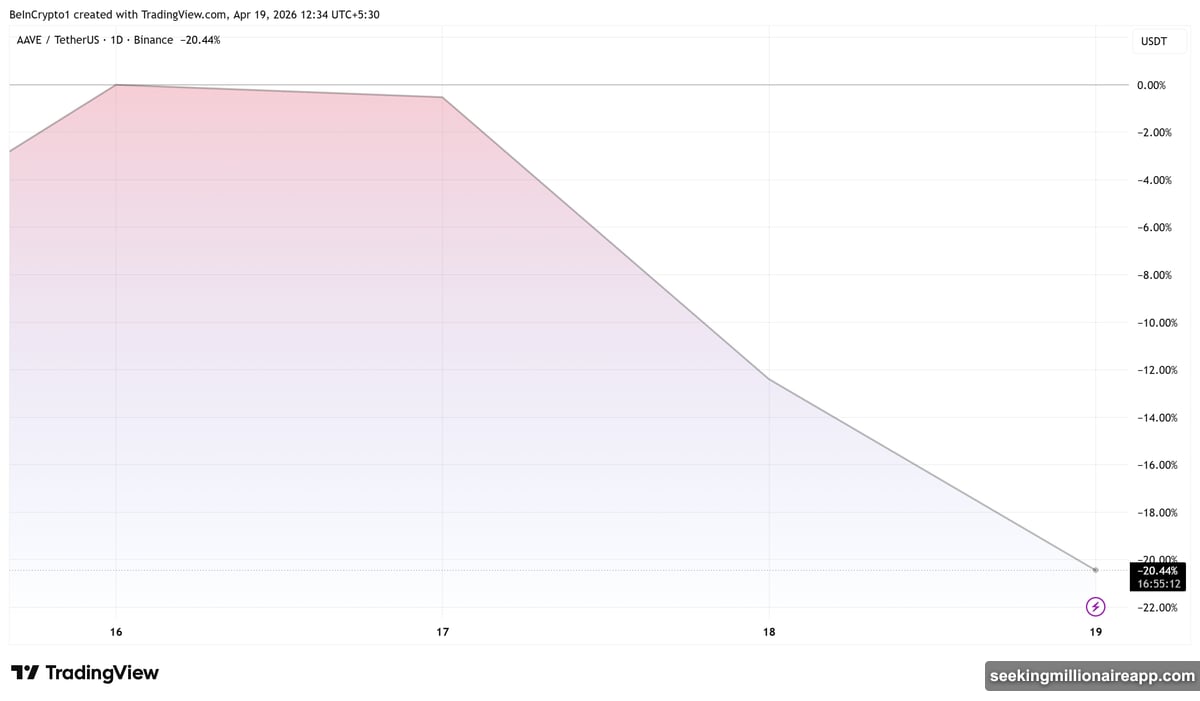
The DeFi world had a rough Saturday. AAVE shed over 20% of its value in just hours after news broke about the KelpDAO rsETH exploit, sending whale wallets into a selling frenzy and pushing Aave’s ETH pool to a point where ordinary depositors couldn’t withdraw their funds.
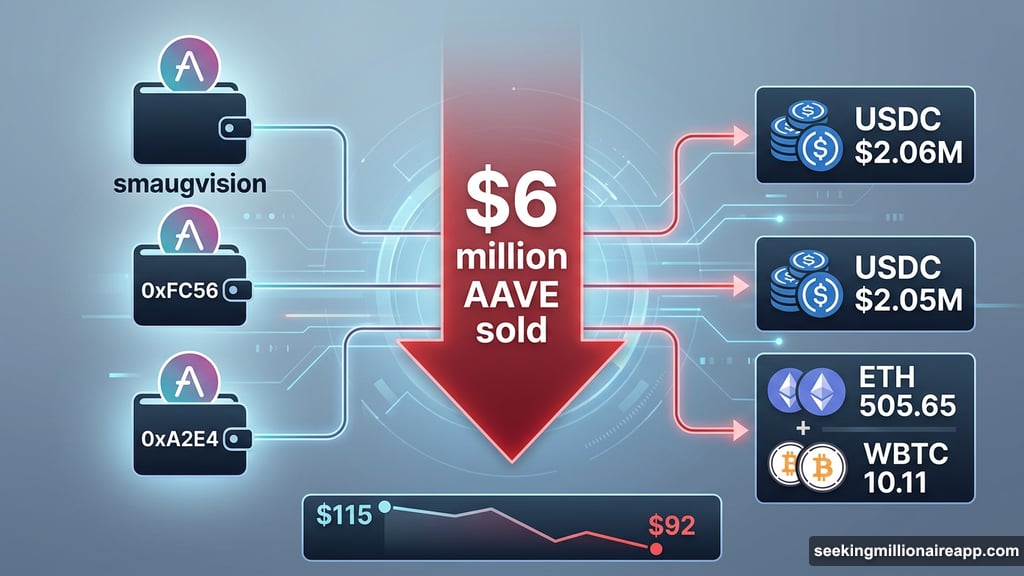
The token slid from around $115 all the way below $92. And the chaos didn’t stop at the price chart.
Whale Wallets Moved Fast
On-chain data tracked by Lookonchain tells a pretty clear story. Three large wallets started offloading AAVE almost immediately after the exploit became public knowledge.
A wallet known as smaugvision sold 20,015 AAVE for $2.06 million USDC, averaging about $103 per token. A second wallet at address 0xFC56 dumped another 20,000 AAVE for $2.05 million at the same average price. Then a third wallet, 0xA2E4, sold 19,666 AAVE worth roughly $1.95 million, converting the proceeds into 505.65 ETH and 10.11 WBTC at a slightly lower $99 average.
Add those up and you get nearly 60,000 AAVE tokens worth over $6 million exiting the market in a matter of hours. That kind of coordinated selling pressure doesn’t go unnoticed, and the price reflected it almost instantly.
ETH Utilization Hit 100%. That’s a Problem.
Here’s where things got genuinely scary for Aave depositors. Beyond the AAVE token sell-off, ETH suppliers started pulling their funds from the protocol at scale too.
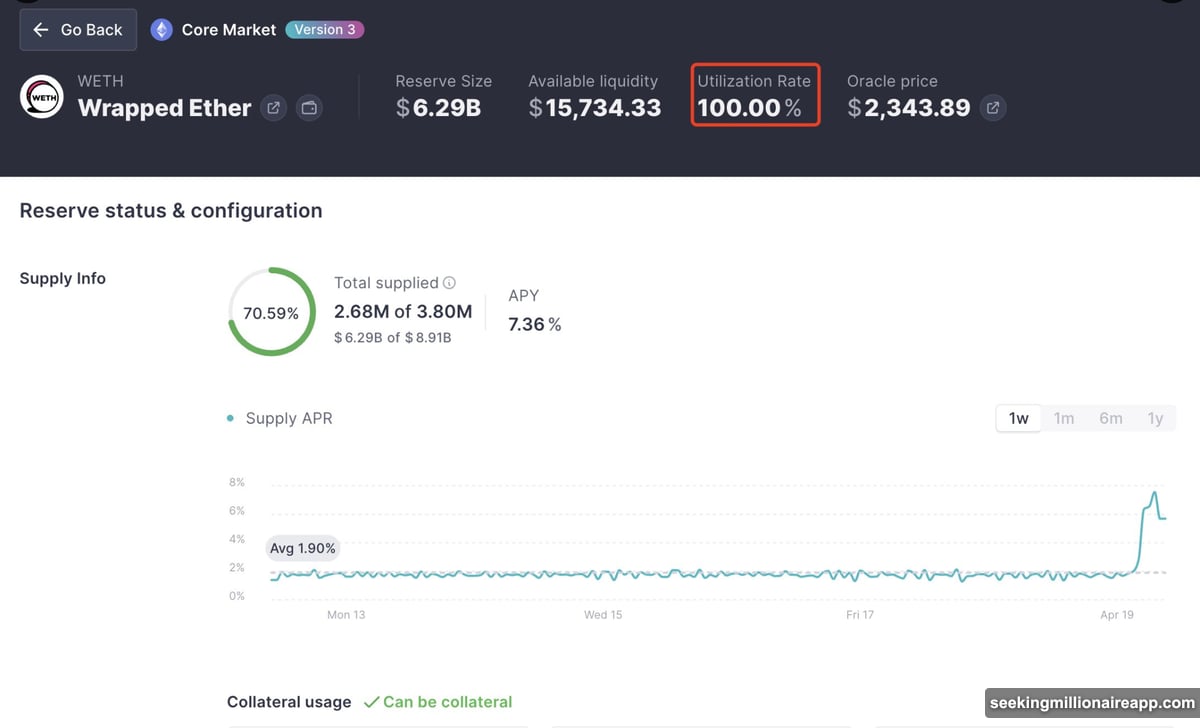
Over $5.4 billion in ETH reportedly left Aave within hours of the news breaking. Tron founder Justin Sun was among the biggest movers, withdrawing 65,584 ETH worth approximately $154 million on his own.
That mass exodus pushed Aave’s ETH utilization rate to 100%. In plain terms, that means the pool ran completely dry. No liquidity left for new withdrawals. Anyone still holding ETH in Aave’s V3 market was effectively locked in, unable to pull their funds out.
High utilization also triggers Aave’s interest rate curve to spike borrowing costs sharply. So borrowers face higher rates on top of everything else.
What Aave Says About the Damage
Aave shared a status update exclusively with BeInCrypto, and the message was clear: the damage is contained.
“On Aave’s side, the situation is contained to the V3 ETH market only. V4 is completely unaffected,” the Aave team confirmed.
The team also moved quickly on the technical side. They froze the rsETH reserve, removed its borrowing power, and temporarily reduced the loan-to-value ratio on ETH to zero. Those are real, meaningful precautionary steps, not just reassuring words.
Stablecoin reserves and all other assets on the platform are reportedly operating normally, with no exposure to the KelpDAO event.
DeFi Protocols Still Carry Real Risk
This situation is a sharp reminder that DeFi’s interconnected design is both its strength and its vulnerability. When one protocol runs into trouble, the ripple effects can spread fast.
The key question now is whether Aave’s Umbrella backstop system and the rsETH market freeze can restore enough confidence to bring liquidity back into the V3 ETH pool. Depositors currently locked out are watching closely.
For anyone holding AAVE or using Aave’s lending markets, the practical takeaway is straightforward. Stay informed on official communications from the Aave team, keep an eye on utilization rates before depositing into any pool, and understand that 100% utilization isn’t just a number on a dashboard. It means your funds aren’t accessible until liquidity returns.
The situation appears manageable based on what Aave has shared so far. But in DeFi, “manageable” can change quickly. Staying sharp and watching for further updates from the team is the smartest move right now.