Two major regulatory forces are colliding right now, and Russian crypto investors are stuck between them.
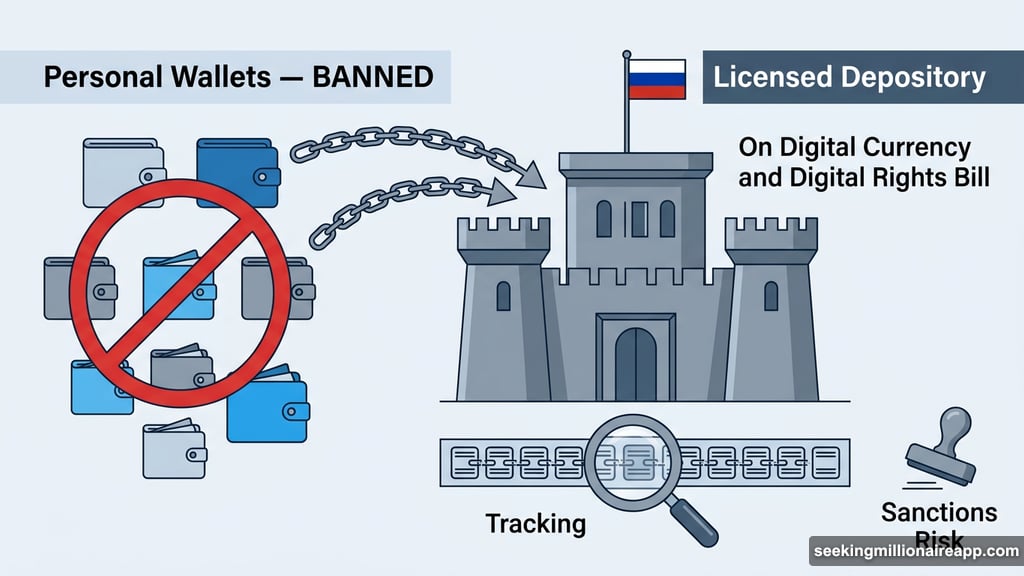
From May 24, 2026, the EU’s 20th sanctions package bans all transactions with Russian-registered crypto providers and exchange platforms. Any market participant under EU jurisdiction who touches these services breaks the law. At the same time, Russian authorities are pushing their own centralization agenda through a proposed bill called “On Digital Currency and Digital Rights,” which would require mandatory storage of crypto in licensed depositories and ban personal wallets entirely.
Put those two developments together and the risk picture for Russian crypto investors gets genuinely alarming.
BeInCrypto spoke with several legal experts to understand what this combination actually means on the ground.
Does Russian Crypto Automatically Become “Dirty”?
This is the question everyone’s asking. And the answer depends on who you talk to.
Mikhail Uspensky, a member of the State Duma’s expert council on crypto regulation, says the “dirty” label is already a de facto reality. Large European platforms are already refusing to accept cryptocurrency with any Russian connection, regardless of formal sanctions status.
But other experts push back on that blanket view. Daria Mitrokhina, a leading lawyer for international projects at Right Side, draws a sharper line. Cryptocurrency used solely by Russian citizens or through unsanctioned platforms doesn’t carry the same automatic blocking risk as assets flowing through sanctioned services. “Dirty” specifically refers to assets linked to criminal activity. However, she acknowledges that Russian-origin crypto still carries elevated risk, and foreign platforms will grow even more cautious as a result.
Olga Ocheretyanaya, a senior associate in crypto regulation and mining at Right Side, agrees with that framing. EU sanctions target Russian platforms, specific tokens linked to the Russian financial system, and sanctions-evasion infrastructure. Simply holding crypto as a Russian resident or passing it through a Russian wallet doesn’t automatically taint it.
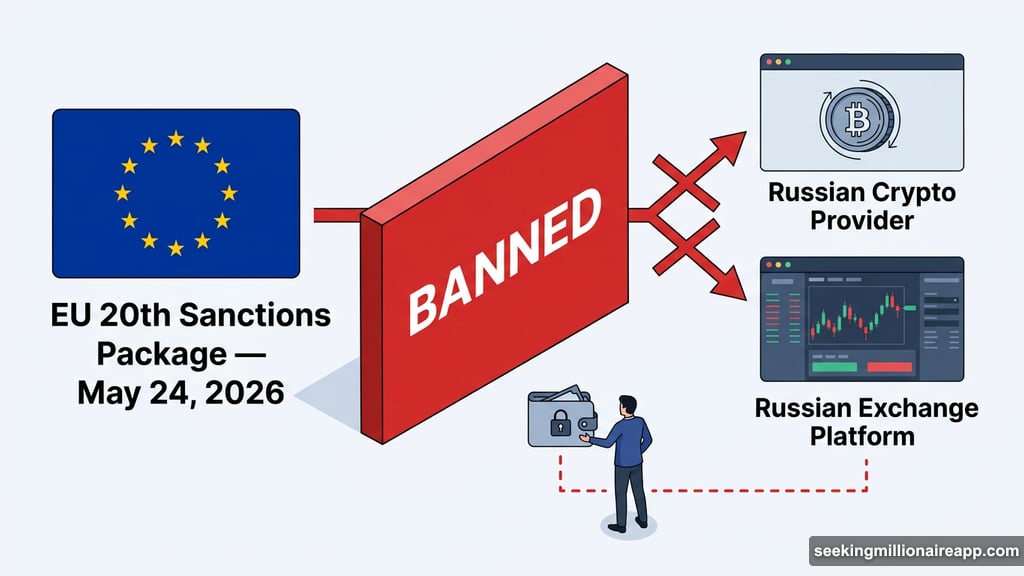
But here’s the critical warning she adds. If Russia’s new depository law passes as currently written, every officially registered crypto platform in Russia will eventually fall under sanctions. And every wallet or asset passing through those platforms will get labeled accordingly.
Mandatory Depositories Create a Tracking Problem
Russia’s proposed digital depository system is causing real confusion among market participants, according to Uspensky. He describes it as a “Russian innovation” born from applying traditional securities regulations to distributed ledger technology. The logic doesn’t translate cleanly.
More importantly, this centralization creates a new vulnerability that the bill’s authors may not have fully considered.
“Transactions by centralized custodians will inevitably create clusters and hubs in the blockchain that are easily tracked,” Uspensky warns. “A hack, a data leak, or even a simple oversight linking address identifiers to a Russian digital depository will cause problems for dozens, if not hundreds, of legitimate Russian residents trying to buy crypto from legitimate exchanges.”
In other words, forcing crypto through centralized Russian custodians doesn’t protect users. It stamps a visible “red Russian trace” onto blockchain transactions that anyone can see and flag.
Will Sanctions Slow Russia’s Centralization Push?
Probably not. In fact, experts suggest the opposite is more likely.
Mitrokhina explains that Russia’s primary goals are already focused inward: restricting external market influence, strengthening the ruble, developing domestic payment systems, and reducing dependence on international financial infrastructure. Tighter EU sanctions reinforce that direction rather than reverse it. Her read is blunt: “We should now expect a focus on settlements with friendly countries and increased domestic oversight.”
Ocheretyanaya agrees. Sanctions are actively pushing Russian authorities toward building a closed domestic circuit, with the possibility of fully isolating external services left on the table. The unanswered question is how cryptocurrency inside that circuit gets replenished with liquidity and how it gets “cleaned” for any international use.
She also points out something worth remembering. EU sanctions only bind those within EU jurisdiction. Russia long ago established crypto channels through Asia, the Middle East, and other friendly jurisdictions. Key flows will simply move further into regions where EU regulations carry no weight.
The Digital Ruble Plays a Separate Game
The digital ruble wasn’t designed to evade sanctions. Both experts are clear on that point. The initiative was aimed at creating an independent Russian payment system for use with neutral and friendly countries, since EU markets had already effectively shut Russia out long before this latest package.
The 20th sanctions package won’t kill the digital ruble project. But it will reshape its geography and operational details. Plans get adjusted, not abandoned.
Ocheretyanaya notes that the bigger obstacle isn’t EU sanctions blocking infrastructure development. It’s reaching a genuine political agreement among BRICS members to actually use the digital ruble for cross-border settlements between themselves. That’s a diplomatic challenge, not just a technical one.
What Does This Mean for Russian Crypto Investors Right Now?
The practical picture is stark. Working with Russian sanctioned platforms and then trying to move that crypto onto international markets is a dead end. Mitrokhina is direct about this: it will likely result in blocking.
But individuals still have options, at least for now. Choosing platforms outside the sanctioned list, operating within legal compliance, and avoiding sanctioned services keeps doors open. The window for that approach narrows if Russia’s depository bill passes in its current form, because it would eventually push all officially registered domestic platforms into sanctioned territory.
The combination of EU external pressure and Russian internal centralization creates a narrowing corridor for anyone trying to hold crypto legally while remaining accessible to international markets. That corridor is closing faster than most investors probably realize.