The crypto industry is facing a double hit right now. A bear market is compressing opportunities, and AI is reshaping the roles that remain.
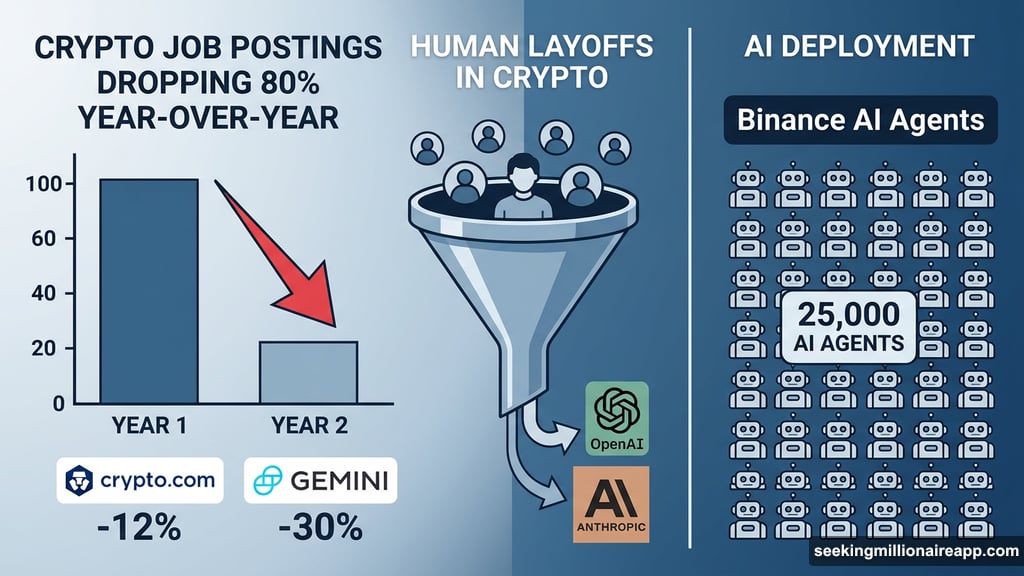
Job postings have dropped 80% year over year. Crypto.com cut 12% of its workforce while explicitly naming AI as the reason. Gemini reduced headcount by 30%. And the talent that built these companies? A growing share is heading to OpenAI, Anthropic, and DeepSeek — and not coming back.
But here’s the thing: not every corner of crypto is dying. Some sectors are genuinely growing. The trick is knowing which ones.
Bear Market Meets AI — A Brutal Combo
Two separate forces are hitting crypto hiring at the same time, and it’s worth separating them clearly.
The first is cyclical. Sectors like restaking, DePIN, and undifferentiated Layer 2 projects have lost momentum fast. Companies in these spaces are cutting costs simply to survive another year. These layoffs aren’t really about AI — they’re about entire product categories losing investor interest.
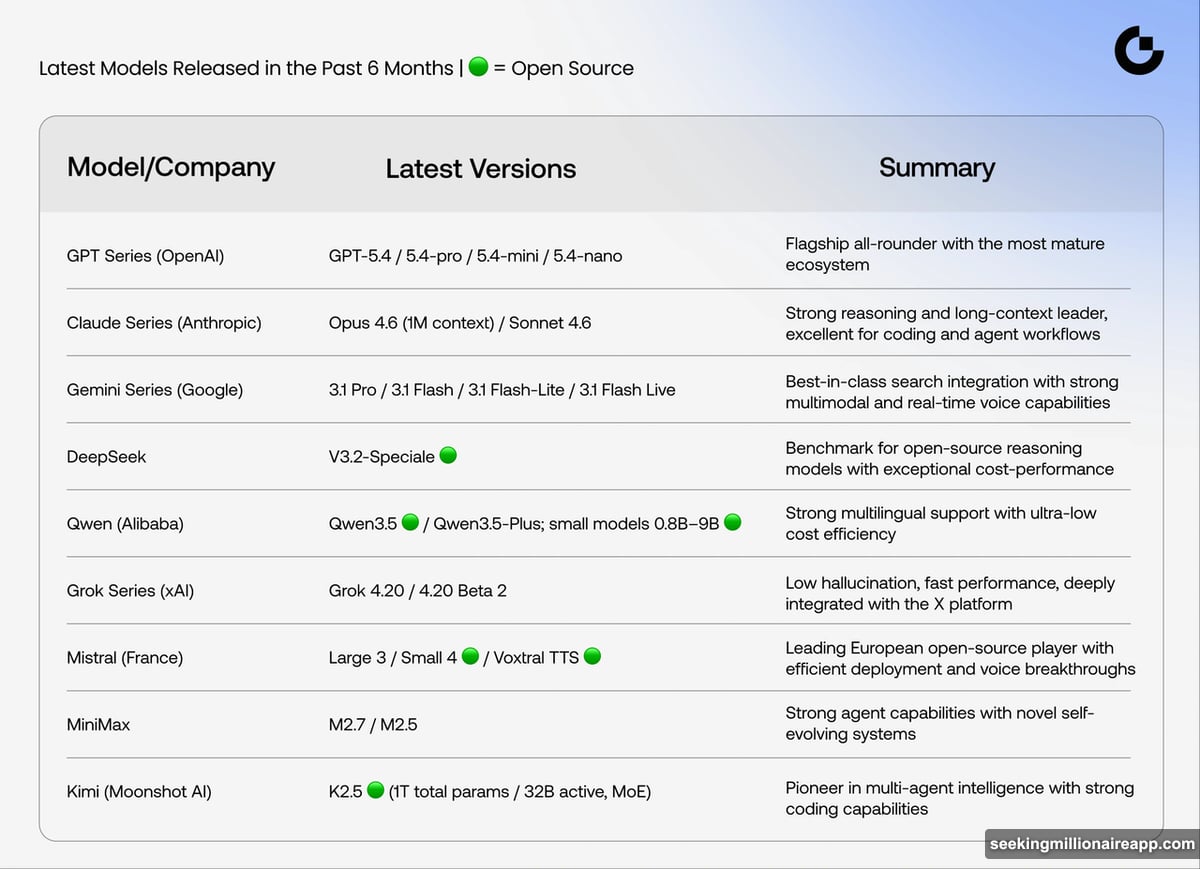
The second force is structural. AI is genuinely changing how work gets done inside crypto companies. Binance has deployed 25,000 AI agents. OKX built an AI layer directly into its developer platform. Gate now lets users trade using plain English commands.
These aren’t pilot programs. They’re live operations replacing tasks that humans used to do manually.
So when you see a layoff announcement, the first question worth asking is: was this role automated, or did this whole sector just run out of money? The answer completely changes how you should respond.
Stablecoins Are the One Bright Spot
Amid the broad pullback, stablecoins stand out as the only crypto use case with large-scale, real-world adoption.
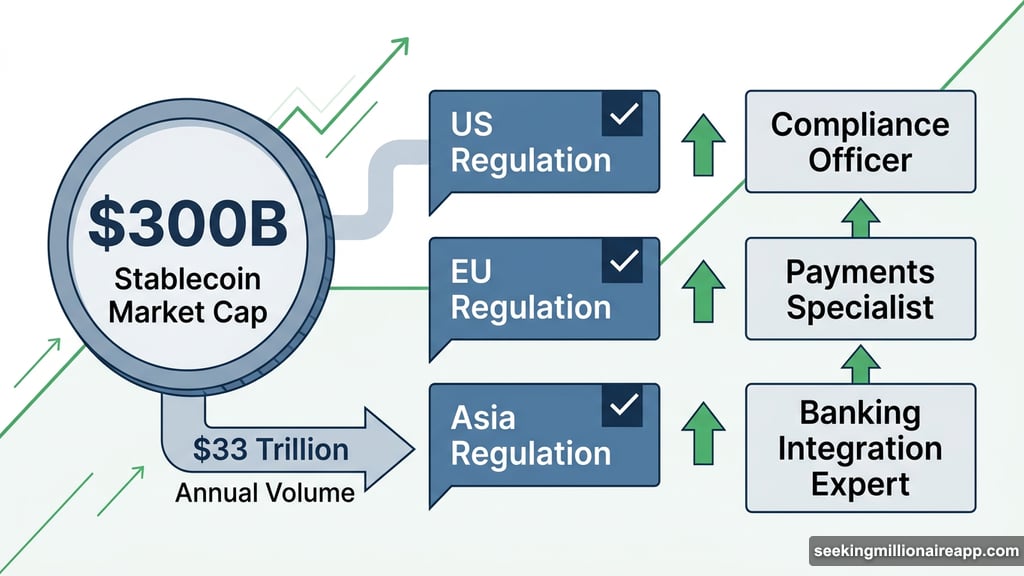
Their combined market cap has crossed $300 billion. Annual transaction volume hit $33 trillion. Regulatory frameworks are taking shape in the US, Europe, and Asia simultaneously.
That regulatory clarity is creating professional roles that didn’t exist two years ago. Compliance officers, payments specialists, and banking integration experts inside the stablecoin ecosystem are among the few crypto positions genuinely insulated from market cycles. When rules get clearer, companies need more lawyers and compliance teams, not fewer.
This matters especially for people coming from traditional finance. A lawyer with securities experience moving into stablecoin regulation, or a payments engineer transitioning from legacy banking infrastructure — these cross-industry paths often outperform a purely crypto-native background right now.
Technical Talent Is Still in Demand — But the Definition Is Shifting
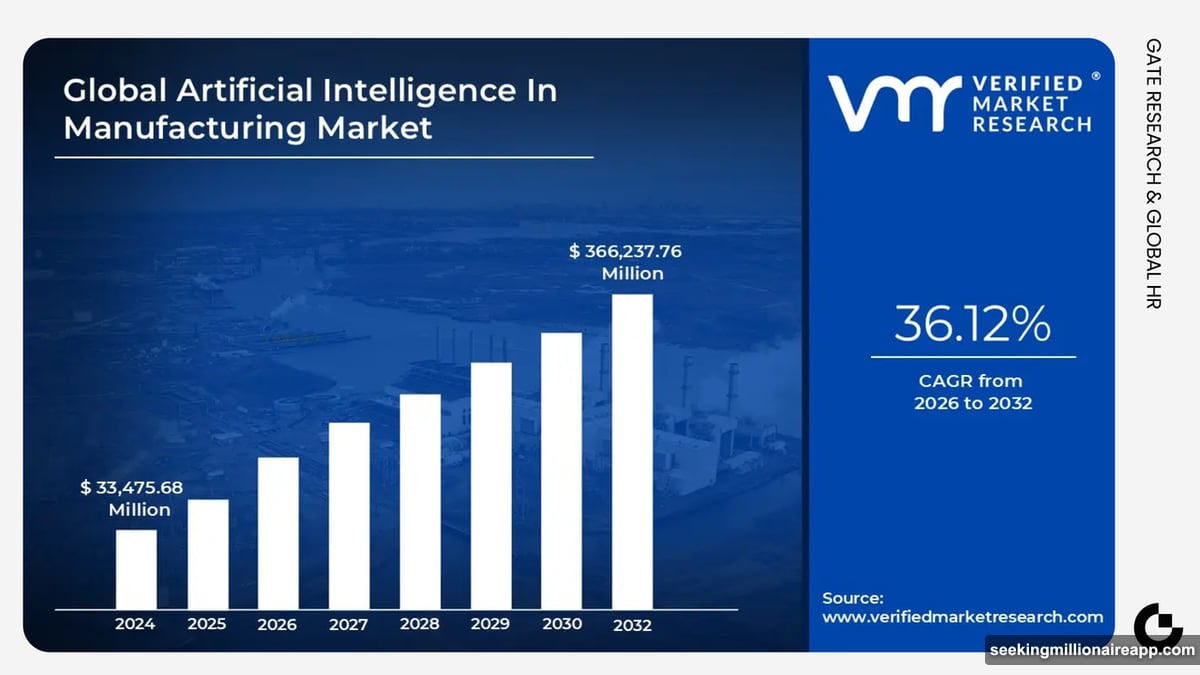
Technical roles still make up over 50% of crypto job listings. Smart contract engineers, blockchain developers, and security auditors remain core demand.
But the definition of “technical” is evolving quickly.
Pure execution coding — writing Solidity, running standard tests, handling repetitive builds — is shrinking fast as AI tools absorb those tasks. What’s growing is architectural thinking. The ability to design systems, solve ambiguous problems, and make judgment calls that an AI agent can’t handle.
Gemini framed this shift bluntly in internal communications: AI is turning “10x engineers” into “100x engineers.” The engineers who understand how to direct AI tools, verify their output, and build systems around them are becoming exponentially more valuable. Those who don’t adopt these tools are sliding toward displacement.
Zero-knowledge proof engineers and rollup designers are particularly scarce right now. Global demand for AI-fluent talent runs at roughly 3.2x the available supply, and roles requiring AI skills command a 67% salary premium over traditional positions. That gap is real, and it’s widening.
What the Salary Data Shows
The global average crypto salary grew about 18% in 2025, but that headline number hides a sharp internal divide.
At the top of the pay scale sit AI-native quantitative researchers and algorithmic traders. Fewer than 3,000 people globally combine genuine finance expertise with AI proficiency at an elite level. The supply-to-demand ratio for this group runs approximately 1:50. These candidates command a 40% to 60% salary premium over traditional quant roles.
Compliance and legal roles follow closely. As major markets finalize regulatory frameworks, senior compliance officers with institutional backgrounds are seeing compensation that rivals quant traders in some regions.
Smart contract auditors occupy a third tier, with significant upside from bug bounties on top of base salaries.
At the other end, basic operations, customer support, and data entry roles face downward pressure from both AI automation and global remote competition. These positions are shrinking, and waiting for conditions to improve isn’t a solid strategy.
On token compensation: over 70% of crypto projects offer token options as part of total packages. During a bull market, these can multiply many times over. During bear cycles, most go to zero. Before accepting any offer heavy on token allocation, it’s worth asking whether the project generates real revenue independent of token issuance, and whether the treasury can survive a full market cycle.
The AI Readiness Gap Is Your Window
Here’s a number worth sitting with: only 16% of professionals currently demonstrate high AI readiness, according to Forrester’s AI Readiness Index.
That’s not a crisis. That’s an opening.
The professionals who learn to use AI tools — not just superficially, but as a genuine productivity multiplier — are building an enormous advantage over the 84% who haven’t made the shift yet. That window won’t stay open indefinitely. But right now, even modest AI fluency puts you ahead of most of the market.
For anyone in crypto or considering entering the industry, the practical starting point is straightforward. Get comfortable with two or three tools: Claude or ChatGPT for analysis and writing workflows, Cursor or GitHub Copilot for development work. Treat this as infrastructure, not a bonus skill.
Where to Focus Your Energy Right Now
The sectors worth building toward in 2026 are stablecoins, compliance and risk management, and the intersection of AI and crypto infrastructure.
Stablecoins are generating real professional demand driven by regulation, not hype. Compliance is non-negotiable as global frameworks tighten. And the companies integrating AI into core crypto operations — exchanges, custody providers, on-chain financial infrastructure — need people who understand both sides.
For professionals currently working in restaking, DePIN, or early-stage L2 projects with limited revenue, the honest advice is to start exploring adjacent opportunities now rather than waiting for conditions to stabilize. Some of those sectors may recover. Many won’t.
For people coming from Web2, AI, or traditional finance: over half of new crypto entrants in the past year came from outside the industry. Cross-functional expertise paired with basic crypto literacy is a stronger position than pure crypto enthusiasm right now.
The market is smaller than it was. But the roles that remain are more clearly defined, better compensated, and built for professionals who can combine deep expertise with practical AI fluency. That combination is rare. And rare things tend to get paid well.