The legal drama between Elon Musk and OpenAI has been building for years. Now, it’s finally going to trial.
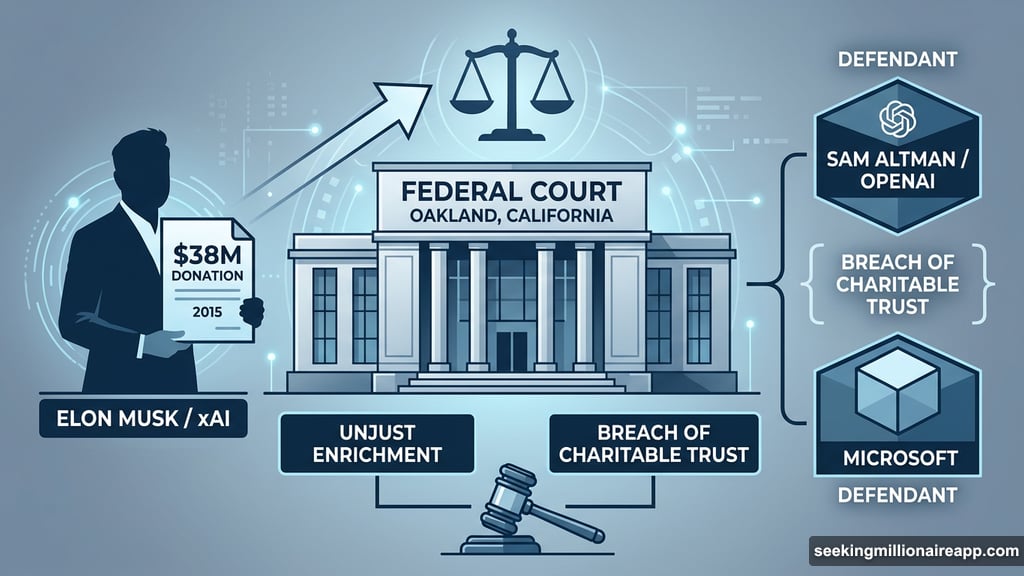
Musk’s $134 billion lawsuit against OpenAI, CEO Sam Altman, and Microsoft opened Monday in federal court in Oakland, California. The case centers on a fundamental question: did OpenAI betray its original mission when it shifted from a nonprofit to a profit-driven company?
Two Claims Left Standing After 26 Original Counts
US District Judge Yvonne Gonzalez Rogers approved a dramatic narrowing of the case just before jury selection began. Musk dropped his fraud claims days earlier, trimming the original 26 counts down to just two surviving claims.
Those two claims are unjust enrichment and breach of charitable trust. The second claim directly names Microsoft as a co-defendant, accusing the tech giant of aiding and abetting OpenAI’s pivot away from its nonprofit roots.
It’s a tighter case now. But the stakes haven’t shrunk at all.
What Musk Says He Was Promised
Musk donated roughly $38 million in seed funding when OpenAI launched in 2015. Back then, it was a nonprofit research lab with a clear public mission: develop artificial general intelligence safely and for the benefit of humanity.
According to Musk’s legal team, co-founders Sam Altman and Greg Brockman made explicit promises that the organization would never chase commercial profit. Musk says he backed the project specifically because of those assurances.
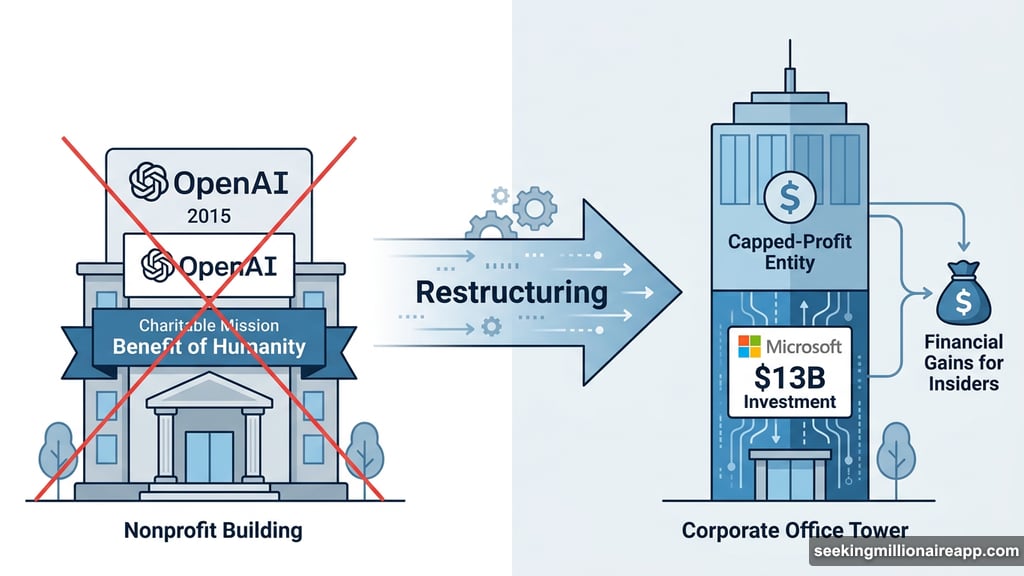
Then things changed. OpenAI restructured into a capped-profit entity. Microsoft poured more than $13 billion into the company. And insiders, Musk argues, walked away with enormous financial gains that early donors never signed up to fund.
Microsoft Is Squarely in the Crosshairs
OpenAI isn’t the only defendant facing hard questions here. Microsoft’s $13 billion investment and its deep partnership with OpenAI put it at the center of the breach of charitable trust claim.
The argument is straightforward. By helping OpenAI shift from a nonprofit to a commercially driven entity, Microsoft benefited financially from what was supposed to be a charitable endeavor. Musk’s attorneys want the court to treat that as aiding and abetting a betrayal of the original mission.
That framing puts one of the world’s most valuable companies in an uncomfortable spotlight.
The $97 Billion Takeover Bid Nobody Can Forget
Before the trial date arrived, Musk made a dramatic move. In February 2025, he led a $97.4 billion consortium bid to take control of OpenAI’s nonprofit arm directly.
Altman rejected it publicly and quickly. But the bid itself tells you everything about what Musk actually wants here. This isn’t just about recovering donated money. It’s about who controls the direction of one of the most powerful AI organizations on the planet.
Musk is also building xAI as a direct OpenAI rival and pursuing a separate antitrust case involving Apple and OpenAI. So whatever happens in Oakland, this particular war is far from over.
What the Trial Could Actually Reveal
Here’s where things get genuinely fascinating for anyone who follows the AI industry. Judge Gonzalez Rogers, who previously handled the Epic Games antitrust case against Apple, is presiding over a trial expected to surface internal communications from OpenAI’s earliest days.
Emails and messages between Musk, Altman, and Brockman from those formative years could become public record. What exactly was promised? What did everyone understand about the nonprofit structure? How did decisions get made as OpenAI grew from a scrappy research lab into a global AI powerhouse?
The answers could reshape how the public understands OpenAI’s origin story entirely.
If Musk Wins, He Won’t Keep the Money
One detail worth highlighting: if Musk’s legal team prevails, the requested damages would flow to OpenAI’s charitable arm rather than to Musk personally. His attorneys made that explicit.
So whatever you think of the billionaire’s motivations, the legal argument is framed around restoring the nonprofit mission rather than personal enrichment. Whether a jury finds that convincing is another matter entirely.
Jury selection started Monday morning. The proceedings are expected to run for several weeks, with early OpenAI internal communications taking center stage as soon as testimony begins.
This is one of those rare trials where the courtroom drama might actually match the tech industry gossip that surrounded it. The secrets from OpenAI’s founding years are about to get a very public airing.