Markets shook overnight. Then did something nobody expected.
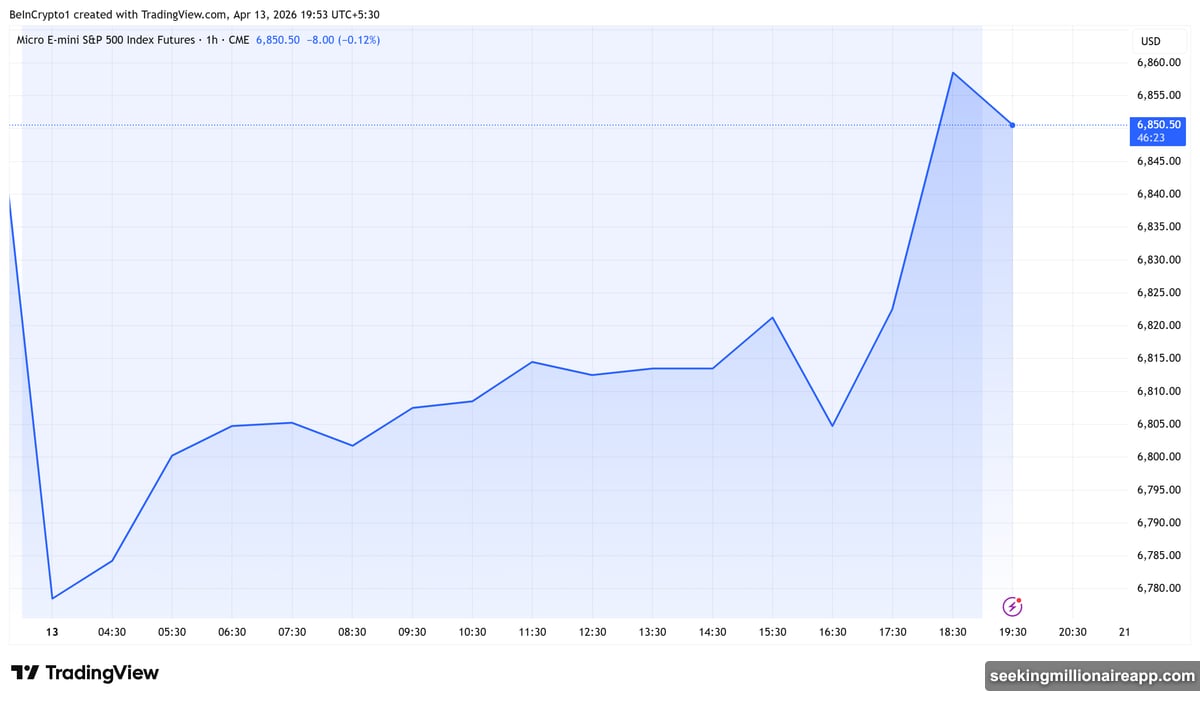
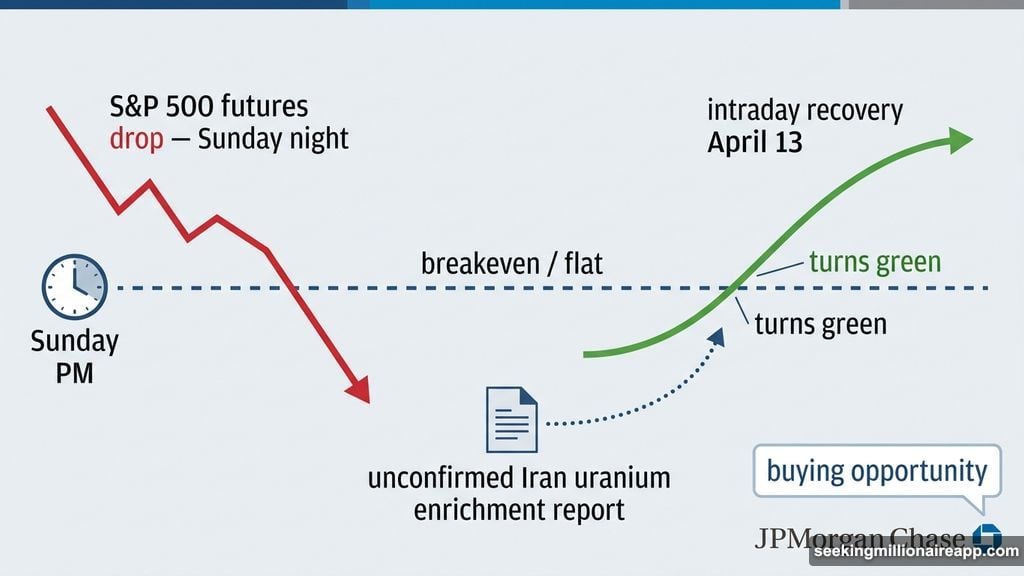
The S&P 500 erased early losses and briefly turned positive on April 13 as US Central Command activated a naval blockade of Iranian ports across the Strait of Hormuz. Equity futures had dropped sharply Sunday night after President Trump announced the operation following the collapse of US-Iran peace talks in Islamabad. So watching the index climb back into the green mid-session genuinely caught traders off guard.
The intraday reversal raises a real question: why are stocks rallying on news that just sent oil above $104 a barrel?
What the Hormuz Blockade Actually Does
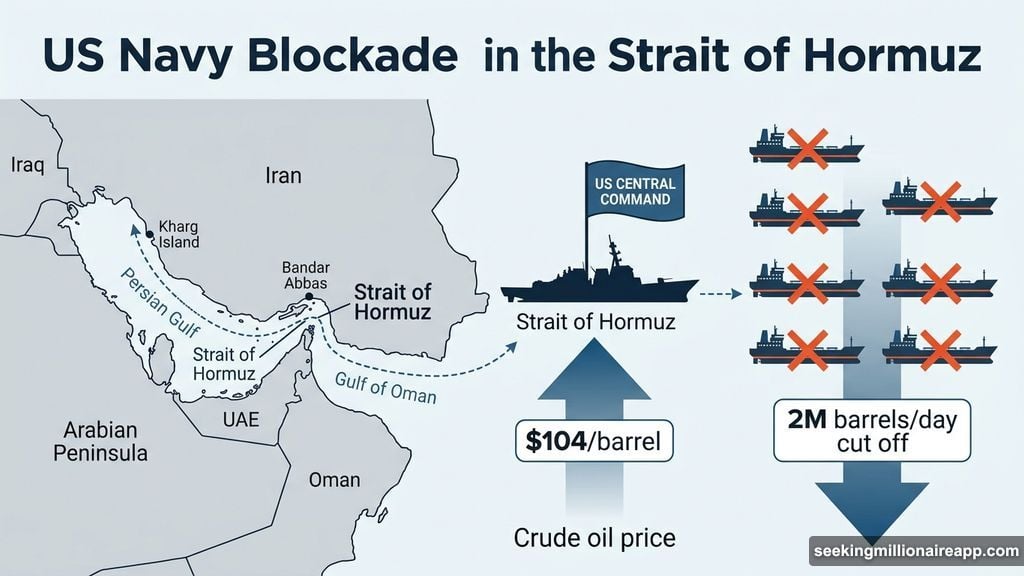
The blockade went live at 10 a.m. ET on Monday. US Central Command confirmed it targets vessels entering or departing Iranian ports specifically. Ships transiting to non-Iranian destinations remain free to pass.
Still, the impact on oil supply is immediate. Iran had been exporting over two million barrels per day before the operation. That flow is now effectively cut off. Crude surged above $104 per barrel on supply fears, and US gas prices are now forecast to climb above $4.25 per gallon.
Mohammad Bagher Ghalibaf, Speaker of Iran’s Parliament, didn’t hold back on social media. “Enjoy the current pump figures. With the so-called ‘blockade’, soon you’ll be nostalgic for $4–$5 gas,” he wrote. Meanwhile, shipping data from Kpler shows Strait of Hormuz traffic running well below normal levels. The chokepoint handles roughly 20% of global oil supply, so even partial disruptions ripple fast through energy markets.
Why Equity Markets Reversed Course
The S&P 500 had just posted its best week since November, gaining 3.6%, driven largely by hopes for a swift diplomatic resolution. That optimism unraveled Sunday night when talks collapsed in Islamabad over disagreements on uranium enrichment, proxy support, and sanctions relief.
But then came the Monday reversal. Analysts at the Kobeissi Letter noted it clearly: “The S&P 500 erases all losses and turns green on the day as the US begins its blockade of the Strait of Hormuz.”
Part of what moved markets was a single unconfirmed report. Iranian officials are reportedly studying whether to abandon uranium enrichment as a US condition for ending hostilities. Tehran has not confirmed the report. But traders priced it in anyway. That kind of diplomatic signal, even unverified, carries real weight when sentiment is already fragile.
JPMorgan Calls It a Buying Opportunity
Not everyone is bracing for the worst. JPMorgan Chase strategist Mislav Matejka came out firmly in favor of buying the pullback.
His argument is straightforward. Bearish sentiment and oversold conditions historically create opportunity, not permanent damage. Volatility may persist in the short term, but a three to twelve month horizon favors adding risk. The bank expects a V-shaped recovery and sees international stocks, emerging markets, small caps, and value plays as likely outperformers as inflows resume.
That’s a bold call given the backdrop. But JPMorgan has made similar calls during previous geopolitical shocks, and markets have often proved them right faster than most expected.
Bitcoin Holds Above $71,000
Risk assets beyond equities showed similar resilience. Bitcoin held above $71,000 on the day, trading near $71,611 with a 0.74% gain. That mirrors a broader pattern seen throughout this conflict. Risk assets have repeatedly absorbed geopolitical shocks before rebounding, sometimes within hours.
It’s not that markets are ignoring the danger. It’s that traders have grown familiar with the cycle: escalation, brief selloff, partial recovery on diplomatic hints. The Hormuz situation fits that pattern almost perfectly so far.
What Comes Next
Whether this calm holds depends on two things. First, how the initial interdiction events unfold. The first vessel actually stopped or turned away by US forces will test both sides’ resolve and trigger the next market reaction. Second, whether that uranium enrichment report gains any official confirmation from Tehran.
Failed negotiations and ongoing enforcement uncertainty continue to suppress traffic through the Strait. But markets are clearly betting that some kind of off-ramp exists, even if nobody can see it clearly yet.
That bet might prove right. Or the next headline could flip everything. For now, the S&P 500 turned green on blockade day, and that tells you something about where trader psychology sits right now.