
Autonomous AI systems aren’t just writing reports anymore. They’re placing trades, routing payments, and settling transactions across major financial platforms — and the pace of adoption is accelerating fast.
BitGo COO Jody Mettler sees the opportunity clearly. But she also sees the risk. Without the right guardrails, she warns, agentic finance could turn into a “wild west” with serious consequences for markets and institutions alike.
So what does responsible agentic finance actually look like? According to Mettler, it comes down to four specific controls every institution needs to have in place.
Agentic Finance Is Already Here
This isn’t a future scenario. It’s happening right now, across multiple platforms simultaneously.
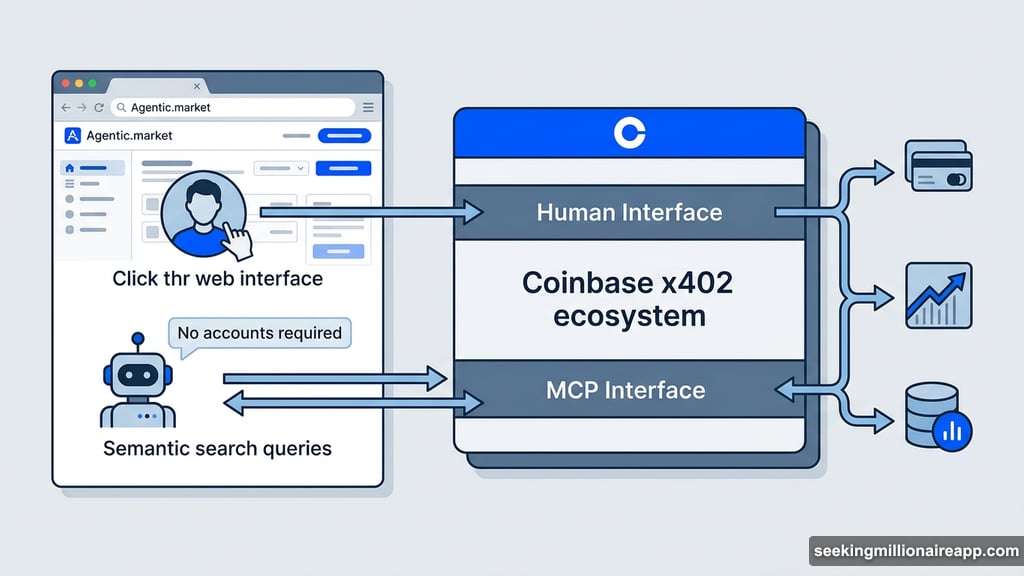
Coinbase recently launched Agentic.market through its x402 ecosystem. The platform lets humans browse services through a standard web interface while AI agents independently find and integrate those same services through an MCP interface. No accounts required. Semantic search built in. Agents operating on their own.
Enterprise software firm Aptean previewed AppCentral, bringing 10 AI agents to Microsoft Dynamics 365 customers. These agents handle finance, supply chain, procurement, and production workflows autonomously. Meanwhile, Basware launched AI agents inside its Invoice Lifecycle Management Platform, moving accounts payable toward full automation.
Bybit rolled out its AI Trading Skill Hub with 253 APIs. It covers market data, spot trading, derivatives, and account management — all in one autonomous system. And BitGo itself shipped its own Model Context Protocol server in March, giving AI development tools direct access to its documentation and APIs.
These aren’t experiments. They’re production deployments.
The Numbers Back It Up
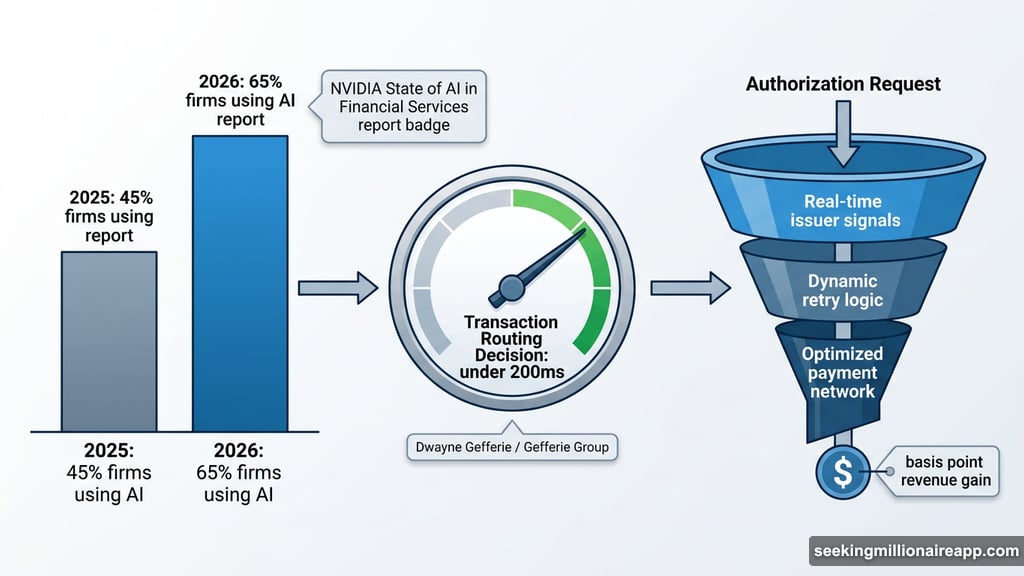
NVIDIA’s sixth annual State of AI in Financial Services report surveyed more than 800 industry professionals. The results are striking. In 2025, 45% of financial firms reported actively using AI. By 2026, that number jumped to 65%.
More specifically to agentic systems, 42% of firms are either using or assessing agentic AI right now. And 21% have already deployed AI agents handling real transactions.
Payments strategist Dwayne Gefferie of the Gefferie Group explained why adoption is moving so fast. “Agentic AI systems can now autonomously route transactions to the most optimized payment networks, dynamically adjust retry logic based on real-time issuer signals, and make routing decisions under 200 milliseconds — something traditional rule-based systems simply can’t match,” he said. “Every basis point improvement in authorization rates translates directly to revenue. There’s no ambiguity in measurement.”
That kind of performance advantage is hard to ignore. So institutions are moving quickly.
Four Controls That Separate Safe Systems From Dangerous Ones
Speed and efficiency are compelling. But Mettler draws a sharp line when it comes to institutional risk.
“While we’re looking at this and we are absolutely excited about what the future can hold here, we don’t want a financial crisis to happen because it’s just the wild west. So, there needs to be controls around it,” she told BeInCrypto.
Her framework is straightforward. Four controls. Each one essential.
Identity comes first. Institutions need to know exactly who or what is acting on their systems at any given moment. An AI agent operating without a clear, verified identity creates accountability gaps that are nearly impossible to close after the fact.
Permissions come second. Every agent needs hard limits on what it can access, authorize, or execute. Unlimited permissions for autonomous systems is how small errors become catastrophic losses.
Policy and approval logic is third. Not every action should run autonomously. Clear rules need to define which transactions require human sign-off and which agents can handle independently. That boundary matters enormously when markets move fast.
Auditability is fourth. Every agent decision needs a traceable record. Institutions and regulators must be able to reconstruct exactly what happened if something goes wrong. Without that trail, accountability is impossible.
Together, these four controls form a framework for agentic finance that can scale without losing oversight.
Why This Framework Matters for the Whole Industry
Mettler’s four-control model isn’t just good practice for BitGo customers. It’s likely to become the standard benchmark as agentic finance spreads across the industry.
“Everybody’s entering into this era with some measured optimism,” she said. “We need to look into it with where it can take us from a financial infrastructure standpoint, but also about the controls that you still need to have behind it.”
That measured optimism is the right tone. The technology is genuinely powerful. Autonomous agents routing transactions in under 200 milliseconds, optimizing payment networks in real time, and handling complex financial workflows without human intervention — these are real capabilities delivering real results.
But Basware CEO Jason Kurtz captured both sides of the moment well. “The future involves Agentic Finance, where AI entities transact on behalf of the enterprise to drive faster, smarter decisions and real business outcomes,” he said. “This is the future we are creating at Basware and preparing our customers for today.”
Preparing customers for it is exactly the right framing. The institutions that will benefit most from agentic finance aren’t the ones who adopt it fastest. They’re the ones who adopt it most thoughtfully, with the right controls already in place before something goes wrong.
Identity, permissions, policy logic, and auditability aren’t obstacles to innovation. They’re what makes sustainable innovation possible. And as AI agents take on more responsibility across financial infrastructure, institutions that treat these controls as optional are taking on risk that’s much harder to see coming — until it arrives all at once.