
Something quietly significant is happening in the Bitcoin market. The big holders — people who own at least one full BTC — are pulling back from exchanges at a pace not seen since 2018. And when large holders stop sending coins to exchanges, it usually means one thing: they’re not planning to sell.
Let’s break down what’s happening, why it matters, and what the on-chain data suggests about where things might go next.
Wholecoiner Exchange Flows Hit Multi-Year Lows
The numbers here are striking. On Binance alone, the monthly average for wholecoiner inflows now sits around 6,000 BTC. Back in 2021, that figure was 15,400 BTC. So we’re talking about a 60% drop from peak activity.
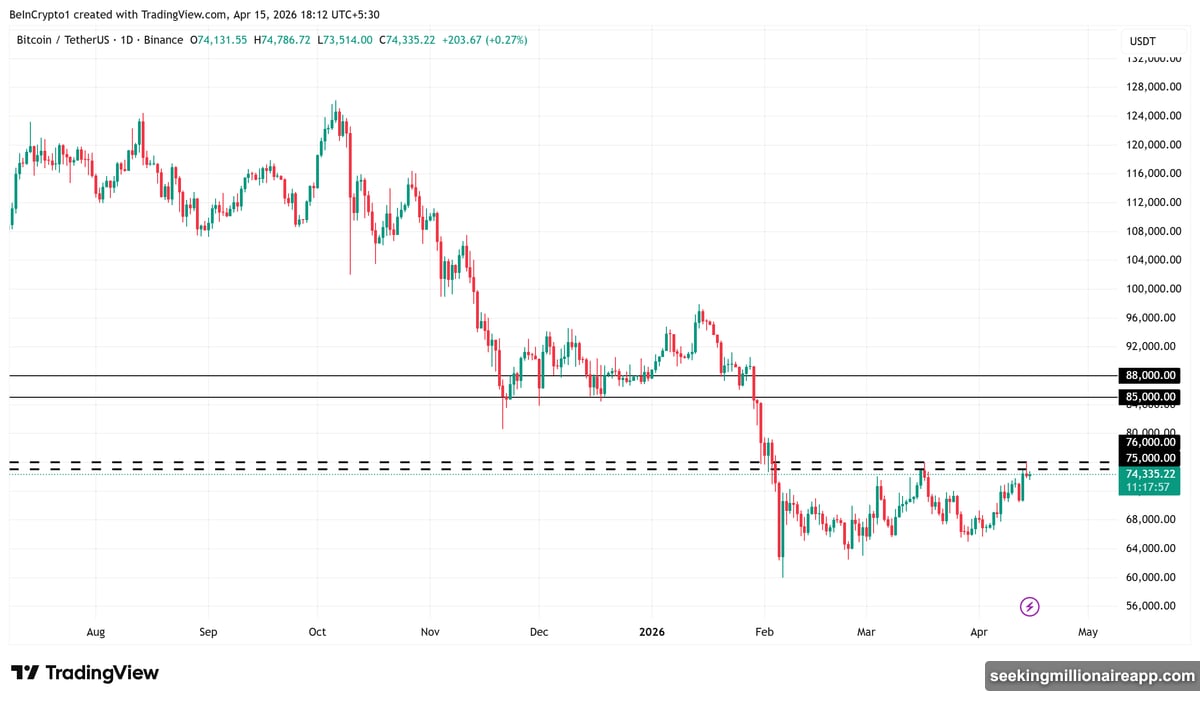
Zoom out globally, and the picture gets even more dramatic. Total transfers of at least one full BTC to exchanges have fallen to roughly 27,500 BTC. At the 2018 peak, that number was closer to 80,000 BTC. That’s a structural change, not a short-term blip.
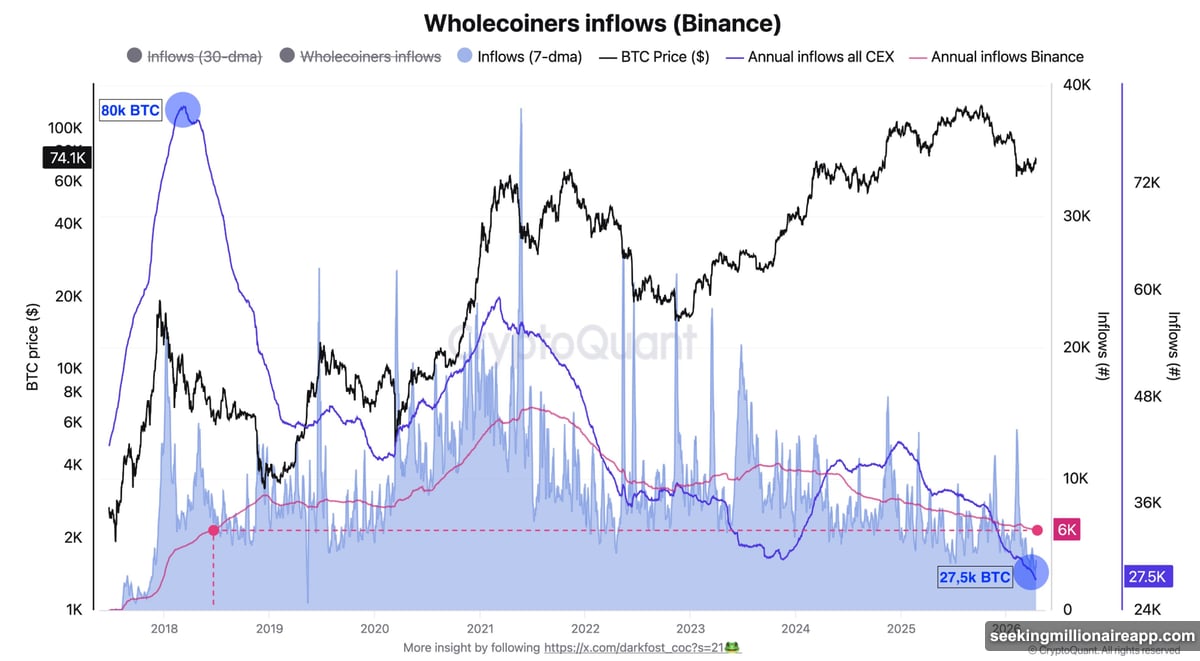
On-chain analyst Darkfost, who flagged this data, put it plainly. “This decline in active wholecoiners on exchanges reflects both reduced selling pressure and a gradual transformation of market structure, with a growing share of supply becoming increasingly illiquid over time.”
In plain terms? Fewer coins are available to buy on the open market. That tightening supply matters a lot when demand picks back up.
Why Are Wholecoiners Stepping Back?
Three things are driving this shift, and they’re all worth understanding separately.
First, rising prices have simply made owning a full bitcoin harder. As BTC climbed into five and six figures, the number of people who could afford to hold a whole coin shrank. So the pool of wholecoiners is smaller now by design.
Second, spot Bitcoin ETFs launched in 2024 and changed the game for institutional investors. Now big money can get Bitcoin exposure without ever touching an exchange or holding BTC directly. That pulls a significant category of buyer out of the traditional exchange flow picture entirely.
Third, the holders who do own full BTC increasingly look like long-term believers. They’re not trading in and out. They’re sitting on their coins and waiting. That behavior removes supply from circulation and makes the available float tighter over time.
Short-Term Holders Are Moving Fast
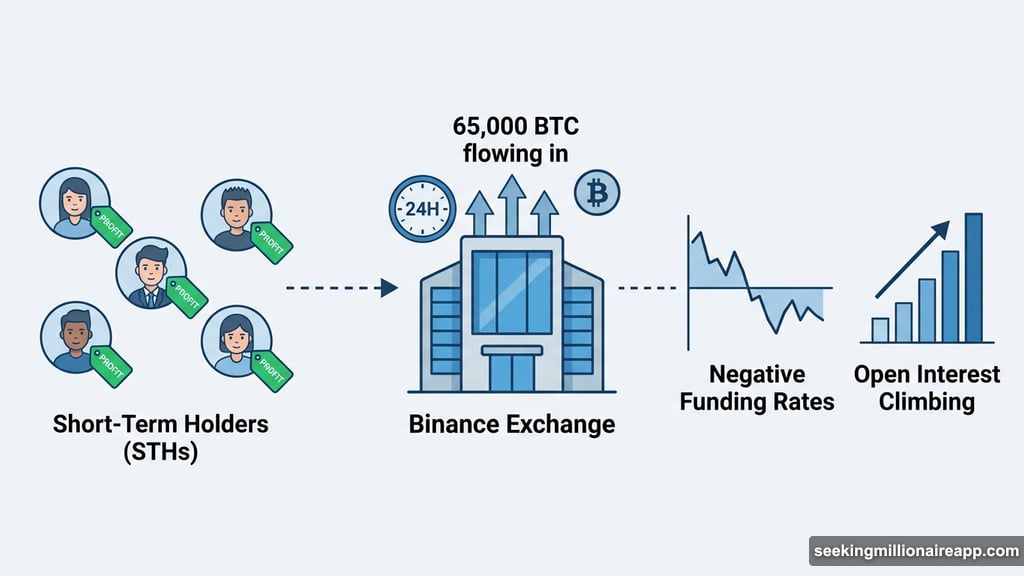
While long-term holders go quiet, short-term holders (STHs) are doing the opposite. When Bitcoin tested the $75,000 level recently, STHs sent more than 65,000 BTC to exchanges within a single 24-hour window. Of those transfers, 61,000 BTC was in profit at the time of the move.
That pattern — short-term holders rushing to lock in gains near round-number resistance — is pretty typical. But it’s worth watching because it creates a specific dynamic in the derivatives market.
Analyst Michaël van de Poppe noted that funding rates have turned negative while open interest has climbed sharply. That combination means traders are piling into short positions just as Bitcoin tests the same resistance level for the third time. “As long as BTC remains above $72K, I wouldn’t be worried, and I’d rather be looking for longs versus shorts,” van de Poppe wrote.
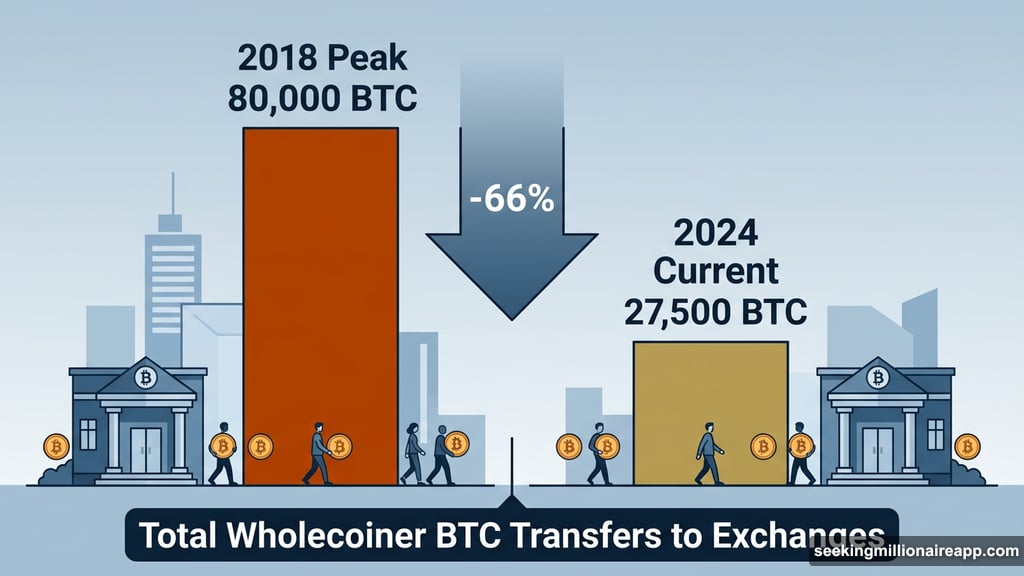
He flagged $85,000 to $88,000 as the next significant resistance zone if Bitcoin manages to break and hold above $75,000.
The Short Squeeze Setup Worth Watching
Here’s where the derivatives data gets interesting. Negative funding rates mean short sellers are actually paying a premium to keep their positions open. Rising open interest means more and more of those positions are piling in. That combination historically sets the stage for a short squeeze — a rapid price spike that forces overleveraged short sellers to buy back their positions, pushing the price even higher.
This doesn’t mean a squeeze is guaranteed. But the conditions are being constructed in real time. And with on-chain supply tightening while shorts accumulate, the setup deserves attention.
What the Bull-Bear Index Says
On-chain researcher Axel Adler Jr. added another layer of context. Bitcoin’s Bull-Bear Index has flipped above zero, officially clearing the bear zone. That’s a meaningful signal on its own.
But Adler Jr. was careful about what it means. Network profit and loss sentiment remains underwater, which means many holders are still sitting on unrealized losses from the previous correction. So this current move looks more like a recovery phase than the start of a brand-new bull run.
That framing matters for how you interpret the price action. Recovery from a downturn and a fresh bull cycle feel similar at the beginning but have different durability. The difference usually shows up in whether new money keeps coming in or whether this is just the old money repositioning.
A Geopolitical Tailwind in the Mix
One factor worth mentioning: Donald Trump’s recent diplomatic signaling around coordination with Chinese President Xi Jinping over the Strait of Hormuz gave markets a risk-on push. Geopolitical tension relief tends to benefit assets like Bitcoin, which sit at the intersection of risk appetite and institutional hedging. It’s a tailwind, not the main story — but it’s part of why the timing of this supply squeeze gets more interesting.
The data is pointing in a consistent direction. Long-term holders are holding tighter than they have in eight years. Short-term traders are nervously profiting near resistance. Shorts are piling in at exactly the moment supply is shrinking. Whether that combustion triggers a move to $85,000 or stalls here, the structural picture for Bitcoin supply looks fundamentally different from what it was just a few years ago. That’s worth paying attention to regardless of what happens next week.