
Bitcoin traders hoping the worst is over may want to hold off on that victory lap. Crypto analyst Ivan Liljeqvist says the cycle bottom is nowhere near confirmed, and a significant sell-off still lies ahead.
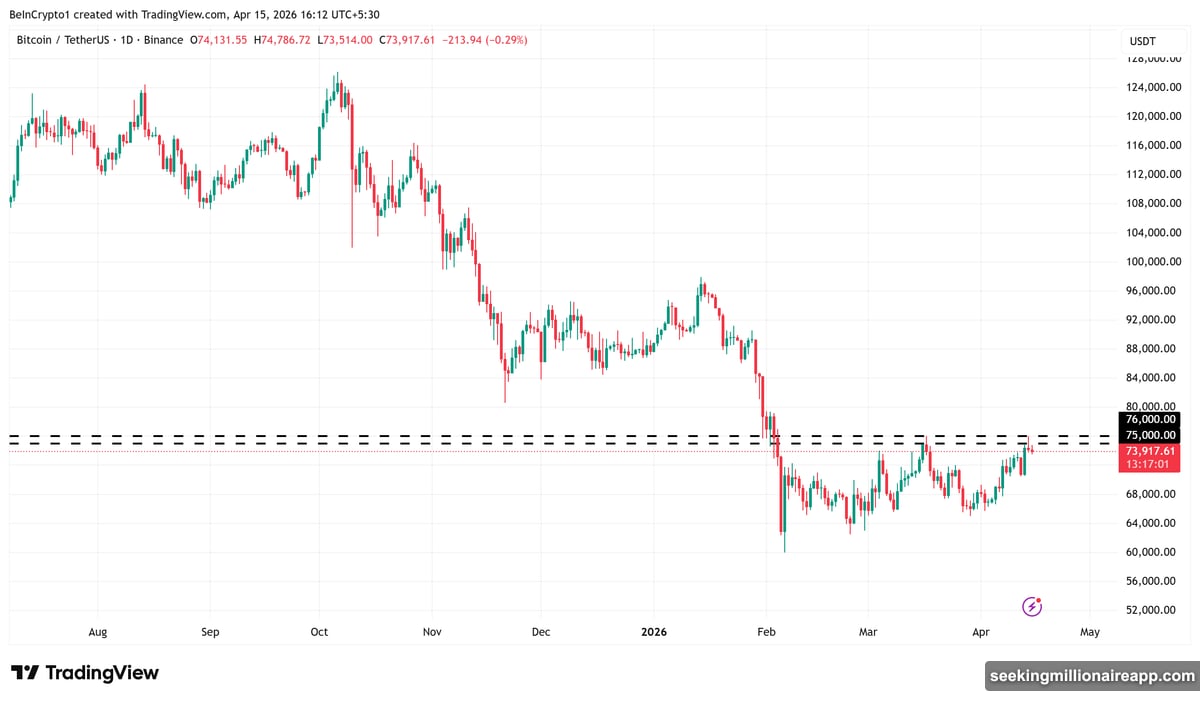
His warning comes as BTC briefly tested the $76,000 level this week, riding a short-term bounce tied to shifting geopolitical sentiment and a surprising US Producer Price Index reading. But Liljeqvist isn’t impressed by the bounce.
$60,000 Was Not the Bitcoin Bottom
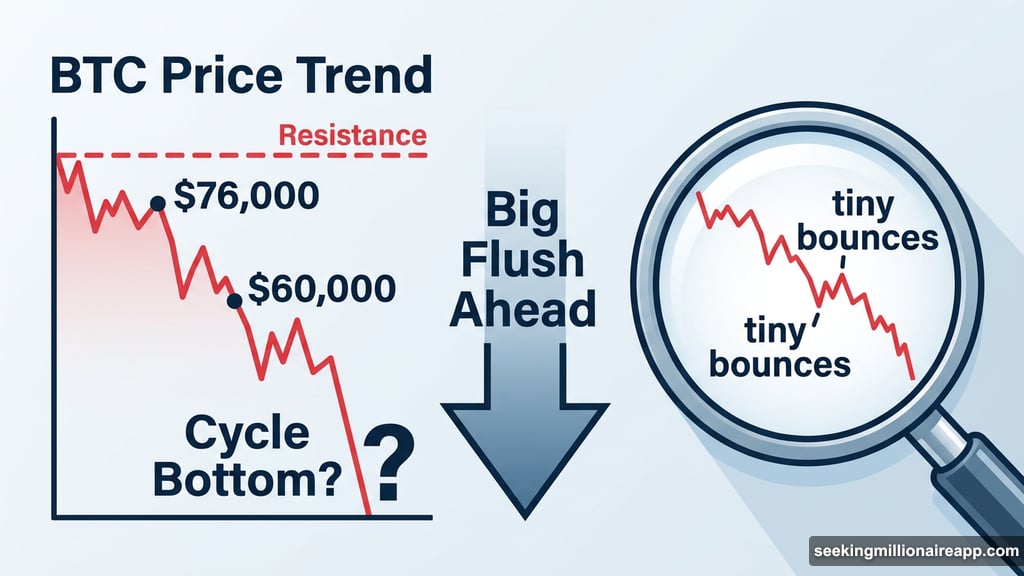
Liljeqvist has been blunt about his outlook. In his words: “I don’t think $60,000 was the bottom. You can pray for it of course but it won’t help. Trend is still down. The few % bounces are tiny if you zoom out.”
That’s a sobering take for anyone who bought the recent dip expecting a quick recovery. And it’s not just a gut feeling. He points to the broader market structure, which he describes as “risk-off since October,” as evidence that Bitcoin hasn’t found its footing yet.
So what’s keeping prices propped up at all? That’s where things get interesting.
MicroStrategy’s STRC Dividend Cycle Props Up BTC
Liljeqvist points to Michael Saylor’s company as a key driver behind recent price movements. MicroStrategy runs what he describes as a predictable buying cycle tied to its STRC dividend schedule.
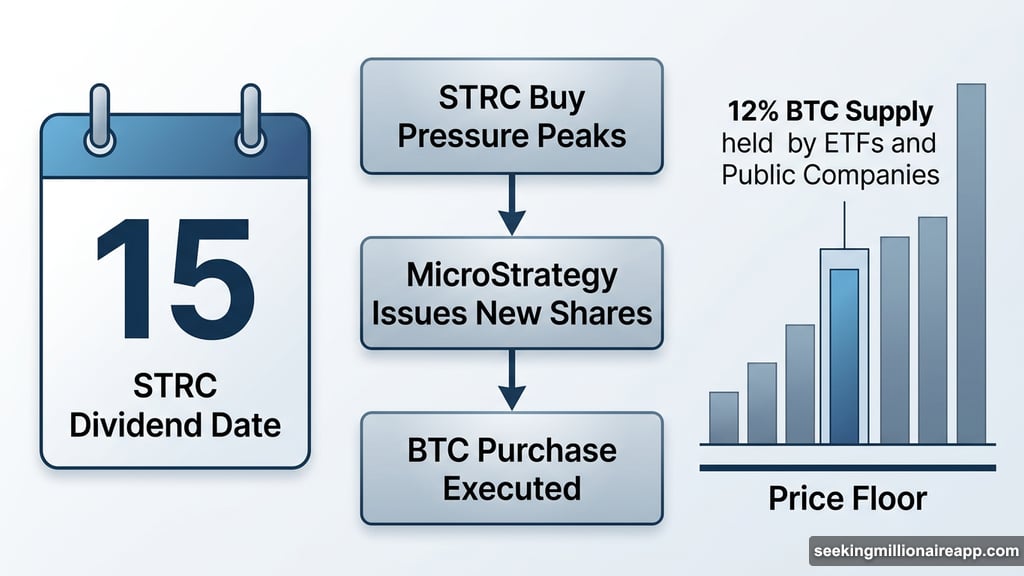
Buy pressure on STRC tends to peak around the 15th of each month. That timing allows the firm to issue additional shares and raise fresh capital for Bitcoin purchases. The result is a recurring but limited boost to BTC demand.
However, Liljeqvist is clear that this mechanical buying cannot push Bitcoin through key resistance levels on its own. MicroStrategy provides a floor of sorts, but not a launch pad. For traders hoping institutional momentum carries BTC higher, this is a meaningful limitation.
Bear Market Drawdowns Look Different Now
Here’s where the picture gets more nuanced. Even if Liljeqvist is right about further downside, this bear market may not replay the brutal declines of previous cycles.
Fidelity Digital Assets noted earlier this month that downside risk in 2026 has been less severe than in prior periods. The reason is structural. Roughly 12% of Bitcoin’s circulating supply is now held by public companies and ETFs. That’s a level of institutional ownership that simply didn’t exist in earlier cycles.
Compare the numbers directly. Bitcoin fell 82% from its 2017 peak. It dropped 77% after the 2021 high. The current drawdown sits at about 40% from the last all-time high. That’s still painful, but it’s a very different kind of painful.
Previous cycles were driven largely by retail speculation. Sharp, emotional selling created those catastrophic collapses. Institutional holders tend to behave differently. They rebalance rather than panic sell, which may put a natural floor under prices even during a genuine bear phase.
The Central Question Heading Into Late 2026
So we’re left with a real tension in the market. One side of the argument says Bitcoin needs a final capitulation flush before a new cycle can begin. The other says institutional demand has permanently changed how bear markets behave, and the deep crashes of old simply won’t repeat.
Both views could be partially right. Liljeqvist’s “big flush” could still arrive, just not as extreme as the 77% to 82% crashes that scarred earlier generations of Bitcoin holders. Or institutional buying floors could hold, and the drawdown stays moderate by historical standards.
What’s clear is that the bottom remains unconfirmed. Anyone calling it right now is guessing. The more honest position, and the one Liljeqvist takes, is capital preservation until the trend actually changes.
Watching whether those institutional support levels hold or crack under selling pressure will be the defining story for Bitcoin in the second half of 2026. That answer is still very much open.