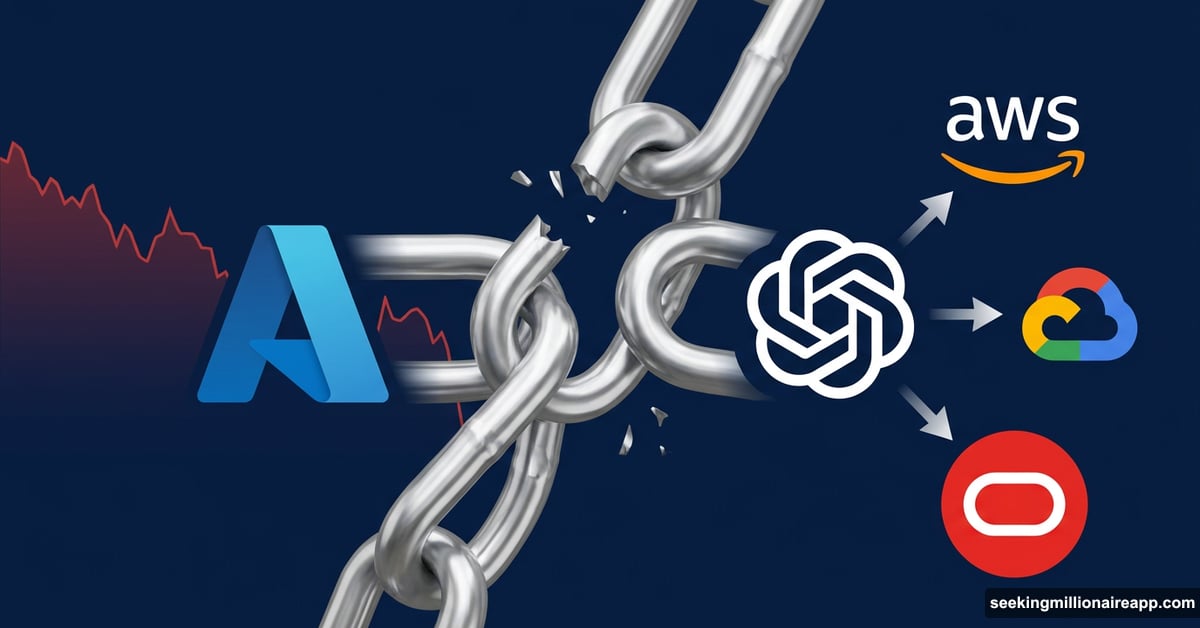
Sam Altman dropped a bombshell on April 27th. OpenAI updated its Microsoft partnership, and the change sent MSFT stock sliding fast.
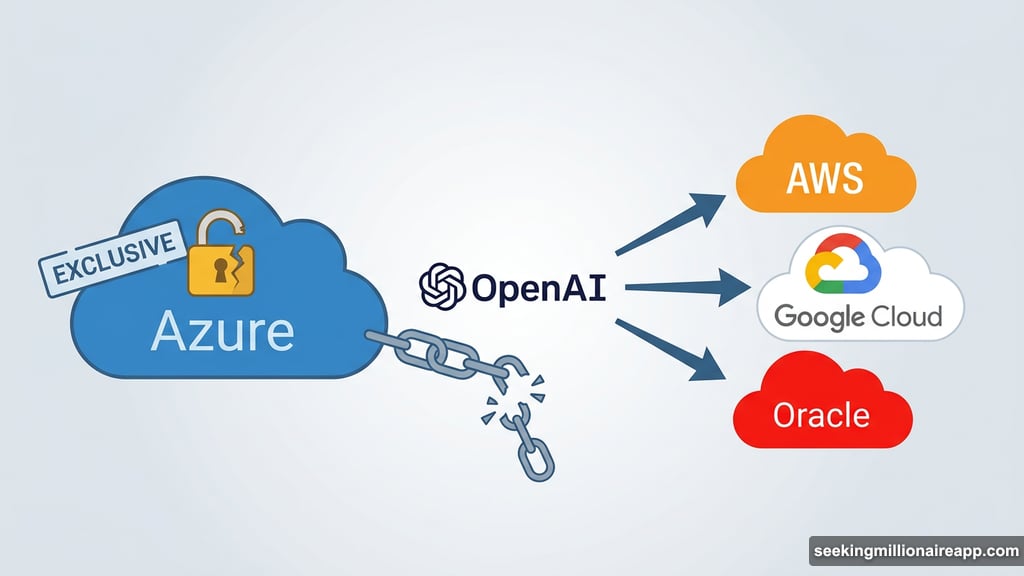
The short version? OpenAI can now sell its products through any cloud provider it wants. That means AWS, Google Cloud, Oracle, and anyone else who comes knocking. Azure no longer holds a monopoly on OpenAI’s flagship AI products, and traders noticed immediately.
Microsoft’s Azure Edge Just Got Smaller
For years, Azure’s association with OpenAI was a genuine competitive advantage. If your company wanted to build with ChatGPT or OpenAI’s models at scale, Microsoft’s cloud was the obvious path. That exclusivity gave Azure something AWS and Google Cloud simply couldn’t match.
Now that wall is gone. OpenAI confirmed it can offer models through competing providers, and the cloud giants have been actively courting frontier AI labs for months. So the business that Azure essentially locked up is now up for grabs.
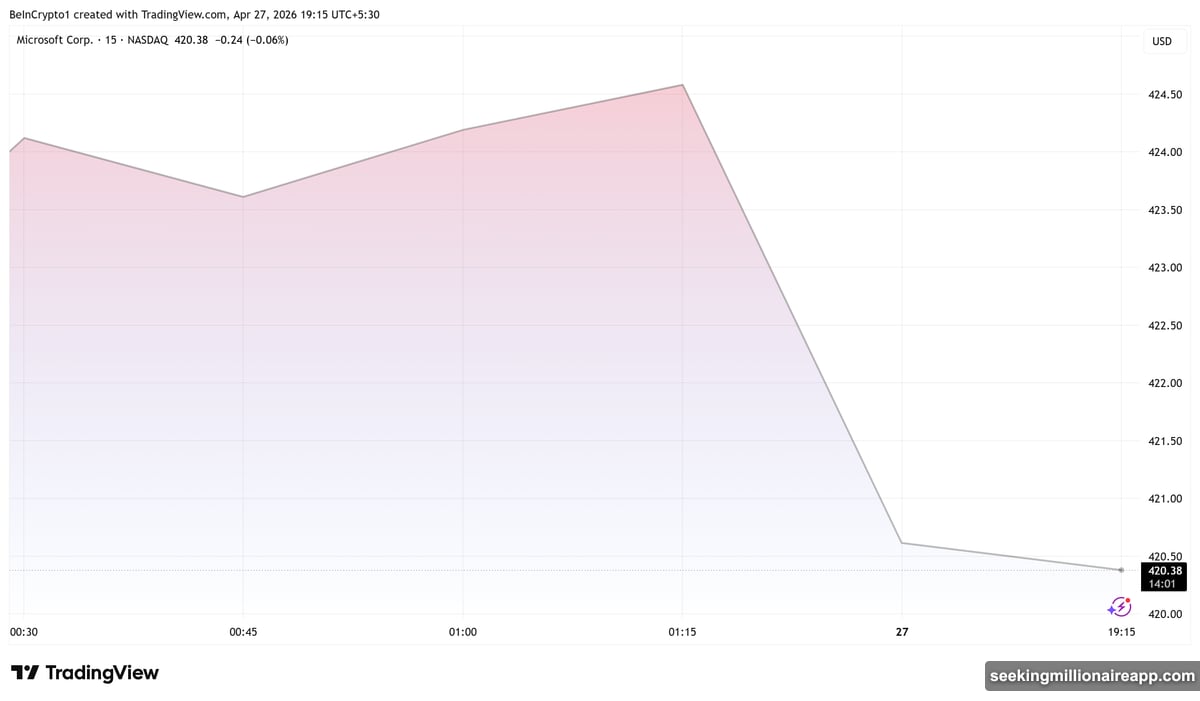
MSFT shares fell as much as 5% intraday before clawing back some losses. Still, the stock remained lower heading into the close.
What the Updated Partnership Terms Look Like
The new arrangement keeps Microsoft and OpenAI working closely together, just without the exclusivity clause. Here’s what stays in place and what changed.
OpenAI will continue supplying Microsoft with models and products through 2032. A revenue share flows from OpenAI to Microsoft through 2030, keeping cash moving toward OpenAI’s biggest backer. Microsoft, however, stops paying a revenue share back to OpenAI, removing one outflow from its income statement.
Microsoft also retains ChatGPT’s intellectual property rights through 2032. Plus, its equity stake in OpenAI remains firmly in place.
The Bull Case That Investors Might Be Missing
Not everyone read this as bad news for Microsoft. CFA Palwinder Singh pushed back hard on the selloff narrative.
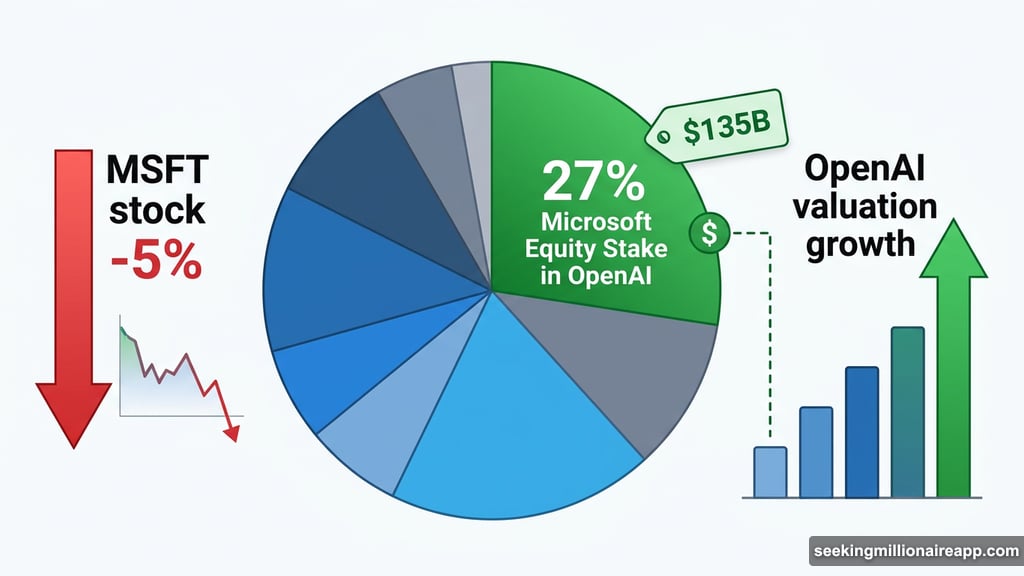
“Investors are crying about exclusivity while ignoring that Microsoft still has a 27% stake in OpenAI valued at $135 billion,” Singh wrote. “This 5% dip is a gift for anyone who can read a balance sheet instead of just a headline.”
Singh has a point worth considering. Microsoft holds a massive equity position in the company that just announced it can reach more customers across more platforms. If OpenAI grows faster because it’s available everywhere, that 27% stake grows in value too.
So the real question isn’t just what Microsoft loses. It’s whether expanded OpenAI distribution actually benefits the equity holder more than exclusivity did.
Azure’s AI Differentiation Strategy Gets Tested
The selloff reveals something important about how investors had been pricing MSFT stock. A meaningful portion of Azure’s premium valuation rested on its unique OpenAI relationship. Traders treated those exclusive workloads as a structural advantage that competitors couldn’t easily replicate.
That assumption now needs updating. AWS and Google Cloud are both aggressive, well-funded platforms. Both have been building their own AI partnerships and infrastructure. And now both can offer OpenAI’s models if deals get done.
Moreover, enterprise customers who were previously steered toward Azure for OpenAI access have more options. Some will stay. Others will consolidate workloads with their preferred cloud provider instead.
A Partnership Still Worth Having
Microsoft isn’t walking away from this arrangement empty-handed. The model supply agreement runs nearly a decade. The IP rights provide long-term leverage. And the equity stake means Microsoft profits directly from OpenAI’s commercial success, whether that happens on Azure or anywhere else.
The arrangement also removes Microsoft’s revenue share payments back to OpenAI, which cleans up the company’s income statement in a meaningful way.
What changed is the narrative investors had built around Azure’s AI moat. That narrative was simpler and easier to price. What’s left is more complicated but potentially just as valuable, depending on how fast OpenAI grows and how well Azure competes on its own merits.
The next few quarters will show whether Azure can hold its AI market position without exclusivity as a crutch. If it can, the selloff looks like exactly what Singh described. If Azure starts losing OpenAI-related workloads to AWS or Google Cloud, investors will have been right to worry.
Either way, the cloud AI competition just got significantly more interesting.