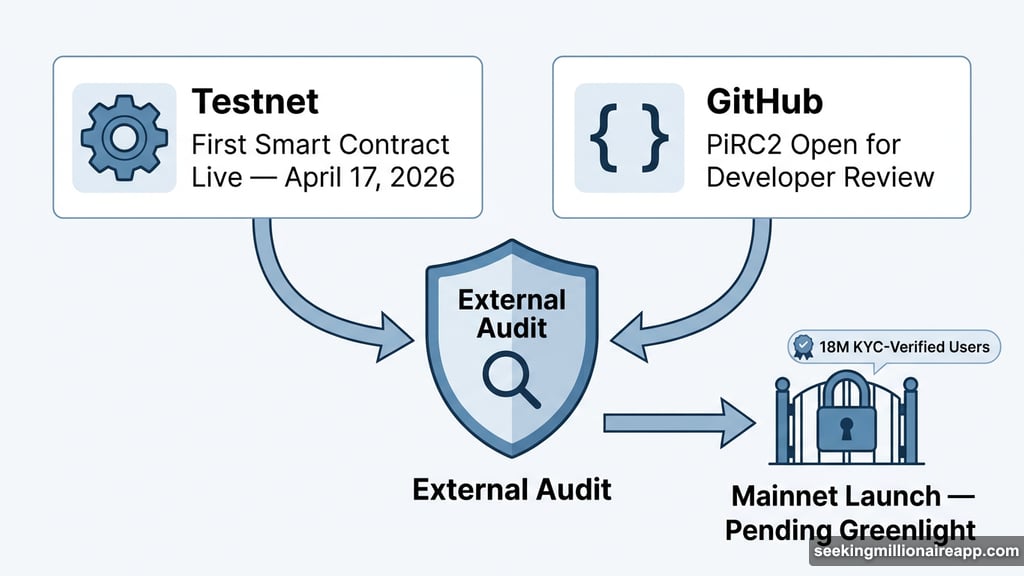
Pi Network just crossed a meaningful threshold. On April 17, 2026, the project activated its first smart contract on Testnet, built specifically around subscription payments. It’s a real, working piece of blockchain infrastructure — and the crypto community is paying attention.
PI is currently trading around $0.17, sitting just below a key resistance level. The technical picture is neutral right now. But this smart contract launch could be the catalyst that changes things, depending on what happens next.
Subscription Smart Contracts Arrive on Pi’s Testnet
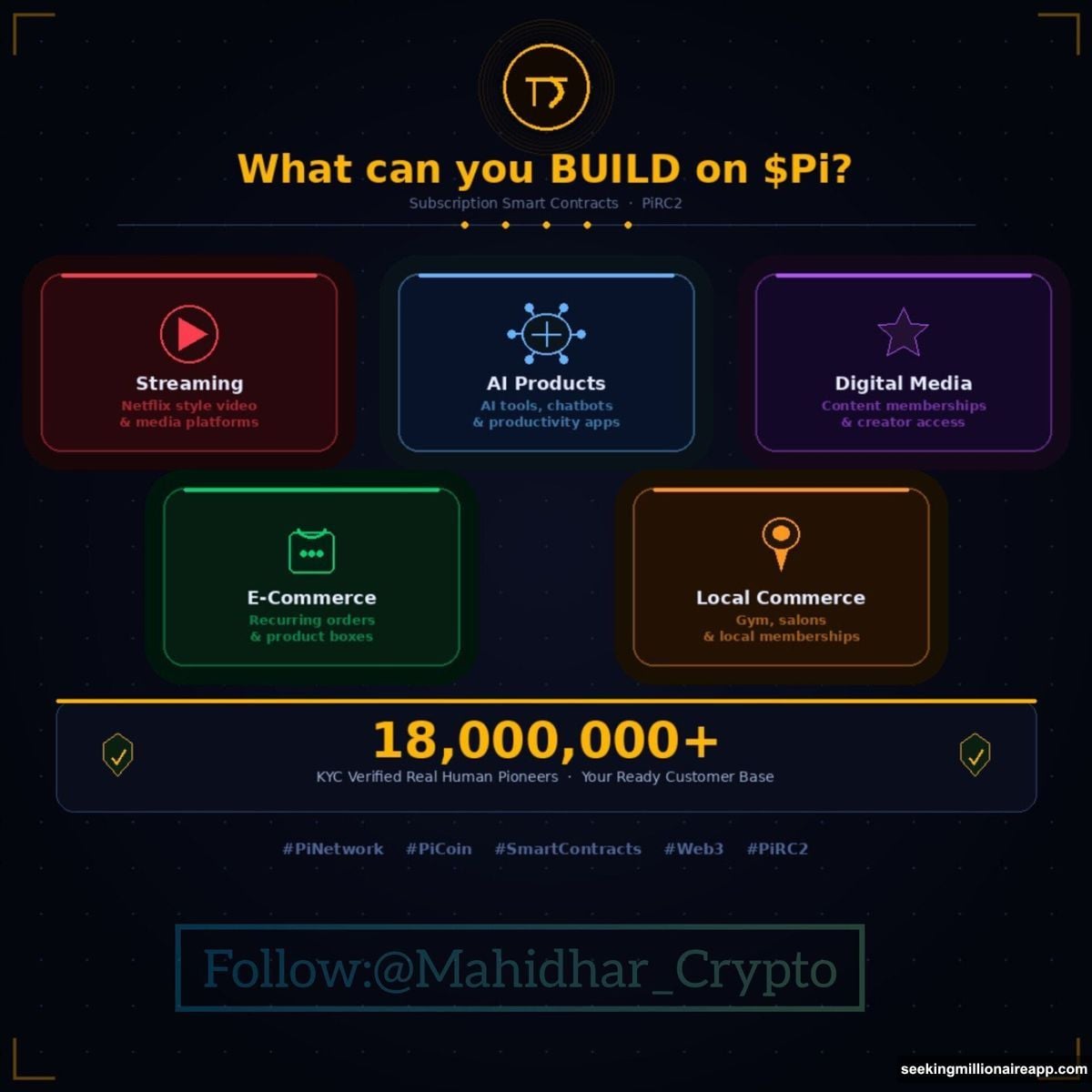
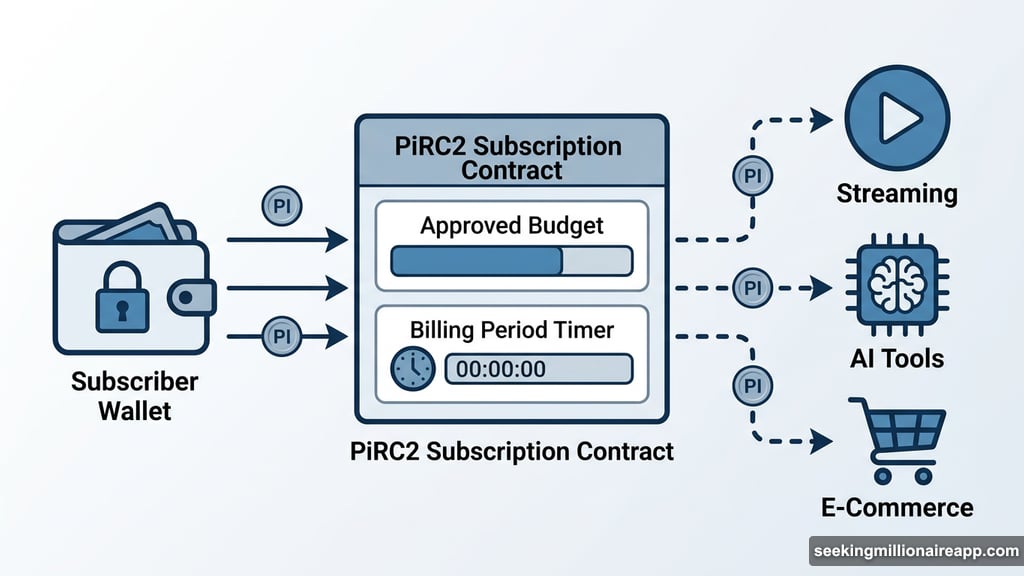
The new contract handles recurring payments — think streaming services, digital memberships, AI tools, and e-commerce subscriptions. That’s actually a harder problem to solve cleanly than it sounds.
Here’s how it works. Subscribers approve a defined spending budget. The contract then draws from that budget over a set billing period. Your funds stay in your wallet until a charge actually processes. No pre-funding required upfront.
That approach sidesteps a few existing limitations. It avoids the full pre-funding model used by account abstraction standards like ERC-4337. It also removes the repeat signature problem from earlier Ethereum proposals, specifically EIP-1337. Pi frames this as a simpler, cleaner path for on-chain recurring payments.
The spec behind this — Pi Request for Comment 2, or PiRC2 — is now open for developer review on GitHub. External auditors are also going through the contract code before any Mainnet launch gets greenlit.
What Recurring Payments Mean for Picoin Demand
Community members have already started mapping this to real-world use cases. Streaming, AI subscriptions, digital memberships, local commerce, and e-commerce all showed up in early discussions.
That framing matters. Pi Network has long faced criticism that PI token demand is mostly speculative. A recurring payment model, if it takes hold, anchors demand to actual services people pay for regularly.
Pi’s pitch to potential builders leans heavily on its user base. The project claims more than 18 million KYC-verified users. Boosters frame that as a ready-made customer base waiting for apps to serve them.
Dr. Vincent McPhillip, a prominent voice in the Pi community, argued that smart contracts move Pi’s functionality closer to Ethereum. He suggested the release could set the stage for a sustained price move. Still, he acknowledged that markets are watching and waiting.
That optimism comes with caveats, though. Staking, DeFi, and decentralized app risks in any young ecosystem are real concerns. Education and thorough auditing will shape how cleanly this rollout actually goes.
PI Price Sits Just Below a Critical Fibonacci Level
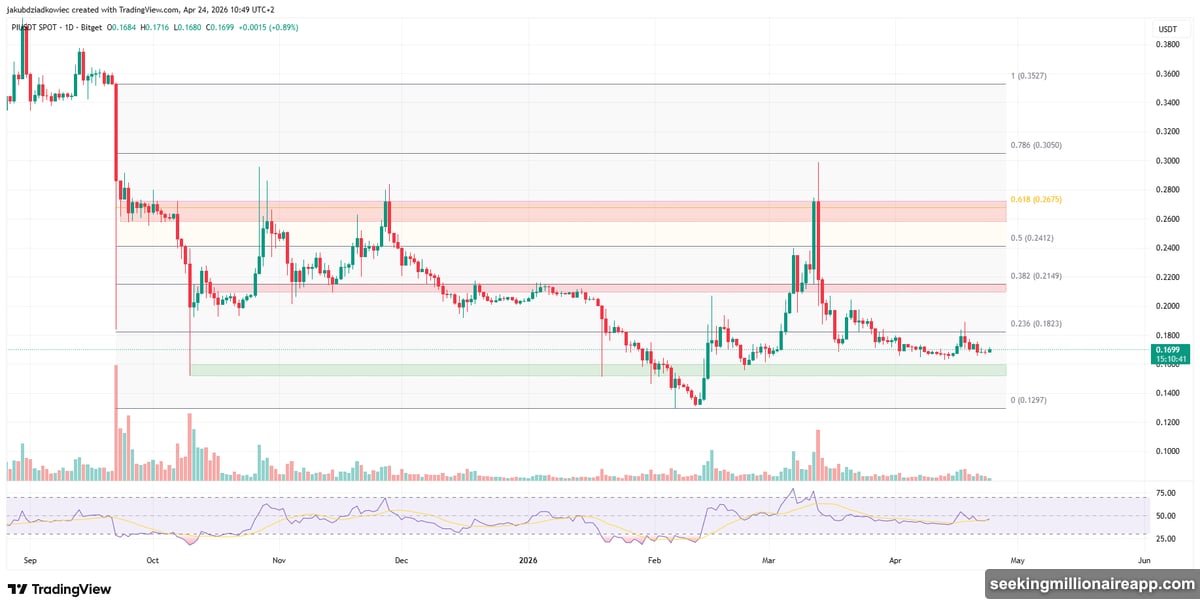
On the technical side, PI is trading at $0.1699 on Bitget. That puts it just under the 0.236 Fibonacci retracement level at $0.1823.
The Fibonacci tool here is anchored between two reference points. The high comes from September 22, 2025, at $0.3527. The low is February 6, 2026, at $0.1297. That gives traders a clean roadmap of where resistance and support live.
A daily close above $0.1823 would be the first meaningful step. From there, the next target is the 0.382 retracement at $0.2149. Above that sits the 0.618 retracement zone at $0.2675, which represents heavier supply from prior reaction highs.
Clearing that $0.27 band would mark the first genuine break of the multi-month downtrend. It would also flip the overall bias back to bullish.
On the downside, horizontal support holds near $0.15. Losing that level would expose the February low at $0.1297 and confirm another leg lower for the bears.
RSI and Volume Tell a Cautious Story
The Relative Strength Index sits in the mid-40s right now. That’s a neutral reading. No strong buying pressure is building, but sellers aren’t exactly piling in either.
Volume has also thinned noticeably through April. Low turnover during a sustained price decline can sometimes signal accumulation — smart money quietly building positions before a move. But it can just as easily mean fading interest and weakening conviction.
The cleanest trigger for a volume expansion would be a confirmed Mainnet launch date. That kind of fundamental news gives traders something concrete to price in.
Right now, the subscription smart contract rollout is the catalyst the market is already weighing. Whether it actually drives flows into PI depends on two things: Mainnet timing and how actively developers and Pioneers engage with the Testnet review process.
Where Things Stand
Pi Network has made a tangible technical step forward. The smart contract works, the use cases are clear, and the developer review process is underway. That’s genuinely more progress than many skeptics expected at this stage.
But the contract is still on Testnet. A Mainnet launch requires clean audit results and positive PiRC2 feedback. Until that happens, the price action stays constrained by those Fibonacci levels.
A close above $0.27 changes the narrative. A drop below $0.15 confirms the bears are still firmly in control. Right now, PI sits in the middle, waiting on fundamentals to tip the scales one way or the other.